Did language play a role in Almeria wildfire tragedy? How expats can follow alerts and use apps in Spain
By Adam Woodward • Published: 11 Jul 2026 • 10:30 • 4 minutes read
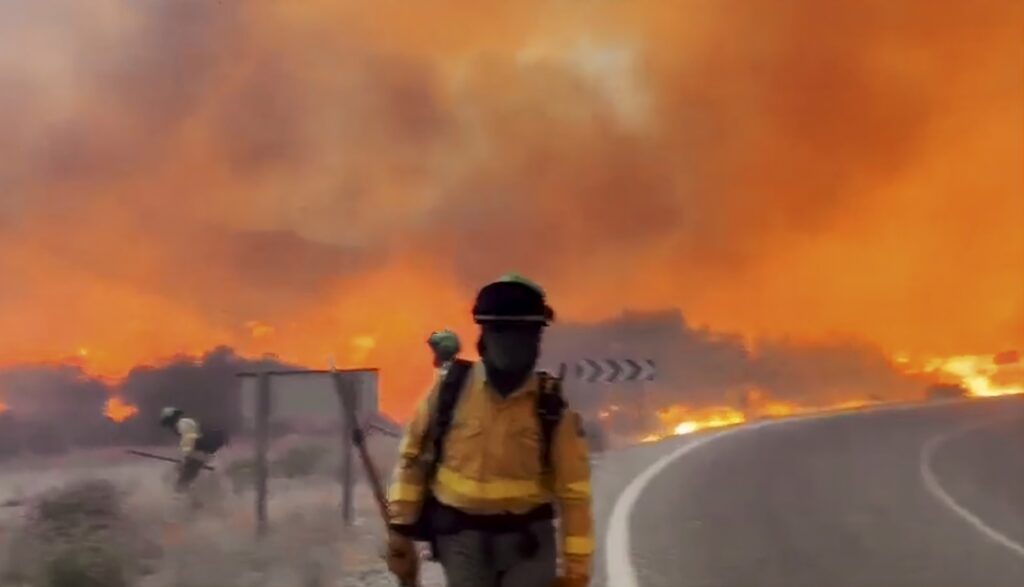
Wildfires in Almeria Province. Credit: EMA X
Foreign retirees often choose rural parts of Spain for its peace and space that suit later life. Recent fires in Los Gallardos and Bedar ended that dream for twelve people, almost all foreign nationals, including British and Belgian residents.
Tragic losses have raised questions about whether language barriers prevented some expats from fully understanding warnings in time. A simple wildfire alert app available in English, such as Wildfire Watch, offers a straightforward way to receive immediate notifications and potentially save lives.
Reports confirm that British and Belgian citizens formed the majority of those who died. Four victims were found inside a vehicle with right-hand drive, a detail that points directly to British ownership. Another group of nine people ended up in a deadly position after they tried to escape by an unofficial route through a rambla (dry flood channel). Tragically, seven of that group lost their lives.
Mayor Angel Collado of Bedar knew several victims well. He had lived as their neighbour for many years and had even officiated at a wedding. His council team visited homes one by one to give warnings and start moving people out. He described the fire moving with extraordinary speed, likening it to a tongue of flame that raced across the hills. At one stage the usual road to Los Gallardos became blocked, so officers quickly turned cars around and sent them to Lubrin instead. Without that quick change, more lives could have been lost.
Antonio Sanz, who coordinates emergencies across Andalucia, spoke of the same rapid spread that caught hundreds of residents off guard. Around six hundred people needed to evacuate, and more than one hundred and eighty found shelter in two temporary centres. While a government app already exists to warn of large-scale threats, Sanz says it was never designed for such small areas as Bedar and Los Gallardos.
Warnings broadcast in Spanish only
Radio stations, local television channels and council social media posts carried repeated messages about the advancing fire. Police officers used loudhailers to tell people to evacuate. Strong winds may have carried those voices away from the very houses that needed them most. Spanish neighbours tried shouting warnings to their British and other overseas neighbours, but were they understood?
Rural living draws British buyers wanting quiet
Many Spaniards these days prefer to live in towns or larger villages where they feel closer to help if trouble strikes, whether from burglary or from natural events. Traditional large family homes that once housed several generations under one roof have become less common. But, the houses remain. The change leaves rural properties available for foreign buyers who want room for family visits and a quieter daily routine. Los Gallardos and Bedar offered exactly that setting to the people who later faced the flames.
Adult language learning brings emergency hurdles
Picking up fluent Spanish after middle age takes an immense effort and often more than a decade to achieve. In areas popular with overseas residents, daily life rarely demands advanced language skills. Doctors, shop staff, estate agents and lawyers frequently switch to English without being asked. Bilingual gestor services handle official paperwork and appointments. The practical need to reach full proficiency, therefore, stays low for many who arrive in Spain to live.
Debbie Skyrme shares her thoughts after watching Spanish TV coverage
Popular singer Debbie Skyrme, who lives and works on the south coast of Spain, posted a poignant and heartfelt recording on her social media after she followed Spanish television reports about the fires. She said:
“I’ve been listening to the Spanish news, and they’re talking about the fires. The commentary is about people coming to Spain and only learning enough Spanish just to get by. In this case, it seems possible that people learning just sufficient Spanish has meant that they had not understood the warnings. They have not understood, possibly, their neighbours telling them that the fire was coming, and by the time they got into their cars, it was too late.“
Skyrme offered clear practical steps:
“If you don’t understand Spanish very well, there are wildfire apps. I’ve got one on my phone. It is in English. You can set how wide a range you want, so mine’s set to 50 kilometres, for example. So, these fatalities are awful, but they possibly could have been avoided if people had understood the warnings.”
Useful tools for receiving wildfire alerts
Residents in Spain could therefore benefit from specialist apps. Wildfire Watch, for example, works free of charge and runs like a social media platform. People post updates and photos of fires or other local emergencies, and both Spanish and English speakers use it. Occasional false reports appear, yet most posts include photographs so users can judge the real level of danger for themselves.
The My112 app also helps anyone calling emergency services to give an exact location straight away.
Official advice for escaping a wildfire
Officials in the Spanish emergency services repeat one clear message: stick to the routes they designate and never try an unofficial shortcut. In open land, move downhill and across the slope rather than straight up. Head for areas already burnt, wide tracks, rocky ground or any space clear of bushes and trees. If caught with no way out, lie in a low dip, face down, feet towards the flames, and cover yourself with soil or damp clothes. Caves, wells and gullies trap smoke and heat, so avoid them. Never try to run through the fire front itself.
Anyone still in a car should close every window, turn off the ventilation, switch on the lights and, if needed, stop in a spot without dry plants and shelter on the floor of the vehicle. At home, shut doors and windows, stuff gaps with wet towels, fill buckets with water and cut off gas and electricity. Stay in the room farthest from the fire until the authorities say it is safe to leave. After the fire passes, wait for official permission before going back, because hidden embers and falling rocks can still cause harm.
Events in Los Gallardos and Bedar show how quickly conditions can change for anyone who has made rural Spain their home. British expats who invested time and care in their properties deserve every chance to receive warnings they can act on without delay.
Follow Euro Weekly News on Google News
Get breaking news from Spain, travel updates, and expat stories directly on your Google News feed.
Follow on Google NewsSign up for personalised news
Subscribe to our Euro Weekly News alerts to get the latest stories into your inbox!
By signing up, you will create a Euro Weekly News account if you don't already have one. Review our Privacy Policy for more information about our privacy practices.


Adam Woodward
Adam is a writer who has lived in Spain for over 25 years. With a background in English teaching and a passion for music, food, and the arts, he brings a rich personal perspective to his work at Euro Weekly News. As a father of three with deep roots in Spanish life, Adam writes engaging stories that explore culture, lifestyle, and the everyday experiences that shape communities across Spain.
Comments