Spain is about to get a rare six planet show and most people won’t even know it’s happening
By Farah Mokrani • Published: 12 Jul 2026 • 15:35 • 4 minutes read
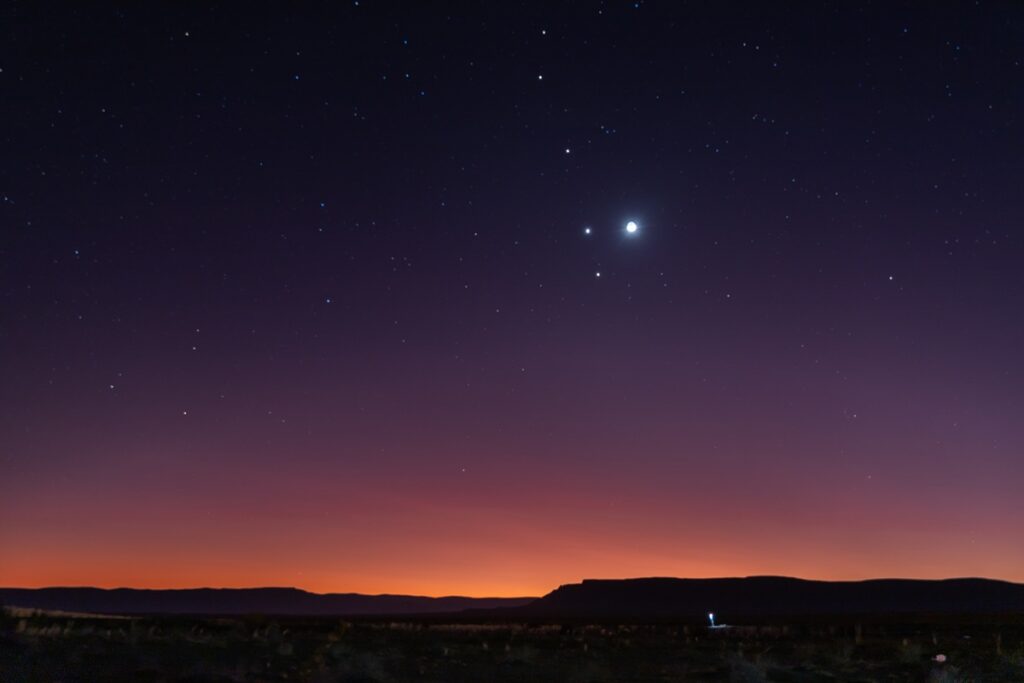
A rare six planet alignment will be visible from Spain on 12 August, alongside the peak of the Perseid meteor shower. Credit : Kim Steinberg, Shutterstock
Most people already know that 12 August is the night to watch the Perseid meteor shower, but that’s only half the story. If the skies stay clear, anyone looking up from Spain could also catch a rare six planet alignment, with Jupiter, Mercury, Mars, Saturn, Uranus and Neptune appearing across the same stretch of sky. Astronomers say alignments involving this many planets don’t happen very often, making it one of the standout nights for skywatchers this summer.
You don’t need to be an expert to enjoy it. In fact, for most people the appeal is simply being outside on a warm August evening and seeing more planets than you would normally expect in a single night. If you’re lucky enough to be away from city lights, you could have a front row seat to one of the year’s most striking celestial displays.
Why this planetary alignment is attracting so much attention
The phrase ‘planetary alignment‘ often sounds more dramatic than the reality, and it’s easy to see why there’s confusion.
The planets are not actually lining up in space one behind another. What happens is that, from our point of view on Earth, several planets appear to gather along the same path across the sky. Astronomers call this path the ecliptic, which is also the route followed by the Sun and the Moon throughout the year.
Small alignments happen fairly regularly. Spotting two or three planets close together is nothing unusual. Seeing six planets appearing in the same part of the sky, however, is much less common.
That’s why 12 August has already been highlighted by astronomy platform Star Walk as one of the key dates of the year for anyone who enjoys watching the night sky.
Adding to the excitement, the alignment arrives on exactly the same night that the Perseid meteor shower is expected to reach its peak. It’s unusual to have two headline astronomical events sharing the same evening, which is why many amateur astronomers have already circled the date on their calendars.
Which planets will you actually be able to see?
This is where expectations need a little reality check.
Although six planets are taking part in the alignment, not all of them will be equally easy to spot.
If you’ve never looked for planets before, Jupiter will probably catch your eye first. It is one of the brightest objects in the night sky and is difficult to miss when conditions are good.
Saturn should also stand out, while Mars will be recognisable thanks to its familiar orange red colour.
The remaining planets are more challenging.
Mercury spends most of its time close to the Sun from our perspective, so it only appears for short periods around sunrise or sunset. Finding it usually requires good timing and an unobstructed horizon.
Then there are Uranus and Neptune. They are simply too faint for most people to see with the naked eye, so binoculars or a telescope will be needed if you want to add them to your list.
Even if you only manage to spot three planets, it’s still an impressive evening. Most of us go through daily life without noticing what’s happening above our heads, and events like this offer a reminder that the night sky is constantly changing.
Where should you go to get the best view in Spain?
The best viewing tip has nothing to do with buying expensive equipment. Your location matters much more than your telescope.
If you’re surrounded by street lights, apartment blocks and illuminated roads, you’ll lose much of the detail. A short drive into the countryside can make a remarkable difference.
Spain has no shortage of places with excellent dark skies. Rural inland areas, mountain viewpoints, national parks and quiet stretches of coastline often provide ideal conditions for stargazing.
Weather is just as important. A perfectly timed astronomical event can disappear behind cloud in seconds, so it’s worth checking the forecast before heading out.
If you’re planning to use binoculars or a telescope, try to arrive before it gets fully dark. Give your eyes around 20 to 30 minutes to adjust naturally, and avoid looking at your phone too often, as bright screens quickly reduce your night vision.
Many local astronomy groups across Spain also organise public observing sessions whenever major celestial events take place. They’re a great option if you’re unsure where to look or simply want someone to point out the planets for you.
A reminder that some of the best summer experiences are completely free
There is something refreshing about an event like this. No tickets, no queues and no booking required.
All you really need is a clear sky and a little patience.
Planetary alignments have fascinated people for thousands of years. Ancient civilisations carefully followed the movements of the planets to create calendars and better understand the changing seasons. Today we know these alignments are simply the result of the planets following their own orbits around the Sun, but that doesn’t make them any less captivating.
For many families, 12 August could become one of those evenings that is remembered long after summer ends. Children might see Saturn for the first time. Someone else may finally understand why Jupiter shines so brightly compared with the surrounding stars. Others may simply enjoy sitting outside while the Perseids streak overhead.
Whether you’re a keen astronomer or someone who rarely looks up after dark, this is one of those occasions that rewards curiosity. Six planets, one of the year’s biggest meteor showers and, hopefully, clear summer skies make for a combination that doesn’t come along very often.
So if the forecast looks promising, it might be worth swapping an evening in front of the television for one under the stars. On 12 August, Spain’s night sky could put on one of its finest displays of the year.
Follow Euro Weekly News on Google News
Get breaking news from Spain, travel updates, and expat stories directly on your Google News feed.
Follow on Google NewsSign up for personalised news
Subscribe to our Euro Weekly News alerts to get the latest stories into your inbox!
By signing up, you will create a Euro Weekly News account if you don't already have one. Review our Privacy Policy for more information about our privacy practices.

Farah Mokrani
Farah is a journalist and content writer with over a decade of experience in both digital and print media. Originally from Tunisia and now based in Spain, she has covered current affairs, investigative reports, and long-form features for a range of international publications. At Euro Weekly News, Farah brings a global perspective to her reporting, contributing news and analysis informed by her editorial background and passion for clear, accurate storytelling.
Comments