Sudden weather flip brings coastline chaos: French beach hit by sand storm and flying parasols
By Adam Woodward • Published: 13 Jul 2026 • 10:28 • 2 minutes read
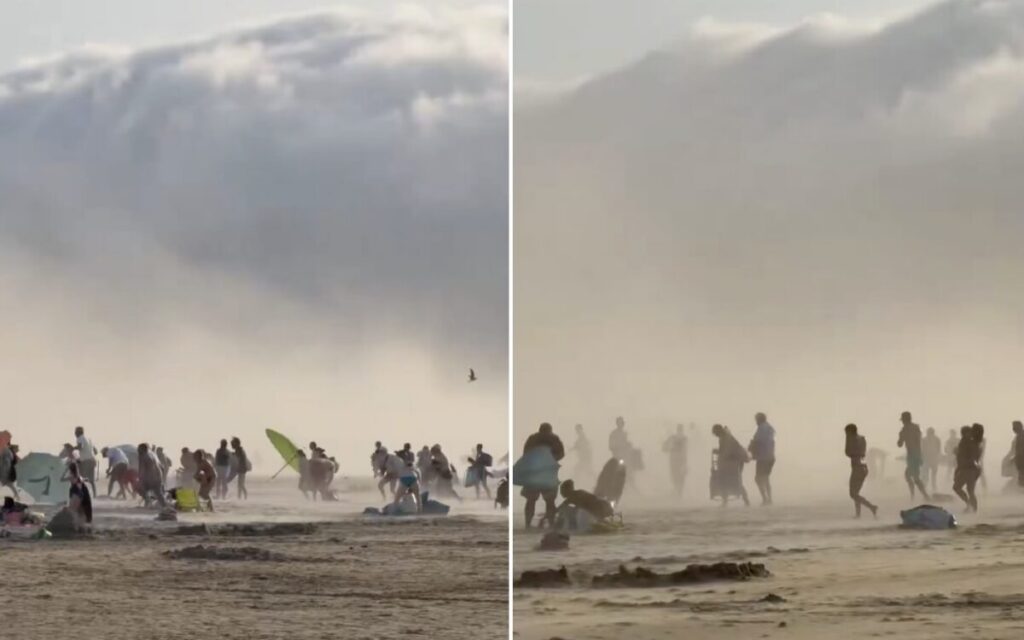
Sudden sandstorm chaos on Hendaye beach. Credit: Marco Urrutia X
Lazing beachgoers in southwest France had to flee in terror this weekend when a freak weather event transformed a scorching hot summer afternoon enjoying the shore into a freezing, wind-swept nightmare within seconds. The crowded shores in Hendaye and Biarritz experienced a dramatic meteorological event known locally as the “enbata” or “galerne” storm. Swimmers enjoying extreme weekend heat suddenly faced flying parasols, blinding sandstorms, and a terrifyingly rapid drop in temperature of 20ºC.
Comment vider la plage d’Hendaye en 2 minutes… 🌬️😅
Énorme enbata ce soir sur la grande plage d’Hendaye ! En quelques instants, cette véritable galerne a fait chuter la température de plus de 15 °C.#hendaye #paysbasque #canicule #galerne pic.twitter.com/AuLIqXmg5J
— Marco Urrutia (@MarcoUrrutia_PB) July 12, 2026
Terrified tourists ran in all directions on Hendaye beach as gale-force winds swept across the sand late on Sunday, 12 July 2026. This natural occurrence, typical of the Pyrenees-Atlantiques region, frequently frightens unsuspecting visitors who are entirely unfamiliar with such sudden atmospheric changes. Heavy mist replaced blue skies almost instantly, forcing unprepared holidaymakers to endure flying beach equipment, airborne debris, ruined picnics, and sudden pelting rain.
Meteorological data captured the astonishing speed of this sudden environmental change. Biarritz had just broken its all-time heat record, reaching an unprecedented 42.9°C in the late afternoon. Within minutes, a powerful westerly wind forced the mercury down to a chilly 23°C. Neighbouring Hendaye witnessed an equally brutal shift, losing a staggering 11 degrees Celsius in just six brief minutes, leaving beachgoers completely stunned and caked in sand.
Fin de journée spectaculaire à Hendaye avec l’arrivée d’un puissant enbata. Au programme : nuage impressionnant, tempête de sable et une chute du thermomètre de plus de 10 degrés en un clin d’œil. La plage, très fréquentée à cause de la chaleur, s’est vidée en quelques minutes. pic.twitter.com/jgDZfjVDEo
— emporioefikz (@emporioefikz) July 12, 2026
Understanding the Enbata phenomenon
Lifelong Basque residents are a little more clued in to this kind of atmospheric transition, though visitors often mistake the incoming gale for a dangerous disaster. Scientists define a galerne as a sudden sea breeze triggered by sharp pressure differences between the Atlantic Ocean and hot inland territories. Cold, humid air rushes landward, creating thick, ominous clouds over the Jaizkibel mountain before sweeping violently across coastal holiday areas.
Wind gusts during these sudden events often reach 75 kilometres per hour, creating highly hazardous conditions for smaller boats navigating out at sea. Visibility drops instantly as thick maritime fog rolls over the open water, blinding captains like something out of a Stephen King novel. Sweeping sand and tumbling parasols routinely cause widespread chaos, yet the dramatic weather event ultimately brings welcome relief during dangerous summer heatwaves.
Cooler air masses moving from the Atlantic Ocean ultimately broke the oppressive heatwave gripping France, steering extreme temperatures further eastward into central Europe. This weekend, holidaymakers undoubtedly gained a valuable lesson about the unpredictable nature of Basque coastal weather. Future beach visitors must watch the western horizon for heavy cloud build-up, which remains the classic, undeniable warning sign of an impending enbata storm.
Follow Euro Weekly News on Google News
Get breaking news from Spain, travel updates, and expat stories directly on your Google News feed.
Follow on Google NewsSign up for personalised news
Subscribe to our Euro Weekly News alerts to get the latest stories into your inbox!
By signing up, you will create a Euro Weekly News account if you don't already have one. Review our Privacy Policy for more information about our privacy practices.




Adam Woodward
Adam is a writer who has lived in Spain for over 25 years. With a background in English teaching and a passion for music, food, and the arts, he brings a rich personal perspective to his work at Euro Weekly News. As a father of three with deep roots in Spanish life, Adam writes engaging stories that explore culture, lifestyle, and the everyday experiences that shape communities across Spain.
Comments