Benidorm and the rest of Spain are packed with tourists, so why are local shops struggling?
By Harry Dennis • Updated: 25 Aug 2026 • 18:23 • 3 minutes read
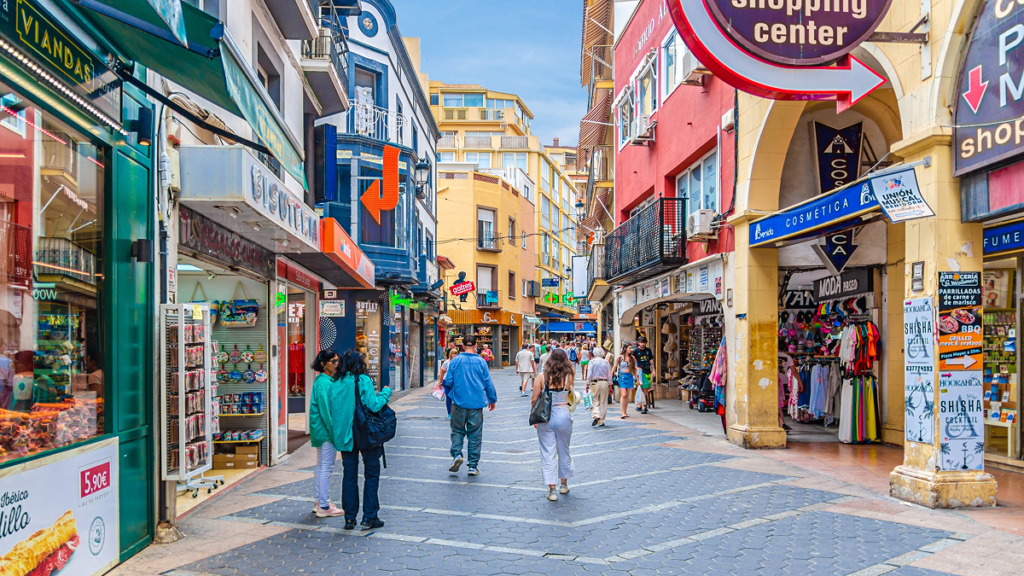
Spain’s streets remain busy, but local traders say fewer tourists are opening their wallets.Credit: Aliaksandr Antanovich / Shutterstock
Benidorm’s hotels are close to full this July, so why are local shops saying sales have fallen by up to 12 per cent since mid-June? The divide points to a wider change in tourist’s holiday spending, with more money going towards rooms, meals, drinks and experiences rather than retail.
Why Benidorm hotels are packed with tourists that aren’t spending in local shops
The same holiday budget that pays for a Benidorm hotel room, meals, drinks and family outings seems to be leaving less and less room for clothes, gifts and impulse buys.
The Independent Association of Traders of Benidorm and the Province (AICO) says businesses have recorded sales falls of between 5 and 12 per cent since mid-June compared with the same period last year. Those figures are based on feedback from local traders and reveal a strange contrast. While sales fell, Benidorm’s hotels ended June with average occupancy of 89.4 per cent, according to the Hotel and Tourism Business Association of the Valencian Community (HOSBEC). The Valencian government has also forecast occupancy of 89.5 per cent for July.
British visitors remain central to that success. Travellers from the UK accounted for 46.8 per cent of Benidorm’s hotel market across June, meaning the resort’s biggest overseas customer base is still arriving in force.
Tourists are spending more in Spain but shops may see less of it
Spain is not facing a collapse in tourism expenditure. International visitors spent €13.55 billion in the country during May 2026, according to Spain’s National Statistics Institute (INE), an increase of 10.9 per cent from the previous year.
These numbers, however, include much more than just money handed over after reaching a hotel. International transport accounted for 20.8 per cent of spending in May, followed by activities at 20.3 per cent, accommodation at 18 per cent and food and drink at 15.5 per cent. Together, those categories absorbed almost three quarters of all international tourist expenditure recorded by the INE.
A visitor can therefore spend more on the holiday as a whole while having less left for clothes, gifts or an unplanned impulse buy. Higher spending totals may reflect more expensive rooms, flights and meals rather than a larger amount of disposable cash circulating through local shops.
Families are protecting the holiday but cutting around it
Travel remains important to British households, even while the cost of living continues to shape their decisions. Research published by the Association of British Travel Agents (ABTA) in June found that 64 per cent of UK adults planned to travel abroad during the following 12 months. More than a third expected to spend more on holidays, but 20 per cent said they planned to spend less, up from 15 per cent in ABTA’s previous survey.
Among those reducing their holiday spending, 54 per cent blamed increased household costs. Almost four in ten people planning a trip had also delayed booking, with flight prices, holiday costs and household finances among the main reasons.
The wider European picture follows a similar pattern. The European Travel Commission found that travel intentions for spring and summer 2026 were at their highest level since 2020, but more people were planning only one trip and fewer expected to take three or more. When asked which part of their next European holiday would receive the most money, 31 per cent chose accommodation, 23 per cent food and drink and 17 per cent activities. Shopping was selected by only 8 per cent.
People clearly aren’t giving up on Spanish holidays, but they are controlling costs through fewer trips, cheaper accommodation, shorter stays or less spending once they arrive.
Meals, football and experiences are winning the holiday euro
AICO says Benidorm’s dominant summer visitor is often travelling with family, and is more likely to prioritise restaurants, attractions and leisure than shopping. Even traditional holiday gifts have become smaller, with traders reporting more purchases of low-cost souvenirs instead of clothing or higher-value products. The basic fridge magnet seems to still be a safe bet.
The World Cup has added another competitor for the limited spending. Evening matches have drawn customers in their hordes towards bars and restaurants this summer, just as temperatures begin to fall and people return to the streets.
Heat is also reducing the hours in which shops can attract passing customers. Visitors are now postponing walking and browsing until after 8pm, when retailers must either close or compete with dinner, entertainment and watching their home team on the big screen.
Benidorm does not prove that every Spanish resort is experiencing the same fall in shop sales. And there is no current national dataset showing how much tourist money reaches independent retailers in each destination. But it does, however, show that a resort can be full, visitors can be spending record amounts, and some local businesses can still be left fighting for the leftovers.
Autumn sales will show whether shops can recover
AICO expects shop sales to begin recovering from September, when temperatures ease and Benidorm traditionally attracts visitors who spend more time walking, browsing and shopping.
Follow Euro Weekly News on Google News
Get breaking news from Spain, travel updates, and expat stories directly on your Google News feed.
Follow on Google NewsSign up for personalised news
Subscribe to our Euro Weekly News alerts to get the latest stories into your inbox!
By signing up, you will create a Euro Weekly News account if you don't already have one. Review our Privacy Policy for more information about our privacy practices.


Harry Dennis
Born in the UK and raised on the Cádiz coast, Harry brings his background in design, music, and photography to his writing for Euro Weekly News, sharing stories that celebrate culture and lifestyle across Spain and beyond.
Comments