The rabbit found nowhere else on Earth has been hiding in plain sight across Spain
By Molly Grace • Published: 20 Jul 2026 • 22:01 • 3 minutes read
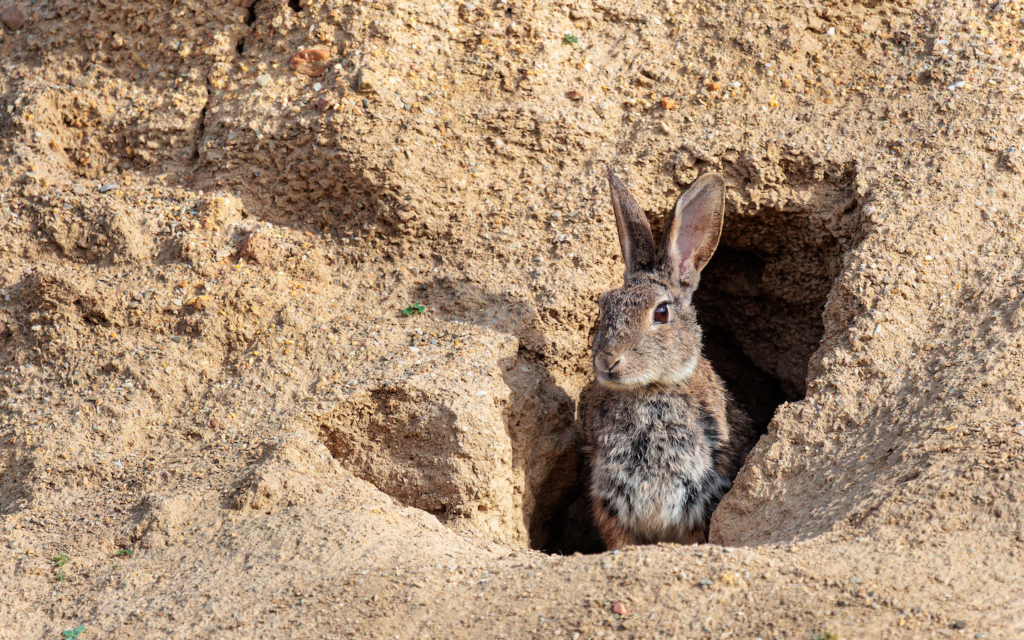
Once a unique evolutionary history is lost, it cannot simply be recreated. Photo credit: LFRabanedo/Shutterstock
It darts across country lanes, disappears into scrubland and is so common that most people barely give it a second glance. But scientists have now discovered that Spain’s humble wild rabbit has been quietly guarding a remarkable secret for around two million years. It’s one of the most familiar sights in the Spanish countryside. Whether you’re driving through Andalucía at dawn, walking in Castilla-La Mancha or exploring the forests of Extremadura, chances are you’ve spotted one.
Small, fast and seemingly ordinary, the Iberian rabbit has long been considered just another part of Spain’s wildlife. Now, however, researchers say that assumption couldn’t be further from the truth. A new scientific study has revealed that the rabbit living across Spain and Portugal is far more unique than previously believed. After spending around two million years isolated on the Iberian Peninsula, the species followed its own evolutionary path, making it unlike any rabbit found anywhere else on Earth. For an animal many people take for granted, it’s an extraordinary discovery that is reshaping what scientists know about one of Europe’s most recognisable mammals.
A two-million-year secret
The research, carried out by scientists from the University of Oviedo, the University of Porto and Spain’s National Research Council (CSIC), suggests the Iberian Peninsula acted as a natural refuge for rabbit populations over millions of years. Separated from other European populations by geological changes and shifting climates, the rabbits gradually evolved in isolation.
While humans have only been studying them for a relatively short time, nature had already been conducting its own experiment for roughly two million years. The findings, published in the journal Proceedings of the National Academy of Sciences (PNAS), show that what many people assumed was simply another European rabbit is, in evolutionary terms, something far more remarkable.
Hidden in plain sight
Perhaps the most surprising part of the discovery is that these rabbits haven’t been living in some remote mountain range or inaccessible national park. They’ve been everywhere, from farmland and forests to roadside verges and coastal dunes, generations of Spaniards have grown up seeing these animals almost every day.
Their familiarity may actually be why their extraordinary evolutionary history remained largely unnoticed for so long. Sometimes the greatest discoveries aren’t hidden deep underground or at the bottom of the ocean, sometimes they’re hopping across the road in front of your car.
More important than many people realise
The Iberian rabbit isn’t just another wild animal, it’s considered one of the most important species in the peninsula’s ecosystem. More than 40 different predators rely on rabbits as a major food source, but none more so than the endangered Iberian lynx and the Spanish imperial eagle. Without healthy rabbit populations, conservationists have long warned that these iconic species struggle to survive. That means protecting rabbits isn’t simply about saving one animal.
It’s about protecting an entire food chain that has evolved alongside them for thousands of generations.The new research adds another compelling reason for conservation efforts, demonstrating that this isn’t simply a widespread rabbit population, it represents a unique evolutionary lineage found nowhere else in the world.
Why the discovery matters
At first glance, the findings might sound like little more than an interesting scientific curiosity. In reality, they could influence how wildlife is managed across Spain and Portugal for decades to come.
Understanding that the Iberian rabbit evolved independently means conservation programmes may need to place even greater emphasis on protecting its genetic diversity rather than assuming populations elsewhere in Europe could ever replace it. Once a unique evolutionary history is lost, it cannot simply be recreated, for scientists, that’s one of the study’s most significant messages.
Spain still has secrets to reveal
The discovery also comes as a reminder that even in one of Europe’s best-studied countries, nature continues to surprise us. Every year, researchers uncover new species, unexpected behaviours and hidden evolutionary stories that change our understanding of the natural world. Few, however, are as surprising as discovering that one of Spain’s most familiar animals has been quietly carrying a two-million-year history almost unnoticed.
For millions of people, the rabbit is simply part of the landscape. For scientists, it has now become something much more extraordinary. The next time you spot one darting into the undergrowth on a Spanish country road, remember that you’re not just looking at another rabbit. You’re looking at a species that has survived ice ages, dramatic geological change and two million years of evolution, hidden in plain sight across Spain and Portugal all along.
Follow Euro Weekly News on Google News
Get breaking news from Spain, travel updates, and expat stories directly on your Google News feed.
Follow on Google NewsSign up for personalised news
Subscribe to our Euro Weekly News alerts to get the latest stories into your inbox!
By signing up, you will create a Euro Weekly News account if you don't already have one. Review our Privacy Policy for more information about our privacy practices.




Molly Grace
Molly is a British journalist and author who has lived in Spain for over 25 years. With a background in animal welfare, equestrian science, and veterinary nursing, she brings curiosity, humour, and a sharp investigative eye to her work. At Euro Weekly News, Molly explores the intersections of nature, culture, and community - drawing on her deep local knowledge and passion for stories that reflect life in Spain from the ground up.
Comments