A washed-up luggage tag helps uncover the 1952 Pan Am wreckage after 74 years
By Molly Grace • Updated: 22 Jul 2026 • 16:33 • 3 minutes read
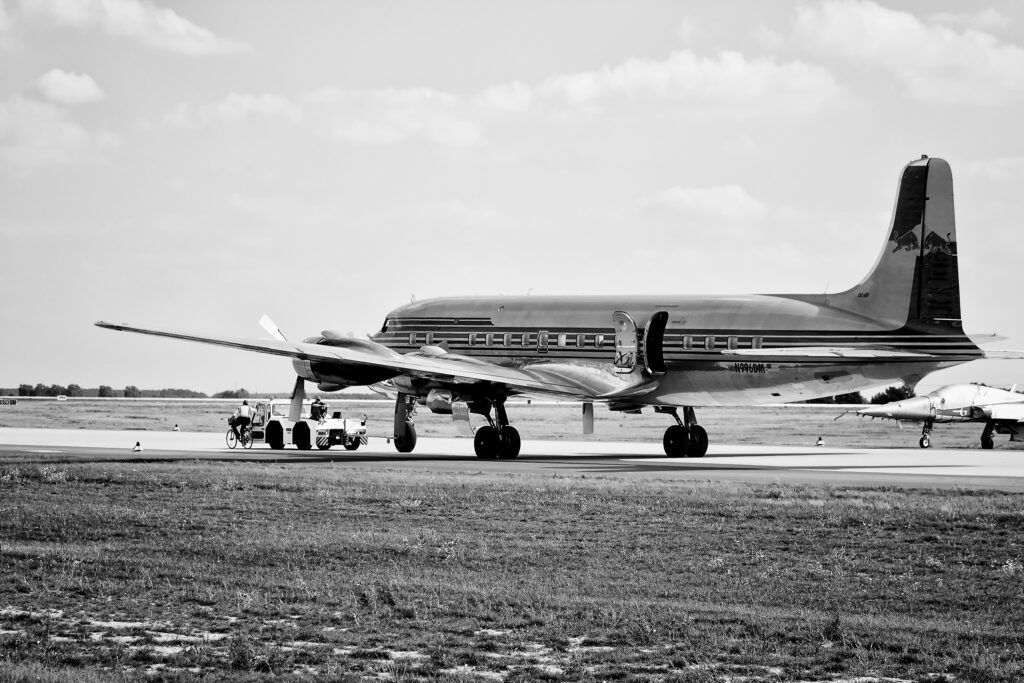
The wreck is far more than a collection of corroded aircraft parts. Photo credit: Sergey Kohl/Shutterstock
A battered luggage tag, a decades-long mystery and the discovery of the wreck that transformed air safety forever. Most people don’t know this but every time you board a plane, fasten your seatbelt or watch cabin crew demonstrate how to use a life jacket, you’re witnessing the legacy of a disaster that happened more than seven decades ago. Now, after 74 years hidden beneath the Caribbean Sea, the wreck of the aircraft that helped change commercial aviation forever has finally been found.
Researchers have located the remains of Pan American World Airways Flight 526A, a Douglas DC-4 known as the ‘Clipper Endeavour’ that plunged into the sea shortly after taking off from San Juan, Puerto Rico, on April 11, 1952. The discovery ends one of aviation’s longest-running mysteries and brings fresh attention to a tragedy that claimed 52 lives while quietly reshaping the way the world flies. It wasn’t just another air crash. It became a turning point.
A routine flight that turned into disaster
Flight 526A had barely left the runway when disaster struck, bound for New York, the aircraft suffered engine trouble shortly after take-off. The crew fought to keep the plane in the air before making the decision every pilot dreads, ditching in open water. The aircraft hit the sea several miles off the Puerto Rican coast. Unlike many aviation disasters, the impact itself was survivable.
But what happened next proved fatal, passengers struggled to find life jackets. Others had no idea how to use them. Life rafts failed to deploy quickly enough as the aircraft began sinking beneath the waves. By the time rescue teams reached the scene, 52 of the 69 people on board had lost their lives. Many of those deaths were later found to have been preventable.
The tragedy that changed aviation forever
Modern airline passengers often tune out the safety briefing before take-off, in 1952, those briefings didn’t exist. The investigation into Flight 526A exposed serious shortcomings in passenger safety. Many people on board had never been shown where life jackets were stored or how to put them on. Emergency equipment was difficult to access, while evacuation procedures varied widely between airlines.
The disaster prompted sweeping changes across commercial aviation. Mandatory pre-flight safety demonstrations became standard practice. Life jackets became easier to locate and use. Emergency equipment was redesigned, while crew training and evacuation procedures were strengthened. Today, millions of passengers hear the same safety instructions before every flight without realising they owe their existence, in part, to lessons learned from a single crash in the Caribbean.
A mystery that refused to disappear
Although the tragedy changed aviation, the aircraft itself was never found. For decades it remained one of the missing pieces of aviation history. Families were left without answers, historians continued searching and the wreck slowly disappeared beneath the sea.
Then came an unexpected clue, in 2019, a weathered Pan American baggage tag linked to Flight 526A washed ashore on a Florida beach. How it travelled hundreds of kilometres after decades underwater remains uncertain, but the discovery renewed interest in the case and helped launch a fresh effort to find the missing aircraft. What had been considered a lost chapter of aviation history suddenly had a new lead.
The search beneath the sea
The breakthrough came after years of research by the Air/Sea Heritage Foundation, working alongside marine exploration company Deep Sea Vision. Using autonomous underwater technology capable of scanning huge areas of the seabed, researchers searched waters off Puerto Rico where investigators believed the aircraft had come down.
Nearly three-quarters of a century after the crash, the sonar images finally revealed what generations had been unable to find. Resting around 600 metres below the surface lay the scattered remains of Pan Am Flight 526A. For aviation historians, it was the end of a mystery that had lasted longer than many of the people searching for it had been alive.
More than twisted metal
The wreck is far more than a collection of corroded aircraft parts. For relatives of those who never returned home, it represents the final resting place of loved ones whose story remained unfinished for more than seven decades. For investigators, it offers an opportunity to compare historical records with the physical evidence left on the seabed.
For the aviation industry, it serves as a reminder that many of today’s safety procedures were written in response to tragedies that cost real lives. Every emergency exit demonstration, every life jacket stored beneath a seat and every cabin safety briefing carries echoes of disasters like Flight 526A.
A legacy still flying today
Commercial aviation is now one of the safest forms of transport in the world, thanks in large part to lessons learned from accidents that exposed fatal weaknesses. Many of those improvements have become so routine that passengers barely notice them.The discovery of Flight 526A is a reminder that every safety instruction delivered before take-off has a history behind it.
Seventy-four years after the aircraft disappeared beneath the Caribbean, investigators have finally found the wreck. The passengers never reached New York. But their legacy has travelled much further, every commercial flight that takes to the skies today carries it.
Follow Euro Weekly News on Google News
Get breaking news from Spain, travel updates, and expat stories directly on your Google News feed.
Follow on Google NewsSign up for personalised news
Subscribe to our Euro Weekly News alerts to get the latest stories into your inbox!
By signing up, you will create a Euro Weekly News account if you don't already have one. Review our Privacy Policy for more information about our privacy practices.




Molly Grace
Molly is a British journalist and author who has lived in Spain for over 25 years. With a background in animal welfare, equestrian science, and veterinary nursing, she brings curiosity, humour, and a sharp investigative eye to her work. At Euro Weekly News, Molly explores the intersections of nature, culture, and community - drawing on her deep local knowledge and passion for stories that reflect life in Spain from the ground up.
Comments