“At least we have the Falklands”: Argentina’s World Cup defeat sparks global backlash
By Molly Grace • Published: 22 Jul 2026 • 11:58 • 3 minutes read
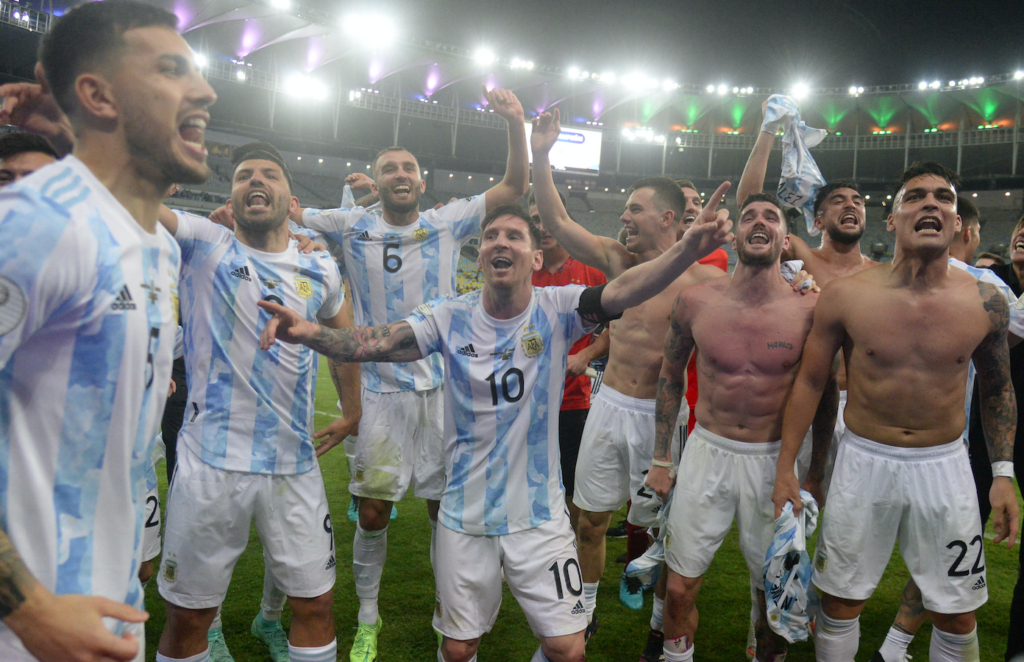
For many Argentina supporters the World Cup is about far more than football. Photo credit: A.RICARDO/Shutterstock
Argentina’s World Cup heartbreak has taken a dramatic turn after Leandro Paredes’ sister sparked an international backlash with a comment that dragged the long-running Falklands dispute back into the spotlight. As Argentina came to terms with missing out on another World Cup triumph, Bárbara Paredes attempted to comfort disappointed supporters with a message of national pride, but her words quickly became the centre of a heated debate.
“We don’t have the fourth star, but at least we have the Falklands,” she said. Within hours, the comment had spread across social media, dividing opinion between those who saw it as a patriotic statement and those who accused her of turning a painful sporting defeat into a political controversy.
A consolation message that sparked outrage
For many Argentinan supporters, the World Cup is about far more than football, the national team represents pride, identity and history, and defeats at major tournaments often produce emotional reactions. But critics argued that invoking the Falkland Islands after a football loss crossed a line and drawn politics into a sporting event.
Some accused Bárbara Paredes of using one of the most sensitive issues in Argentine and British history as a way to soften the disappointment of losing the final. Others went further, describing the remark as “ignorant” and spiteful arguing that a conflict involving centuries of history and the loss of lives should not be reduced to a football consolation. The criticism quickly became as loud as the original comment itself.
Why the Falklands remain such a sensitive issue
The Falkland Islands have been at the centre of a sovereignty dispute between Argentina and the United Kingdom for generations. Argentina claims the islands as its own and refers to them as Las Malvinas, while the United Kingdom maintains that the islanders have the right to decide their own future. The issue became even more deeply entrenched after the 1982 Falklands War, when British and Argentine forces fought for control of the islands.
Hundreds of lives were lost during the conflict, and memories of the war continue to influence attitudes on both sides today. That history is why any public reference to the Falklands can quickly trigger strong reactions.
Football rivalry meets political history
The controversy is another example of how football can become intertwined with national identity. World Cup victories and defeats rarely remain confined to the pitch. They become moments that reflect a country’s emotions, pride and sense of belonging. Argentina has experienced this more than most nations.
The country’s World Cup victories in 1978 and 1986 became defining moments in its history, while the national team’s performances continue to carry huge emotional weight. But this time, the conversation after the final was not about tactics, missed chances or players, it was about a single sentence.
Supporters divided over the remark
While many criticised Bárbara Paredes, others defended her comments, saying they reflected a sentiment shared by many Argentinians. For those supporters, the Falkland Islands are not simply a political issue but a deeply rooted part of national identity.
They argued that her words came from a place of emotion following a painful defeat, rather than an attempt to provoke controversy. However, critics said the timing was the problem. A football match may unite millions, but it can also reopen historic disagreements that remain unresolved decades later.
A controversy that will continue beyond the final whistle
For Leandro Paredes and Argentina’s squad, the World Cup will be remembered for the disappointment of falling extremely short, the lack of shots at goal and the the shocking foul play. But the fallout has created another chapter away from the stadium. A comment intended as comfort for defeated fans has instead reignited a debate that has existed for more than 40 years.
The final whistle ended the match, it did not end the arguments, nad once again, the world’s biggest sporting event has shown that football is rarely just about football.
Follow Euro Weekly News on Google News
Get breaking news from Spain, travel updates, and expat stories directly on your Google News feed.
Follow on Google NewsSign up for personalised news
Subscribe to our Euro Weekly News alerts to get the latest stories into your inbox!
By signing up, you will create a Euro Weekly News account if you don't already have one. Review our Privacy Policy for more information about our privacy practices.



Molly Grace
Molly is a British journalist and author who has lived in Spain for over 25 years. With a background in animal welfare, equestrian science, and veterinary nursing, she brings curiosity, humour, and a sharp investigative eye to her work. At Euro Weekly News, Molly explores the intersections of nature, culture, and community - drawing on her deep local knowledge and passion for stories that reflect life in Spain from the ground up.
Comments
Capt
22 July 2026 • 13:14The FALKLANDS were always Argentina’s island given the British empire sought to like many invaders take what was not theirs to take. Typical British to invade a land unlike Ireland the irish kick their asses! out fo Ireland