Spanish taxi driver hit with first £300 fine for working in Gibraltar under new treaty: What drivers are allowed?
By Adam Woodward • Published: 24 Jul 2026 • 15:34 • 2 minutes read
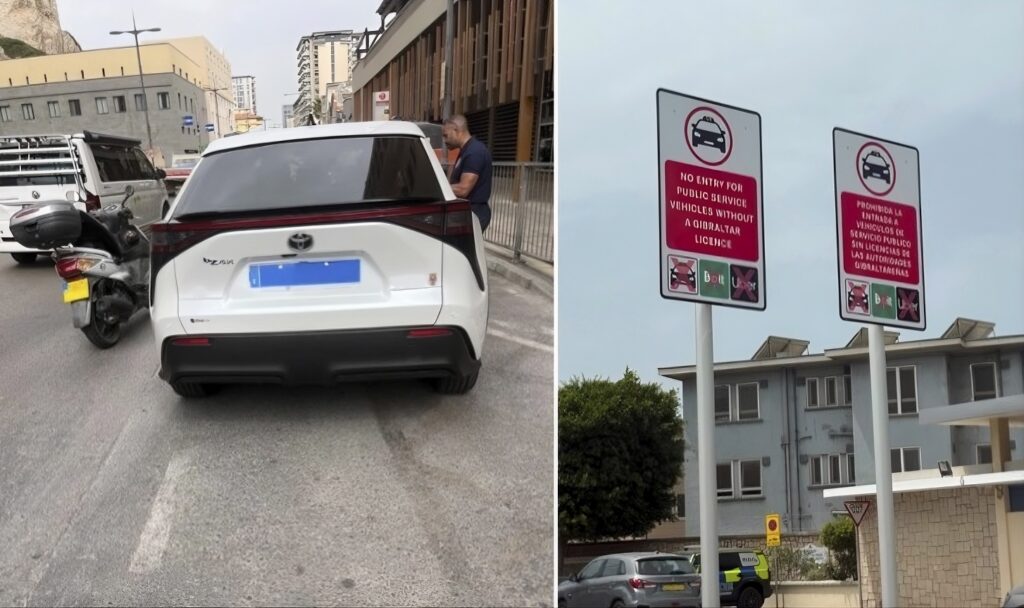
Taxi pinched for taking ride in Gibraltar terrotory. Credit: gibraltar.gov
Spanish taxi drivers now face real penalties if they try to pick up fares on the Rock. Gibraltar’s Ministry of Transport has issued the first fixed penalty notice since the new UK-EU treaty took effect, handing a Spanish driver a £300 fine for operating without a local licence.
Transport inspectors stopped the marked Spanish taxi on Devil’s Tower Road. Officers told the driver he was breaking the rules by using a motor vehicle as a public service vehicle without the road service licence granted by Gibraltar’s Transport Commission. The £300 fixed penalty was issued on the spot.
New rules on Gibraltar/Spain pact not clear to everyone
Royal Gibraltar Police and Transport Inspectors have been working the border ever since the treaty arrangements began. Their job is to stop Spanish taxis and private-hire vehicles , such as chofer-driven cars, from entering and to send them straight back to Spain. Signs already warn drivers that Spanish cabs are not allowed across. For those wanting a taxi ride into Gibraltar, the taxi has to stop at the border, and you have to get a Gibraltarian taxi to take you onto your destination, if you can actually find one!
EU-UK agreement rules do not cover cross-frontier taxi or private-hire services. Gibraltar’s government says it will keep enforcing the existing laws so that only locally licensed taxis work on the Rock and residents get the service they expect. Officials are also looking at raising the fine for this offence.
Gibraltar keeping soverainty over taxis
Local taxi drivers have welcomed the action. Many feared cheaper Spanish operators would undercut them once routine border checks disappeared. Authorities stress that passenger safety remains the top priority while they work to improve the local service.
Private cars registered in Spain can still cross freely for personal use. Commercial activity is a different matter. Anyone thinking of running a Spanish taxi, private-hire car or delivery service into Gibraltar risks the same kind of fines.
What drivers are allowed?
Practical transport rules for Gibraltar today
Gibraltar officials say the focus remains on protecting local operators and keeping standards high. Drivers who ignore the warnings can expect more stop-checks and higher penalties in the weeks ahead. Anyone planning to travel between Spain and Gibraltar by car or van should stick to personal use only if the vehicle is Spanish-registered and not licensed for hire or reward on the Rock.
Follow Euro Weekly News on Google News
Get breaking news from Spain, travel updates, and expat stories directly on your Google News feed.
Follow on Google NewsSign up for personalised news
Subscribe to our Euro Weekly News alerts to get the latest stories into your inbox!
By signing up, you will create a Euro Weekly News account if you don't already have one. Review our Privacy Policy for more information about our privacy practices.





Adam Woodward
Adam is a writer who has lived in Spain for over 25 years. With a background in English teaching and a passion for music, food, and the arts, he brings a rich personal perspective to his work at Euro Weekly News. As a father of three with deep roots in Spanish life, Adam writes engaging stories that explore culture, lifestyle, and the everyday experiences that shape communities across Spain.
Comments