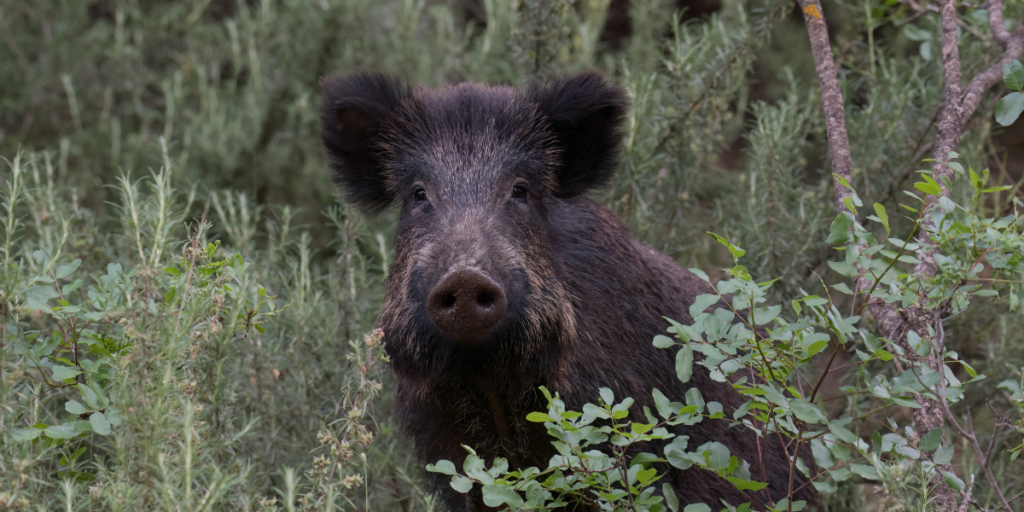
At first glance, a wild boar wandering through a Spanish neighbourhood or trotting along a beach can seem almost charming. Videos of families of striped piglets crossing roads or rooting around parks regularly go viral, with many people stopping to take photographs or even attempting to feed them.
But wildlife experts say that adorable appearance hides a much harsher reality.
Spain’s wild boar population has grown dramatically in recent years, and the animals are now appearing in urban areas with increasing frequency. Besides causing traffic accidents and damaging gardens, they can also carry diseases that affect humans, pets and livestock. New research from Málaga has highlighted just how important that risk may be.
Study uncovers infectious disease risk
Veterinarians in Málaga have been analysing around 80 wild boars and feral pigs that were captured after entering urban areas and residential neighbourhoods. Preliminary findings revealed a high prevalence of antibodies linked to hepatitis E, a virus that can infect people and is commonly spread through contaminated food or contact with infected faeces. Researchers are also screening the animals for numerous other bacteria, parasites and viruses capable of causing disease.
Experts stress that the greatest concern is not simply eating wild boar meat, which is subject to inspection when legally sourced, but the increasing contact between these animals and people in parks, streets and public spaces where contamination from faeces becomes possible.
Where are wild boars found in Spain?
Wild boars live throughout much of mainland Spain and are especially common in Andalucía, Catalonia, Aragón, Castilla y León, Extremadura, Galicia and parts of the Valencian Community.
However, they are no longer confined to forests.
Sightings have become increasingly common around Málaga, Marbella, Benahavís and other Costa del Sol towns, while they regularly appear on the outskirts of Barcelona, Madrid and numerous smaller municipalities. Holidaymakers have even spotted them wandering across beaches, golf courses, campsites and supermarket car parks in search of food.
Their growing confidence around humans is largely driven by easy access to rubbish bins, discarded food and deliberate feeding by well-meaning residents.
Why they are more dangerous than they look
Despite their stocky appearance, wild boars are surprisingly fast and powerful. Adults can weigh well over 100 kilograms and are capable of sprinting at speeds approaching 50km/h.
Although they generally avoid people, they can become aggressive if cornered, frightened or protecting their young. Females with piglets are particularly defensive, while males possess sharp tusks capable of causing serious injuries.
Road safety is another major concern. Collisions involving wild boars have risen across Spain as animals venture onto roads at dawn, dusk and during the night, often appearing with little warning.
Veterinarians also warn that wild boars can act as reservoirs for diseases affecting domestic pigs, hunting dogs and wildlife, while some infections may also pose a risk to humans.
What should you do if one approaches?
Wildlife experts recommend staying calm and giving the animal plenty of space.
Do not feed it, try to touch it or attempt to take a close-up selfie. Feeding encourages boars to lose their natural fear of humans, increasing the likelihood of future encounters.
If a boar approaches, slowly back away without making sudden movements. Keep dogs on a short lead, as barking pets can provoke defensive behaviour. Never get between a mother and her piglets, and if the animal shows signs of aggression, move behind a solid barrier such as a parked car, fence or building.
If you encounter an injured or unusually aggressive boar in an urban area, contact the local police or emergency services rather than trying to deal with it yourself.
Learning to live alongside wildlife
Experts say wild boars are an important part of Spain’s natural ecosystems, helping disperse seeds and recycle nutrients through woodland habitats.
The challenge comes when expanding towns, plentiful food waste and shrinking natural spaces encourage them into areas heavily used by people.
That is why authorities continue to urge residents and visitors to secure rubbish, avoid feeding wildlife and respect the animals from a safe distance.
They may look irresistibly cute from afar, but Spain’s wild boars are still wild animals, and the safest encounter is always one viewed from a respectful distance.



Lottie Verrier
Lottie Verrier is a journalist and digital media specialist based in Mallorca. After a decade in London media, including a role as Deputy Editor for the MailOnline’s eCommerce division, she now combines her editorial expertise with a passion for the island to create engaging content that celebrates the best of life in Spain. Instagram @lottieinmallorca
Comments