How to stay safe if you meet a wild boar while walking or driving
By Santiago Carneri • Updated: 29 Sep 2025 • 15:50 • 1 minute read
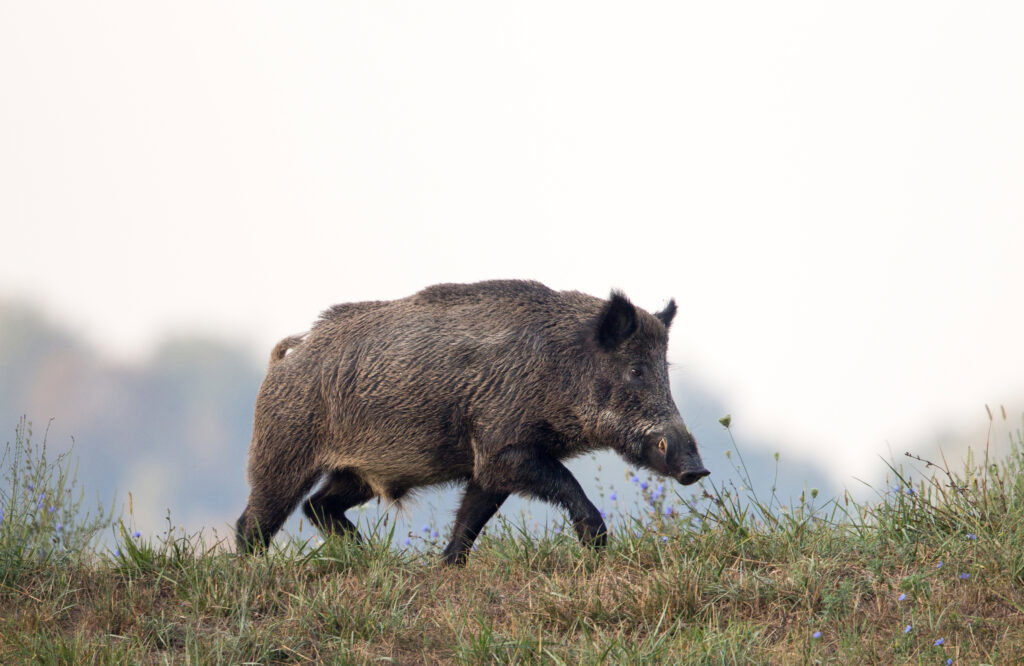
The surge in wild boar numbers is linked to a mix of ecological, social and urban factors. Credit: Budimir Jevtic / Shutterstock.com
Wild boars are becoming an increasingly common sight in urban areas across Spain. Towns such as Denia, Javea, Calpe, Pego, El Verger and Els Poblets are among the most affected, with these wild animals no longer sticking to forests. Streets, beaches and even homes are now on their route, leaving locals feeling uneasy. With tourism down, the boars’ presence is even more noticeable.
This isn’t a new problem. The surge in wild boar numbers is linked to a mix of ecological, social and urban factors.
To tackle the issue, the Generalitat Valenciana has introduced a decree with guidelines on population control and wildlife management, alongside financial support for local councils to strengthen their own strategies.
What to do if you encounter a wild boar
Keep your distance – don’t touch or corner them.
Warning signs of a possible attack: hair standing on end along the back and a cracking sound like nuts being bitten.
Never feed them.
If driving, stay calm: keep your eyes open, avoid honking, and don’t flash your lights.
Keep campsites and trails clean, as food scraps attract them.
Authorities’ role
The Police and Guardia Civil are responsible for managing the situation, usually by guiding the animals back to their natural habitats. Each municipality has its own protocols depending on the severity of the problem.
Why wild boars are booming
No natural predators: The disappearance of foxes, genets and eagles has helped them multiply.
High reproductive rate: A female can have up to eight piglets per litter.
Milder winters: Climate change means more adults and young survive.
Damage to crops: They ruin fields, orchards and irrigation systems, causing economic losses.
Urban incursions: Their lack of fear of humans brings them into gardens, terraces and streets.
Population control measures include capture cages and studies into sterilisation. Experts agree that long-term solutions require an integrated approach combining population management, public education and urban planning.
Stay tuned with Euro Weekly News for the latest news about Europe and Costa Blanca.
Follow Euro Weekly News on Google News
Get breaking news from Spain, travel updates, and expat stories directly on your Google News feed.
Follow on Google NewsSign up for personalised news
Subscribe to our Euro Weekly News alerts to get the latest stories into your inbox!
By signing up, you will create a Euro Weekly News account if you don't already have one. Review our Privacy Policy for more information about our privacy practices.


Santiago Carneri
Santiago is a freelance journalist, writer, photographer, and documentary producer with over a decade of experience reporting from Paraguay and Brazil. His work has appeared in The New York Times, The Guardian, Vice News, BBC, Associated Press, France Press, Der Spiegel, Deutsche Welle, El País, and more. Now based in Dénia—his self-described secret paradise—Santi contributes to Euro Weekly News, bringing a global perspective to both local and international stories. Outside of journalism, he enjoys boxing and cultivating his home garden.
Comments