120 people stung in one day! Portuguese Man o’ War jellyfish attacks shut down San Sebastián beaches
By Lottie Verrier • Updated: 08 Aug 2026 • 11:37 • 2 minutes read
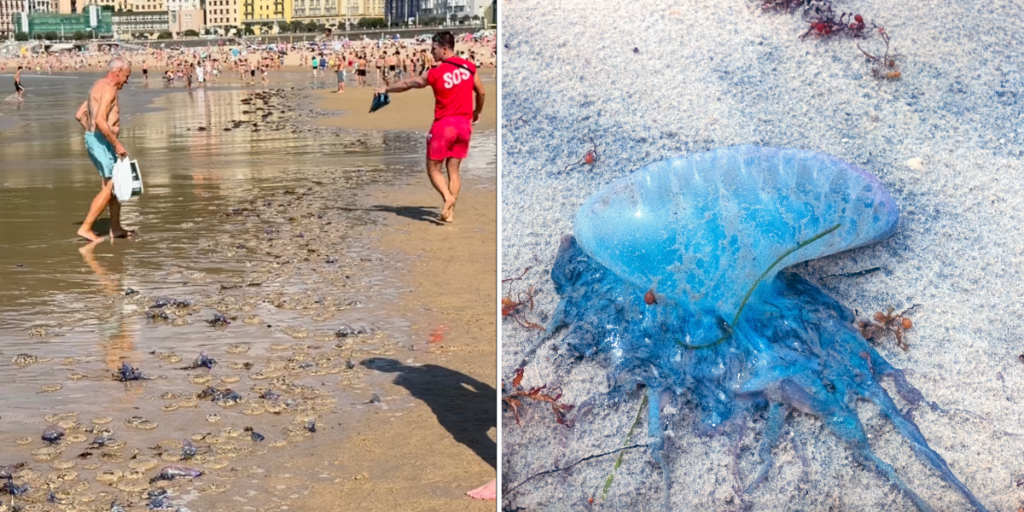
120 people stung in one day after jellyfish invasion Credit: Instagram/Ivancl_ & Shutterstock/briannadignard
Beachgoers on Spain’s northern coast have been warned to stay out of the water after a sudden influx of Portuguese man o’ war forced the temporary closure of several popular beaches and left more than 120 people needing treatment for stings in a single day.
The marine creatures, often mistaken for jellyfish but considerably more dangerous, have washed ashore across Gipuzkoa, prompting lifeguards to raise red flags and restrict swimming at some of the region’s busiest beaches.
Authorities say the situation has been driven by persistent north-easterly winds combined with unusually warm sea temperatures, creating ideal conditions for the organisms to drift towards the coastline.
More than 120 stings reported
San Sebastián has been among the worst affected areas. On Tuesday August 4, lifeguards recorded around 120 sting incidents across the city’s beaches, although officials stressed that the overwhelming majority were minor.
The most serious cases occurred earlier in the week, including a regular swimmer who was taken to hospital after reportedly being stung several times while swimming near Getaria. Another woman also required ambulance treatment following a sting at Zarautz.
Elsewhere, lifeguards responded to numerous incidents at beaches including Zurriola, Mutriku and Zumaia, although most victims were treated on site and did not require hospital care.
Popular beaches temporarily closed
As the number of Portuguese man o’ war increased, authorities temporarily prohibited bathing at San Sebastián’s famous La Concha, Ondarreta and Zurriola beaches.
In some locations, sections of beach were able to remain open where no specimens had been spotted, but restrictions changed throughout the day as lifeguards monitored conditions.
Officials emphasised that closures are introduced only when the risk becomes significant, with decisions based on the number, size and location of the marine creatures, together with advice from rescue teams. Beaches can reopen quickly if conditions improve.
Why they have arrived
Experts believe the recent invasion has been caused by a combination of favourable winds and warmer-than-average coastal waters.
Sea temperatures along the Gipuzkoa coastline have been hovering at around 24.8C, helping these floating colonies survive as they are carried closer to shore.
Authorities also noted that larger specimens have begun appearing in recent days, increasing concern because bigger Portuguese man o’ war generally carry longer tentacles capable of delivering more painful stings.
What to do if you see one
Health officials are reminding beach users never to touch a Portuguese man o’ war, even if it appears dead on the sand. Its tentacles can remain venomous long after the animal has washed ashore.
Anyone stung should leave the water immediately and seek assistance from the nearest lifeguard. The affected area should be rinsed with seawater rather than fresh water, which can worsen the sting, and cold packs may help reduce pain while waiting for medical advice.
Visitors are also urged to pay close attention to beach flags and follow instructions from lifeguards, as conditions can change rapidly throughout the day depending on tides, wind and the movement of the organisms.
Follow Euro Weekly News on Google News
Get breaking news from Spain, travel updates, and expat stories directly on your Google News feed.
Follow on Google NewsSign up for personalised news
Subscribe to our Euro Weekly News alerts to get the latest stories into your inbox!
By signing up, you will create a Euro Weekly News account if you don't already have one. Review our Privacy Policy for more information about our privacy practices.





Lottie Verrier
Lottie Verrier is a journalist and digital media specialist based in Mallorca. After a decade in London media, including a role as Deputy Editor for the MailOnline’s eCommerce division, she now combines her editorial expertise with a passion for the island to create engaging content that celebrates the best of life in Spain. Instagram @lottieinmallorca
Comments