Biologist reveals extraordinary theory behind Spain’s mysterious orca encounters
By Molly Grace • Updated: 06 Aug 2026 • 23:00 • 3 minutes read
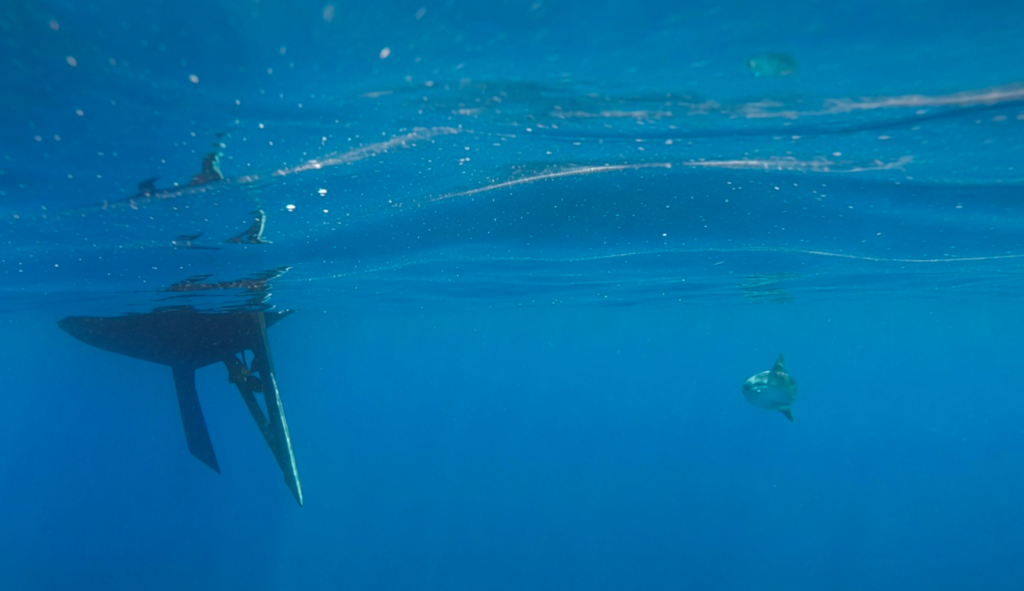
The hull of a boat or a tuna fish? Photo credit: Pelagics Conservation
For sailors crossing the waters between Spain and Portugal, the fear is not only rough seas, changing weather or mechanical problems. In recent years, a different kind of encounter has left crews facing damaged boats, disrupted journeys and one question that has captured worldwide attention: why are a small pod of orca repeatedly targeting sailing boat rudders?
The mysterious behaviour has left scientists searching for answers and sailors wondering what is happening beneath the waves. The animals involved are not an entire population of orcas, but a specific group of Iberian orcas known as the Gladis, whose interactions with vessels have created one of the most unusual marine stories of recent years.
Since 2020, the Gladis have been involved in repeated encounters with sailing boats off the coasts of Spain and Portugal. While some incidents have resulted in serious damage to rudders, the reason behind the behaviour remains unclear, with theories ranging from play and curiosity to social learning between members of the group. Now, Fernando López Mirones, a Spanish biologist, Screen writer and author of Spania, el secreto de las orcas, believes he may have found a possible explanation.
Could the Orca be practising how to hunt tuna?
Fernando’s theory links the unusual encounters to one of the most important animals in the lives of Iberian orcas: the Atlantic bluefin tuna. The waters around the Iberian Peninsula are home to orcas that have developed specialised hunting skills for catching these powerful fish. For Fernando, the answer to the rudder mystery may lie in the way these intelligent predators learn and pass knowledge between generations.
He believes that, when viewed from below the surface, the shape and movement of a sailing boat’s rudder may resemble part of a large marine creature such as a whale or tuna. However, Fernando does not suggest that the pod are simply mistaking boats for prey. Instead, his theory is that the orcas recognise the object is not a tuna but may be using it as a substitute during a form of hunting practice.
The idea is that younger members of the group could be learning through interaction, using the rudder as a kind of training object while developing skills connected to hunting. For a species as socially complex as the orca, learning is a vital part of survival. Hunting techniques are not only instinctive, they are taught.

Orcas have their own cultures
Orcas are among the most intelligent animals in the ocean, with family groups developing their own traditions, communication patterns and hunting strategies. Different populations around the world specialise in catching different types of prey, and these methods are often passed down from older animals to younger generations.
A young orca does not simply know how to hunt. It watches, copies and learns from the experienced members of its family group. This is one of the reasons Fernando believes the behaviour of the Gladis could be connected to hunting practice rather than aggression towards humans.
The relationship between Iberian orcas and Atlantic bluefin tuna goes back thousands of years. These whales have developed specific techniques for pursuing and capturing the fast-moving fish, making learning within the group especially important. If Fernando’s theory is correct, the boat rudders could unintentionally be providing an opportunity for the animals to rehearse movements associated with their natural hunting behaviour.
Scientists are still trying to solve the mystery
Although Fernando’s explanation is one possible theory, there is currently no confirmed answer for why the Gladis interact with boats. Researchers studying the behaviour have suggested several explanations, including curiosity, play and social learning. The fact that the behaviour appears to have spread among a small number of individuals has led many experts to consider the role of cultural transmission.
In other words, one animal’s behaviour may be copied by others within the group. This would not be unusual for orcas, which are known for their ability to learn from each other and develop group-specific behaviours. The idea that the Gladis are using rudders as practice targets remains unproven, but it highlights the remarkable intelligence of these marine mammals and the complexity of their social lives.
A frightening experience for sailors, a fascinating discovery for science
For sailors who have encountered the Gladis, the experience can be frightening. A damaged rudder can leave a boat unable to steer and create a serious problem far from shore. However, the encounters also offer scientists a rare opportunity to study how intelligent animals behave, learn and adapt.
What appears from the surface to be an attack may have a much more complicated explanation beneath the waves. Fernando’s theory suggests that the behaviour could be connected to the ancient relationship between Iberian orcas and tuna, revealing a possible link between modern sailing boats and traditional hunting behaviours passed down through generations.
Whether future research confirms this explanation or discovers another reason, the Gladis continue to challenge what humans understand about orca. Their actions have created concern among sailors, but they have also opened a window into the hidden world of one of the ocean’s most intelligent predators, a world built on communication, memory and learning.
Follow Euro Weekly News on Google News
Get breaking news from Spain, travel updates, and expat stories directly on your Google News feed.
Follow on Google NewsSign up for personalised news
Subscribe to our Euro Weekly News alerts to get the latest stories into your inbox!
By signing up, you will create a Euro Weekly News account if you don't already have one. Review our Privacy Policy for more information about our privacy practices.



Molly Grace
Molly is a British journalist and author who has lived in Spain for over 25 years. With a background in animal welfare, equestrian science, and veterinary nursing, she brings curiosity, humour, and a sharp investigative eye to her work. At Euro Weekly News, Molly explores the intersections of nature, culture, and community - drawing on her deep local knowledge and passion for stories that reflect life in Spain from the ground up.
Comments