Costa Blanca swimmers are using this free app to check for jellyfish before hitting the beach
By Lottie Verrier • Published: 11 Aug 2026 • 12:45 • 2 minutes read
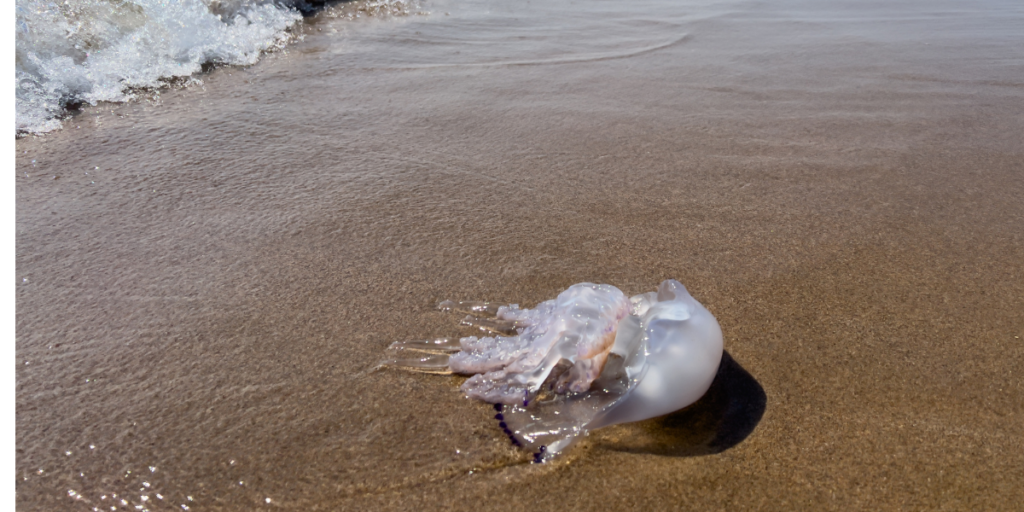
Free app to check for jellyfish developed in Valencia Credit: Shutterstock/Alberto Gonzalez
That sinking feeling when you reach the beach and discover jellyfish have beaten you to the water could become easier to avoid thanks to a Spanish-developed app being used by swimmers around the world.
MedusApp allows beachgoers to check recent jellyfish sightings before heading into the sea, with its interactive map particularly useful along Spain’s Mediterranean coastline, including the Costa Blanca.
Developed by researchers from the University of Alicante and the Polytechnic University of Valencia, the free citizen-science project has its roots firmly in this corner of Spain. However, it is not restricted to the Costa Blanca, or even the country.
The platform can receive geolocated reports internationally and has evolved from its original Mediterranean focus into a tool used much further afield.
Check before you swim
For Costa Blanca residents and holidaymakers, the concept is simple.
Users can open the app and explore recent reports submitted around the coastline, including sightings near popular destinations such as Javea, Dénia, Calpe and Moraira when data has been logged there.
Rather than relying exclusively on official monitoring, MedusApp harnesses information provided by ordinary swimmers, sailors and other sea users.
Beachgoers who spot a jellyfish can submit its location and photograph, while people can also record occasions when they have seen no jellyfish.
According to University of Alicante ecology professor César Bordehore, around 99 per cent of the information gathered by the platform comes from members of the public.
From Spain to worldwide
Although its origins and much of its activity are closely associated with Spain and the Mediterranean, MedusApp has grown beyond those boundaries.
The platform accepts sightings from other parts of the world, while its species information has also expanded to cover other coastlines.
That means it is more accurate to describe MedusApp as a Spanish-developed international citizen-science project rather than simply a Costa Blanca jellyfish app.
Its home-grown credentials nevertheless make it particularly relevant to local beachgoers, with the University of Alicante among the institutions behind the technology.
AI identifies jellyfish
The app offers more than a map of recent encounters.
Users can upload photographs to help identify what they have found, with artificial intelligence assisting in species recognition. Information within the app also explains different types of jellyfish and the potential severity of their stings.
The data collected has a scientific purpose too, providing researchers with valuable information about jellyfish distribution and changes in marine ecosystems.
Recent reports have highlighted the fried egg jellyfish, Cotylorhiza tuberculata, among frequently spotted species. Despite its dramatic appearance, its sting is generally considered much less troublesome than that of the mauve stinger, Pelagia noctiluca.
App cannot replace lifeguards
While checking MedusApp before leaving home could provide a useful indication of recent activity, crowdsourced reports cannot guarantee that a beach will be jellyfish-free.
Conditions can change and jellyfish move with currents, meaning official beach warnings remain crucial.
Swimmers should always obey beach flags, signage and lifeguard instructions. Jellyfish should never be touched, including specimens washed onto the sand, as their tentacles may still sting.
So before packing the towels and heading for the Costa Blanca coastline this summer, checking MedusApp could be one more useful addition to the beach-day routine.
Follow Euro Weekly News on Google News
Get breaking news from Spain, travel updates, and expat stories directly on your Google News feed.
Follow on Google NewsSign up for personalised news
Subscribe to our Euro Weekly News alerts to get the latest stories into your inbox!
By signing up, you will create a Euro Weekly News account if you don't already have one. Review our Privacy Policy for more information about our privacy practices.





Lottie Verrier
Lottie Verrier is a journalist and digital media specialist based in Mallorca. After a decade in London media, including a role as Deputy Editor for the MailOnline’s eCommerce division, she now combines her editorial expertise with a passion for the island to create engaging content that celebrates the best of life in Spain. Instagram @lottieinmallorca
Comments