Jellyfish surge hits Mallorca’s waters as beachgoers warned to take extra care
By Lottie Verrier • Published: 11 Aug 2026 • 19:07 • 2 minutes read
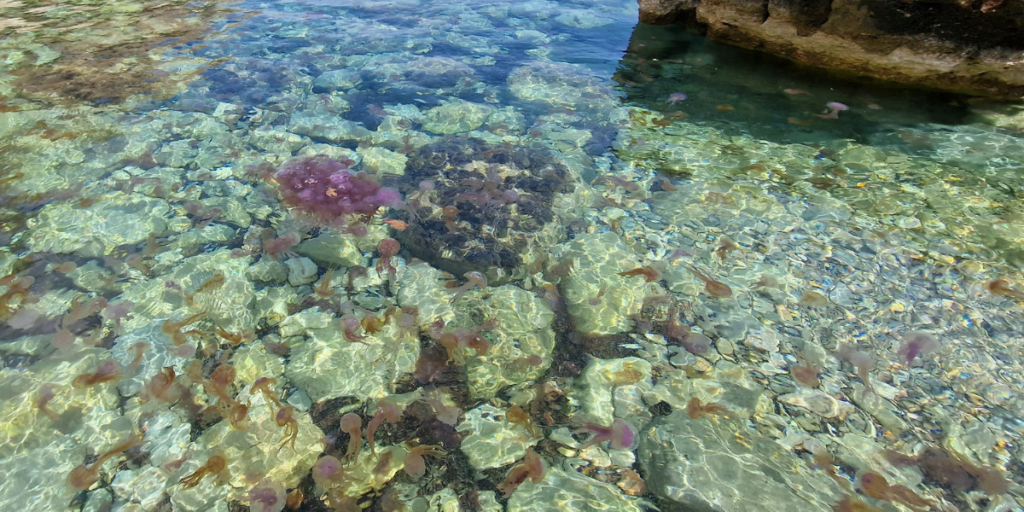
Now this would put a sting in your swim... Credit: Shutterstock/Michaela Holubova
Beachgoers in Mallorca are being urged to keep an eye on the water this August after authorities recorded an increase in jellyfish around the Balearic Islands during the height of the summer season.
The rise was detected by the Balearic Government’s coastal clean-up operation during July, when crews collected around 10 kilograms of jellyfish of different species from bathing areas.
While jellyfish are a familiar summer visitor to Mallorca, their numbers can change dramatically depending on sea temperatures, currents and wind conditions, meaning one beach can be affected while another nearby remains completely clear.
Crucially, no Portuguese man-of-war were detected or collected by the service during July, according to figures reported from the regional coastal operation.
Why are more jellyfish appearing?
Jellyfish sightings around Mallorca are not unusual during the warmer months, particularly between July and September.
Their arrival close to beaches is strongly influenced by conditions at sea. Currents can push jellyfish towards the coastline, while winds and rising water temperatures can also affect where concentrations develop.
Some of the species found around the Balearics are relatively harmless, while others can deliver painful stings.
Among those regularly reported in the region is the Pelagia noctiluca, sometimes called the mauve stinger, which can cause a painful reaction. Other Mediterranean species include the distinctive fried egg jellyfish, Cotylorhiza tuberculata, and the barrel jellyfish, Rhizostoma pulmo.
Beach conditions can change quickly, however, so swimmers are advised to pay attention to warning flags and information provided by lifeguards rather than assuming conditions will be the same throughout the day.
Mallorca tops clean-up figures
The jellyfish findings emerged as part of a much wider operation to remove rubbish and debris from Balearic waters.
During July, the regional coastal clean-up service removed approximately 7.1 tonnes of waste from the sea and coastline.
Mallorca accounted for the largest share, with around 3.4 tonnes, compared with 1.8 tonnes in Menorca, 1.4 tonnes in Ibiza and 388 kilograms in Formentera.
A fleet of 23 vessels was involved, including 15 boats operating around beaches and eight covering coastal waters.
Plastic remained the biggest problem, accounting for more than 48 per cent of everything collected, while wood represented almost 33 per cent. Vegetation, organic material and other rubbish made up the remainder.
Crews encountered considerably larger objects too. In Mallorca alone, workers recovered an engine, a chair and several logs, while assistance was also given to three vessels that had been left adrift.
What to do if stung
Anyone heading into the sea should avoid touching jellyfish, including specimens washed onto the sand, as tentacles can potentially remain capable of stinging.
If a sting occurs, guidance recommends leaving the water and not rubbing the affected area. The skin should be rinsed with seawater or saline rather than fresh water, while visible tentacle fragments can be carefully removed without touching them directly.
Cold wrapped in a cloth can then be applied to the affected area. Beachgoers should seek help from lifeguards where available.
More serious symptoms, including breathing difficulties, dizziness, severe pain or a significant allergic reaction, require urgent medical attention.
Check before taking a dip
For holidaymakers and residents, the increase does not mean Mallorca’s beaches are suddenly off limits.
Jellyfish often arrive in localised groups and their presence can change rapidly as winds and currents shift. Most encounters are temporary rather than island-wide events.
The Balearic coastal clean-up campaign will remain active until September 30, continuing to patrol beaches and coastal waters during the busiest part of the tourism season.
With August temperatures sending thousands of people into the Mediterranean every day, the simplest advice is to check the beach flags, listen to lifeguards and take a quick look at the water before diving in.
Follow Euro Weekly News on Google News
Get breaking news from Spain, travel updates, and expat stories directly on your Google News feed.
Follow on Google NewsSign up for personalised news
Subscribe to our Euro Weekly News alerts to get the latest stories into your inbox!
By signing up, you will create a Euro Weekly News account if you don't already have one. Review our Privacy Policy for more information about our privacy practices.



Lottie Verrier
Lottie Verrier is a journalist and digital media specialist based in Mallorca. After a decade in London media, including a role as Deputy Editor for the MailOnline’s eCommerce division, she now combines her editorial expertise with a passion for the island to create engaging content that celebrates the best of life in Spain. Instagram @lottieinmallorca
Comments