Dr Google is seeing you now: The real risks of online self-diagnosis
By Dr Marcus Stephan • Published: 12 Aug 2026 • 9:00 • 5 minutes read
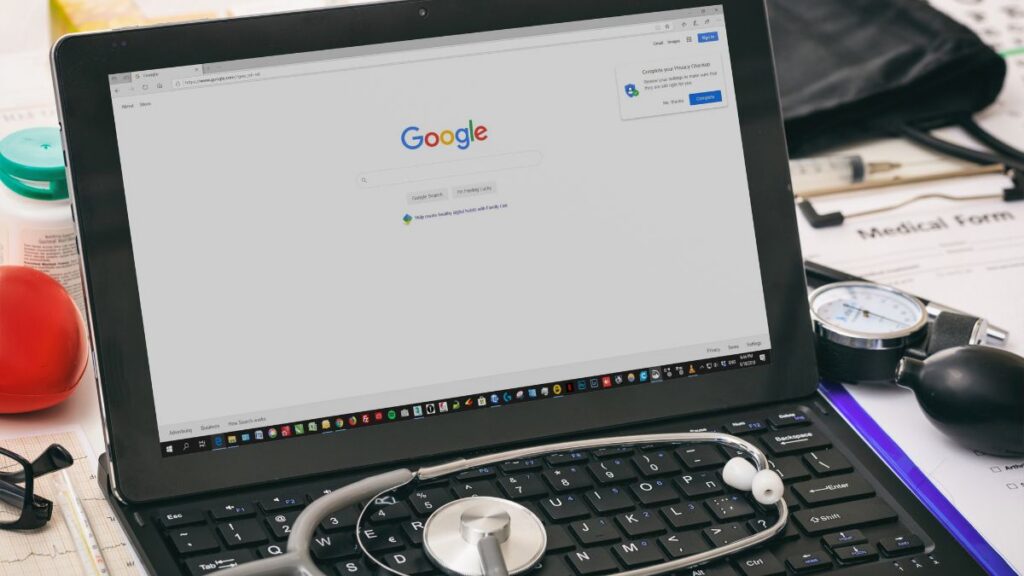
Searching symptoms on Google may seem quick and convenient, but search algorithms can't replace a real doctor's clinical evaluation. Credit: rawf8 / Shutterstock.com
Searching health symptoms online has become second nature for millions, offering instant access to vast medical information. However, relying on search engines to self-diagnose often converts minor ailments into severe health anxiety – a phenomenon known as cyberchondria. While searching online can educate patients on general wellness, algorithms lack the clinical nuance, contextual questioning, and pattern-recognition skills of a qualified medical professional.
We’ve all done it.
You wake up with a headache, a sore throat or a mysterious ache in your shoulder. Rather than making an appointment with your doctor, you pick up your phone and type a few words into Google*.
Five minutes later, you’re convinced you’ve got an incurable neurological disease, three forms of cancer and perhaps something so rare that only six people in the world have ever had it – and you’ve got it!
Welcome to the wonderful – and occasionally terrifying – world of Dr Google.
The benefits and pitfalls of online health information
The internet has changed our lives beyond recognition. Never before has so much medical information been available to so many people at the touch of a button. That’s a fantastic thing. We can learn about healthy eating, understand why our blood pressure matters, read about diabetes, heart disease or arthritis, and become much better informed patients.
The trouble starts when information turns into diagnosis.
Google is brilliant at finding information. It is hopeless at telling you what’s actually wrong with you.
Why algorithms can’t replace clinical questions
Imagine walking into a doctor’s surgery and saying, “I’ve got a headache.”
The doctor doesn’t immediately reply, “Brain tumour.”
Instead, they start asking questions.
Where exactly does it hurt? How long have you had it? Have you been under stress? Do you wear glasses? Have you hit your head? Are you sensitive to light? Do you have a fever? What medications are you taking? Do you have high blood pressure?
Within a few minutes, they’ve built up a picture that Google simply can’t.
Medicine as detective work: Symptoms are clues, not answers
Medicine is a bit like detective work. Symptoms are clues, not answers.
Take tiredness, for example. Almost everyone feels tired from time to time. Perhaps you’re not sleeping well. Maybe work is stressful or you’ve been burning the candle at both ends.
But tiredness can also be caused by anaemia, diabetes, thyroid problems, heart disease, depression, sleep apnoea, vitamin deficiencies and dozens of other conditions.
The symptom is the same. The cause can be completely different.
That’s why doctors spend years learning not just diseases, but how to recognise patterns.
Search engines don’t recognise patterns. They recognise keywords.
Cyberchondria and the cycle of health anxiety
Unfortunately, they also have another bad habit.
They love drama.
If you search for “headache”, the internet doesn’t usually tell you that you’re dehydrated after spending the afternoon on the beach, with a few beers. It quickly points you towards meningitis, aneurysms and brain tumours.
Now, those conditions certainly exist and they can be very serious. But they are also relatively uncommon. Most headaches are caused by far less sinister problems.
The internet doesn’t always understand probability.
Our brains aren’t very good at it either.
Psychologists even have a name for what happens next: cyberchondria.
The more you search, the more anxious you become.
The more anxious you become, the more physical symptoms you notice.
Your heart starts racing because you’re worried. You Google the racing heart and discover pages discussing dangerous heart rhythms. Suddenly you’re even more anxious, your heart beats faster still and before long you’ve convinced yourself you’re having a medical emergency.
It’s a vicious circle that many people unknowingly create for themselves.
The dangers of false reassurance and delayed care
But there’s another danger that’s arguably even more serious.
False reassurance.
Not everyone who searches the internet assumes they’re dying.
Some people do exactly the opposite.
“It’s only indigestion.”
“It’s just stress.”
“It’ll go away.”
Sometimes they’re absolutely right.
Sometimes they’re dangerously wrong.
Every year, people delay seeking medical help because they’ve convinced themselves that worrying symptoms aren’t important. Chest pain is dismissed as heartburn. Rectal bleeding is blamed on piles. A changing mole is ignored because it doesn’t hurt.
Doctors often say they’d much rather see ten people whose symptoms turn out to be harmless than miss the one patient whose illness could have been treated much more successfully if diagnosed early.
Social media misinformation and miracle cures
Social media has complicated matters even further.
Health advice now arrives in sixty-second videos from smiling influencers who confidently promise to cure arthritis with exotic herbs, reverse diabetes with miracle drinks or “detox” organs that have absolutely no need of detoxing.
Our bodies already have remarkably effective detoxification systems. They’re called the liver and kidneys.
If they’re working properly, they don’t need help from expensive juices or supplements advertised by someone whose main qualification appears to be owning a ring light and a smartphone.
How to use the internet safely for health research
That isn’t to say all online health advice is bad.
Far from it.
There are excellent websites run by national health services, medical charities, universities and professional organisations. These explain illnesses clearly, describe warning signs and, perhaps most importantly, tell you when you should seek urgent medical advice.
Used sensibly, the internet can help us understand our health and prepare sensible questions for our doctor.
That’s a very different thing from diagnosing ourselves.
The old saying goes, “A little knowledge is a dangerous thing.”
Nowhere is that truer than medicine.
Our bodies are wonderfully complex, and many illnesses share remarkably similar symptoms. Even experienced doctors often need blood tests, X-rays, ECGs or scans before reaching a diagnosis.
If medicine were as simple as typing a few symptoms into a search box, we’d all be doctors after an afternoon on the internet.
Thankfully—or perhaps thankfully not—it doesn’t work like that.
So, by all means use Google to learn. Read about healthy lifestyles. Find out what your medication does. Understand your condition after your doctor has explained it.
But if you’re relying on a search engine to tell you whether that persistent cough, unexplained weight loss or chest discomfort is serious, you’re asking the wrong expert.
Why real medical expertise remains unreplaceable
Google is an extraordinary source of information.
It just isn’t qualified to diagnose you.
And when it comes to your health, the best search result is still a conversation with someone who has spent years learning how to separate the common from the rare, the harmless from the dangerous, and the worrying from the genuinely urgent.
I was reading only today about a stairlift salesman who is promoting a drug normally prescribed for scabies as a ‘cure’ for cancer, because according to him it ‘cured’ his mother. He operates within the social media world, where the number of followers you have almost becomes a quality kitemark. So, this chap has quite a following and people believe him, even though there is not a shred, not even an iota of evidence, that this drug is effective against cancer. Coincidentally, he is also committing a criminal offence by selling prescription drugs without a lawful prescription.
Sometimes, the smartest thing you can do with your smartphone is use it to book an appointment with your doctor instead of opening a search engine.
*By the way, I’m not having a go at Google, that just happens to be my go-to search engine and I think its great, but all search engines operate in the same way.
Follow Euro Weekly News on Google News
Get breaking news from Spain, travel updates, and expat stories directly on your Google News feed.
Follow on Google NewsSign up for personalised news
Subscribe to our Euro Weekly News alerts to get the latest stories into your inbox!
By signing up, you will create a Euro Weekly News account if you don't already have one. Review our Privacy Policy for more information about our privacy practices.





Dr Marcus Stephan
With a career spanning more than 35 years in both the UK and internationally, Dr Marcus' passion lies in empowering individuals through knowledge, enabling them to care for themselves and others. He simplifies the science behind medicine by removing unnecessary jargon, explains common health conditions, and shares updates on the latest advances and developments in medicine.
Comments