I nearly missed my ship on embarkation day. What am I doing wrong?
By Sara Romera • Published: 12 Aug 2026 • 9:54 • 5 minutes read
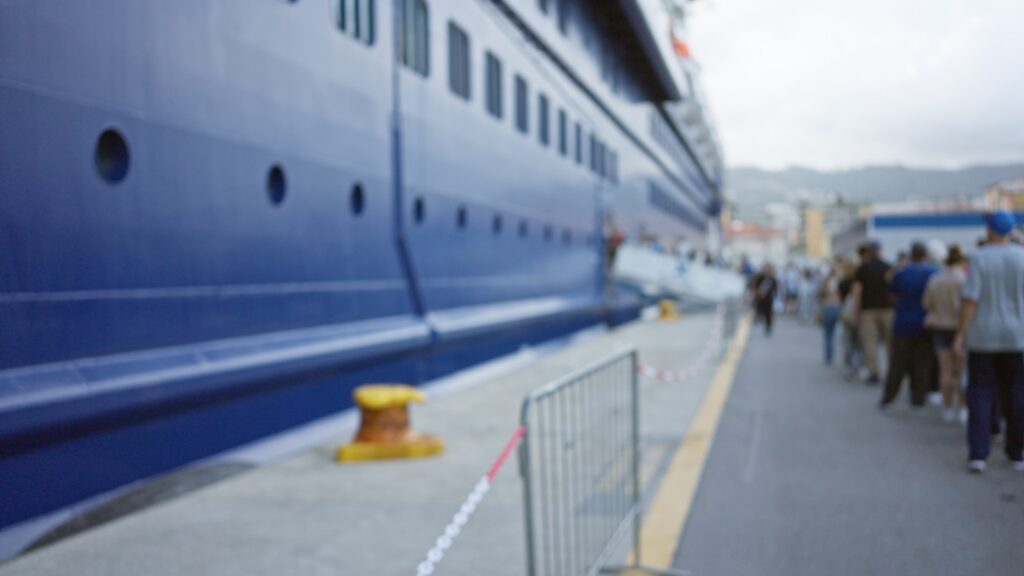
Don’t miss embarkation. Credit: Krakenimages.com/Shutterstock.
Ask the Officer: Your cruise questions answered by a former senior ship’s officer
“I nearly missed my ship on embarkation day and spent the last two days of my cruise worrying about my flight home. What am I doing wrong?”
The answer is buffers, and the crew never skip them.
The calmest passengers I’ve ever watched start their cruise the same unremarkable way: sleep near the port the night before, a hot shower, coffee in a real cup, suitcase by the door. No scrambling, no sprinting through a terminal, no white-knuckle taxi ride to the pier. They arrive the day before embarkation, and it makes everything that follows easier. Rather than indulgence, it’s good seamanship. It’s how crew travel. We cross continents, land late, and still come the night before the ship arrives, because no sailing schedule will pause for a delayed connection. If the cruise line builds that buffer for its own people, build one for yourself.
The night before is not a luxury
Book the hotel. If you have energy, make it a plus: wander out for dinner, a plate of something local, a glass that beads in your hand, a small walk back under city lights you don’t have to rush. If you don’t, shower and sleep. Either way, give yourself that night and small disasters stay small. A delayed bag can catch up. A missed connection becomes a shrug and a late meal, not a ruin. You step on board as a guest, not a casualty of the morning.
There is a particular quiet to waking up slowly the morning you board: walking to the window and, in many port hotels, actually seeing your ship sitting in the harbor, knowing you’re already exactly where you need to be. That feeling is part of what you bought. Guard it.
If same-day arrival is truly unavoidable, know what you’re asking of your luck. Book a nonstop flight. Land by 10:30 a.m., my hard line from years of watching things go wrong at the last minute. Pack all medications, chargers, a change of clothes, and basic toiletries in your carry-on and make peace with the possibility that your checked bag may not find you for days. Don’t chain a tight connection to boarding day, and don’t assume a terminal you’ve never seen will behave like a hotel lobby. Check-in closes well before sail-away, often long before.
The return journey catches more people out
I bumped into Yushin and Hana near the atrium as they were heading back from the gangway on one of our last sea days. I asked how their day ashore had been. Hana smiled briefly, then looked down at the luggage tags in her hand.
“It was great,” Yushin said. “Quick question: do you think we’ll make our flight? We’re kind of worried.”
I knew that look. Good people counting backwards, papers spread out, eyes moving between times that don’t care about each other. I’ve watched it play out on nearly every cruise, the stress arriving two days early and shrinking what should be the most relaxed part of the trip.
Here is what the operations side actually looks like. An itinerary that reads “arrival 06:00” does not mean you can walk off at 06:01. First, the ship must be cleared. Long before we arrive, a full passenger manifest goes ahead to the port’s border officers. They run their checks. After we tie up, the officers come on board. We settle them in a quiet lounge, and I learned early that a pot of coffee and something small on the table smooths the edges considerably. Goodwill is part of seamanship. The review begins. When the approval stamp lands you can hear it move through the ship: radios wake, the word “cleared” travels from Documentation to Security, the PA chimes softly through the lounges, and the gangway light flips from red to green.
Union rules put border officers and longshoremen on a 7:00 a.m. start. Only when they are on duty does clearance run, the pier stands ready, and the rope drops. Then the human morning begins. Breakfast lines. Elevators. Luggage halls. Taxis that appear and vanish like a shoal of tiny silver fish in the shallows, here and then gone before you reach the front of the queue. From the operations office, radios hissing, we watch the city wake. Below, stevedores build mountains of suitcases and knock them down again. Everyone is counting.
Give yourself a number you can trust
If you want a figure that has earned its keep: anything before 4:00 p.m. for your return flight is asking for trouble, even on a direct route. Could you make a 2:30? Possibly. But what if clearance runs long? What if your bag is misrouted somewhere between the passageway and the pier-side hall? What if there’s a longshoremen slowdown, a taxi queue that doesn’t move, a train on strike? Things go wrong even when you plan well. Buffers don’t prevent the unexpected; they absorb it and keep it from becoming the thing you remember about the trip.
If you can, give yourself one more night at the port. Walk the waterfront. Eat something you’ll remember for the right reasons. Sleep. Fly tomorrow. The extra night protects more than you realize.
Some ports and some lines offer a paid day-stay option, letting you remain on board into the afternoon and disembark later. It isn’t universal and it isn’t guaranteed, but it exists and is worth asking about if you have a late flight.
Ships turn fast. The latest most guests can disembark is around 9:15 a.m., and by 10:30 the ship is already shifting into the next chapter: new manifests open, safety checks start, embarkation preparations are underway. The machinery of a new week doesn’t pause, and the port often requires every single passenger off before it can legally begin. If you’ve booked a hotel for that last night, plan to leave your luggage with their concierge in the morning. Most hotels will hold it until your room is ready at the standard mid-afternoon check-in, usually around 3:00 p.m. Pack a small day bag with what you’ll need in the meantime and give those hours some shape: a café, a museum, a shady bench in a square you hadn’t planned on finding.
The principle underneath all of it
You chose the ship, the itinerary, the cabin. You made dozens of careful decisions so that the middle of the trip, the days at sea and in port, would have room to breathe and sing. Beginnings and endings decide whether it actually does. Arrive rested. Leave without counting backwards. The memories taste better when they aren’t chased.
Have a cruise question? Write to contact@sararomera.com. Selected questions will be featured in upcoming columns.
Sara Romera is the author of Inside the Floating City and The Discerning Voyager.
Follow Euro Weekly News on Google News
Get breaking news from Spain, travel updates, and expat stories directly on your Google News feed.
Follow on Google NewsSign up for personalised news
Subscribe to our Euro Weekly News alerts to get the latest stories into your inbox!
By signing up, you will create a Euro Weekly News account if you don't already have one. Review our Privacy Policy for more information about our privacy practices.




Sara Romera
ASK THE OFFICER: Sara Romera grew up on the Costa del Sol and spent fifteen years as a senior officer aboard cruise ships, leading teams across some of the world's most demanding waters. She writes and consults on cruise travel from Antequera. sararomera.com
Comments