Electric cars can legally drive 30km/h faster than petrol cars in one European country: Will Spain be next?
By Adam Woodward • Published: 14 Aug 2026 • 13:35 • 2 minutes read
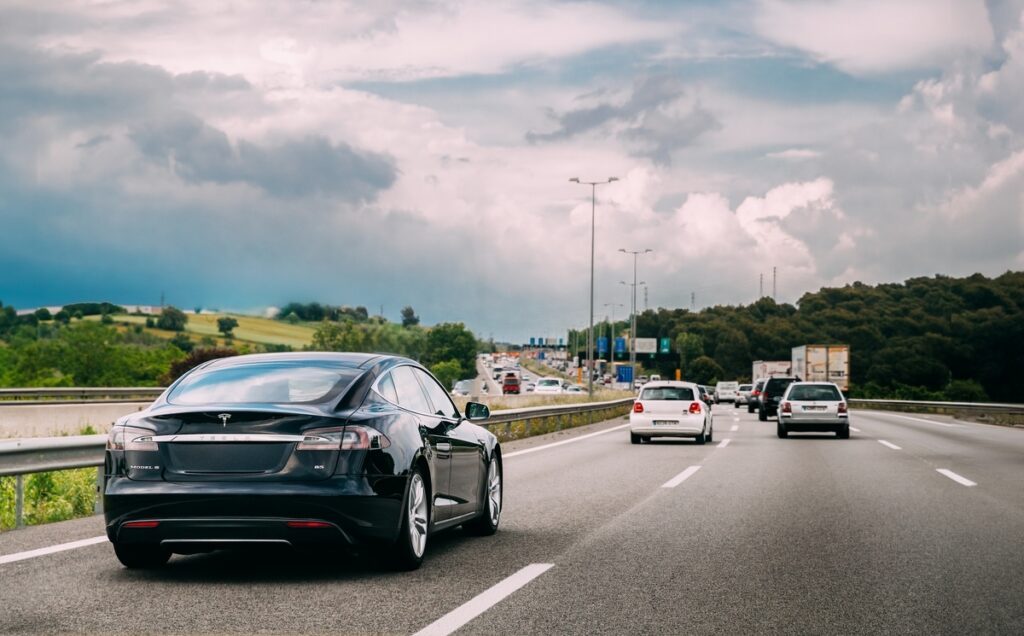
Will we have to get out of the way of electric cars? Credit: Grisha Bruev - Shutterstock
A strange motorway rule in Austria means electric car drivers can legally travel 30km/h faster than petrol and diesel cars on certain stretches of road when pollution restrictions are activated.
For someone driving along a motorway at 100km/h, obeying the speed limit, seeing another car cruise past at 130km/h could be a bit of a shock. There is no separate lane, no obvious mistake and, under the right circumstances, the faster driver is not breaking the law. Their secret? They may be driving a fully electric car.
Why electric cars can drive faster in Austria
Austria has a special environmental rule known as IG-L, short for its air pollution control legislation. Certain motorway sections normally allow speeds of up to 130km/h. When local air pollution triggers an IG-L restriction, electronic signs can reduce the limit to 100km/h to cut harmful emissions. Some electric cars, however, are exempt from that particular restriction.
Austria’s Federal Ministry for Innovation, Mobility and Infrastructure confirms that vehicles powered entirely by electricity or hydrogen fuel-cell technology can continue at the normal legal motorway maximum of 130km/h when an IG-L 100km/h restriction is in force.
That means a petrol or diesel car may legally have to stick to 100km/h while an eligible electric car can travel at 130km/h on exactly the same stretch of road. It is not actually a special 130km/h limit created for electric vehicles. Instead, the environmental restriction does not apply to qualifying zero-emission vehicles, allowing them to still go at the ordinary motorway maximum.
Green number plates are important
Qualifying vehicles need Austria’s distinctive E licence plate with green lettering to benefit from the exemption. Austria’s government says the special plate is available for purely electric and hydrogen-powered vehicles. Although having one is generally optional, it is required if motorists want to take advantage of certain local benefits, including exemptions connected with IG-L restrictions.
That makes the rule particularly interesting for anyone driving an electric vehicle through Austria from another country, as the paperwork and vehicle identification requirements matter.
Could Spain introduce the same rule?
Spanish motorists should not expect to see electric cars legally overtaking everyone at 150km/h any time soon. Spain’s general maximum speed for cars and motorcycles on motorways and dual carriageways remains 120km/h, regardless of whether the vehicle is electric, petrol or diesel. The DGT confirms the 120km/h limit for these roads.
Spain already uses environmental classifications to give certain vehicles different treatment in areas such as low-emission zones. Malaga, for example, has introduced its own low-emission zone rules, with vehicles classified according to their environmental status.
Any future Spanish system would also need to be carefully worded. Rather than allowing electric vehicles to exceed the normal motorway maximum, a system modelled on Austria could theoretically allow them to retain the ordinary 120km/h limit while petrol and diesel vehicles were temporarily reduced to a lower speed for pollution reasons.
Very different approach to electric car incentives
Austria’s rule offers an unusual example of how environmental policy can affect what happens on the motorway.
Spain has already offered electric vehicles certain privileges, although those benefits are changing. Recent Spanish traffic rules, for example, removed a previous advantage for some zero-emission vehicles using BUS-VAO lanes without enough passengers.
For drivers in Spain, the important point is simple: owning an electric car does not currently give you permission to exceed the posted motorway speed limit.
Anyone heading across the border into Austria, however, could encounter the remarkable situation where the type of engine under the bonnet genuinely determines whether 100km/h or 130km/h is legal.
Follow Euro Weekly News on Google News
Get breaking news from Spain, travel updates, and expat stories directly on your Google News feed.
Follow on Google NewsSign up for personalised news
Subscribe to our Euro Weekly News alerts to get the latest stories into your inbox!
By signing up, you will create a Euro Weekly News account if you don't already have one. Review our Privacy Policy for more information about our privacy practices.




Adam Woodward
Adam is a writer who has lived in Spain for over 25 years. With a background in English teaching and a passion for music, food, and the arts, he brings a rich personal perspective to his work at Euro Weekly News. As a father of three with deep roots in Spanish life, Adam writes engaging stories that explore culture, lifestyle, and the everyday experiences that shape communities across Spain.
Comments