Four raccoons set free in 1934 now number nearly two million across Germany
By Adam Woodward • Published: 20 Aug 2026 • 18:53 • 2 minutes read
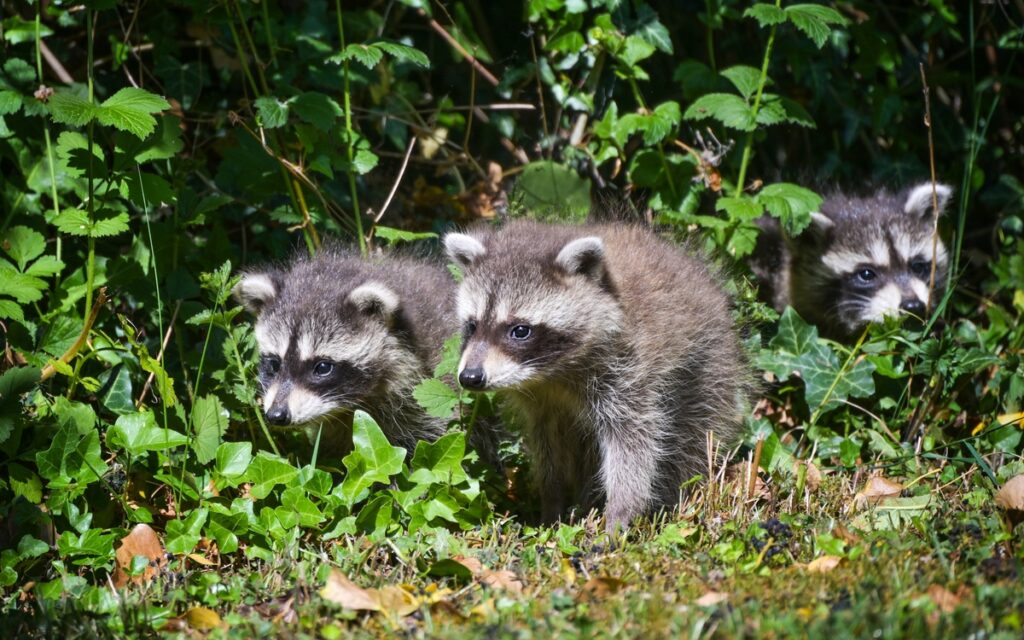
Germany's immigration issue? Credit: Maren Winter - Shutterstock
Nearly a century ago two pairs of North American raccoons were tipped out of crates beside a German reservoir. Those four animals helped launch a population now estimated at close to two million, turning forests and city streets into their playground and leaving locals split over whether the masked mammals are pests or pets.
Four raccoons let loose by a lake in 1934
Back in April 1934 forestry staff near Vohl, about 50 kilometres southwest of Kassel, opened two boxes on the southern shore of the Edersee. Two males and two females of Procyon lotor trotted freely. Official paperwork had been sent to the Prussian hunting office asking permission “to enrich the fauna”, yet the animals were released before formal approval arrived.
For years tourist guides, local politicians and plenty of residents repeated a colourful tale that Nazi bigwig Hermann Göring ordered the release himself. Former Vohl forestry boss Eberhard Leicht dug through the old files and found no evidence Göring ever signed off or even knew about it. “The whole process was simply an administrative matter,” he told investigators. The decision sat with local officials – nothing more.
From tiny group to millions across Germany
Those original four cannot account for today’s numbers alone. After the Second World War more raccoons slipped out of a fur farm in Brandenburg. Genetic tests on more than 400 animals later pointed to at least two further introductions, one near the Czech border in eastern Saxony and another in the Harz Mountains.
Kassel itself has earned the nickname “European capital of the raccoon”, with roughly 30,000 of them living in and around the city. Clever climbers and bin-raiders, they turn up in hospital corridors, power stations, zoos and attic spaces, sometimes leaving thousands of euros’ worth of damage behind. They have also crossed into the Netherlands, Czech Republic, Switzerland and other countries.
Hunting fails to halt the rise
Most German states now allow year-round shooting. Since 2005 the annual cull has quadrupled and now goes over 250,000 animals. Yet numbers keep climbing. Vera Heck, who runs the Federal Association of Wildlife Rescue Organisations, puts it bluntly: “They shoot and shoot and shoot, and every year there are more raccoons!”
The European Union lists the species as an invasive alien of Union concern. Some studies show the animals take eggs of waterbirds and amphibians. Other researchers argue the evidence for wide-scale harm to German biodiversity remains thin. Either way, the population shows no sign of shrinking.
Divided opinions on the masked visitors
In many towns neighbours still put out food each evening, while others dial the hunters the moment a raccoon appears on the roof. Property owners complain of wrecked insulation and chewed wiring. Nature groups worry about pressure on already struggling native species. Ninety-plus years after those first crates were opened beside the Edersee, the raccoons look set to stay.
Follow Euro Weekly News on Google News
Get breaking news from Spain, travel updates, and expat stories directly on your Google News feed.
Follow on Google NewsSign up for personalised news
Subscribe to our Euro Weekly News alerts to get the latest stories into your inbox!
By signing up, you will create a Euro Weekly News account if you don't already have one. Review our Privacy Policy for more information about our privacy practices.




Adam Woodward
Adam is a writer who has lived in Spain for over 25 years. With a background in English teaching and a passion for music, food, and the arts, he brings a rich personal perspective to his work at Euro Weekly News. As a father of three with deep roots in Spanish life, Adam writes engaging stories that explore culture, lifestyle, and the everyday experiences that shape communities across Spain.
Comments