“Biggest is yet to come”: Granada earthquake sequence passes 1,000 tremors
By Molly Grace • Published: 24 Aug 2026 • 17:22 • 3 minutes read
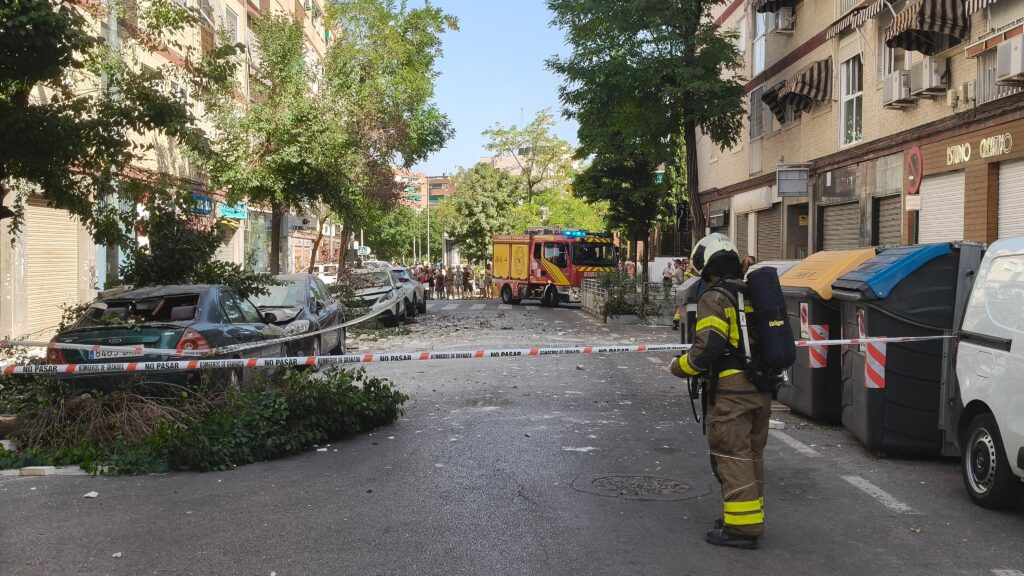
The strongest tremors have disrupted daily life across Granada and surrounding municipalities. Photo credit: @Luzarcos on X
People across Granada are still feeling the ground move beneath them after an earthquake sequence that has now passed 1,000 tremors, with the shaking reaching as far as the Alpujarra and damage already reported in affected areas. But the earthquake count is still rising, and a Spanish scientist has warned that the strongest tremor may not have happened yet.
The latest figures from Spain’s National Geographic Institute (IGN) show that 1,075 seismic movements have been recorded since the current sequence began on August 14, with 94 felt by residents.
Concern over what cannot be seen
The two strongest earthquakes in the sequence reached magnitude 4.8, on August 15 and August 18. They were strong enough to send people out of buildings and trigger inspections across the affected area. Some damage is obvious. Cracks have appeared, masonry has fallen from buildings and streets have had to be closed. The greater concern for some residents is what cannot be spotted from the pavement.
A building can suffer damage to structural elements or connections without developing a dramatic crack. Determining whether repeated movement has weakened a property requires a proper technical inspection. So far, 976 buildings have been inspected, with none classified as being at risk of collapse. Emergency services have dealt with 3,606 incidents since the sequence began.
That provides reassurance, but it does not mean every property is free from damage. Granada also has thousands of buildings constructed before Spain’s current earthquake-resistant standards came into force in 2002. Their ability to withstand repeated seismic movement can vary considerably depending on their construction and later alterations. For homeowners, that leaves an unsettling problem: a house can look fine and still need checking.
The biggest earthquake may still be ahead
The possibility of further strong shaking is making that uncertainty worse. A Spanish scientist interviewed by 20minutos has warned that the largest earthquake of the current sequence may still be ahead, rather than assuming that the two magnitude 4.8 earthquakes were the peak.
That is not the same as predicting a larger earthquake will definitely happen. Earthquakes cannot currently be predicted accurately enough to give a date or magnitude for a future event. But it means residents cannot take the recent drop in activity as proof that the danger has passed. The current sequence has produced more than a thousand movements in a matter of days, and the strongest recorded earthquake so far was only magnitude 4.8.
Granada has already been disrupted
The earthquakes have affected much more than individual homes. The Alhambra was temporarily closed following one of the stronger earthquakes while checks were carried out. Other public buildings have also been inspected, while falling material from façades has caused problems in some streets. Three people have suffered minor injuries during the sequence.
The psychological strain has also been significant. Thousands of people have contacted emergency services about the earthquakes, while psychological support has been provided to residents affected by the continuing tremors. For people living in the worst-hit areas, the difficulty is knowing when they can stop worrying about the next movement. A tremor lasting only seconds can be enough to wake a family in the middle of the night, send people outside and leave them wondering whether the next one will be stronger.
Why Granada keeps shaking
The current sequence is centred around Alhendín, south of Granada, and has produced repeated shallow earthquakes across the surrounding area. Granada sits in one of Spain’s most active seismic regions because of the movement between the African and Eurasian tectonic plates.
The pressure created by that movement is released through faults beneath the region, producing earthquakes of different sizes. Most of the current movements have been small. The IGN’s records show numerous events below magnitude 2, many of which were not felt. The shallow depth of some of the earthquakes means that even relatively small movements can be noticed by people living close to the source.
Not out of the woods
There has been a reduction in the number and strength of the latest movements.Nine earthquakes were recorded in Granada on Sunday, all below magnitude 2.That is a welcome change after the stronger events earlier in the sequence, but it does not establish that the sequence has finished.More than 1,000 movements have already been recorded, two have reached 4.8 and residents are still being warned that another stronger earthquake cannot be ruled out.
For people whose homes have already been inspected, the wait may now be for reassurance that the building is structurally sound. For everyone else, the concern is more difficult: the damage they fear most may be the damage they cannot see. And with a Spanish scientist warning that the biggest earthquake could still be ahead, Granada residents have little choice but to keep watching, listening and waiting for the ground to settle
Follow Euro Weekly News on Google News
Get breaking news from Spain, travel updates, and expat stories directly on your Google News feed.
Follow on Google NewsSign up for personalised news
Subscribe to our Euro Weekly News alerts to get the latest stories into your inbox!
By signing up, you will create a Euro Weekly News account if you don't already have one. Review our Privacy Policy for more information about our privacy practices.




Molly Grace
Molly is a British journalist and author who has lived in Spain for over 25 years. With a background in animal welfare, equestrian science, and veterinary nursing, she brings curiosity, humour, and a sharp investigative eye to her work. At Euro Weekly News, Molly explores the intersections of nature, culture, and community - drawing on her deep local knowledge and passion for stories that reflect life in Spain from the ground up.
Comments