Friend or foe in a Spanish garden: What to keep and what to say ‘adios’ to
By Adam Woodward • Updated: 31 Aug 2026 • 13:28 • 4 minutes read
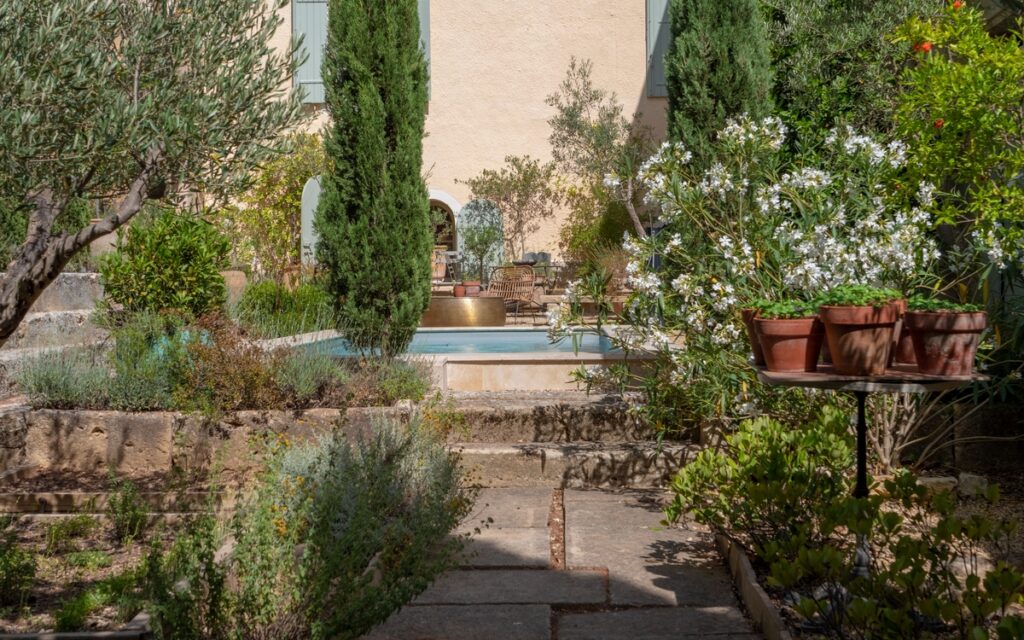
Spanish garden delight. Credit: Ally Foster - Shutterstock
A Spanish garden is a whole different ballpark to a northern European garden with successful citrus, olives, geraniums, tomatoes, lavender, rosemary, all primed to lives in a warm, dry Mediterranean climate. That climate is kind to plants and to a long list of insects. But, which are good, and which will cause a problem? The useful rule is simple: most insects you see are either doing a job you want or doing a job you do not. Get rid of the second group only when they actually become a problem, and never spray something that also kills the first group. Here’s a list of things you will want to leave alone, and some you probably won’t want around.
Friends: keep these
These are the ones that eat pests, pollinate, or both. Adults often look harmless (or even pretty); the larvae are usually the real hunters.
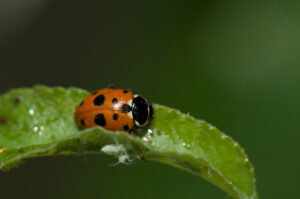
Ladybirds / mariquitas (Coccinellidae)
Credit: Victor Suarez Naranjo – Shutterstock
Spain has around 120 species. Both adults and the alligator-shaped larvae eat aphids, whitefly, mealybugs, scale and mites. A larva can take dozens of aphids a day. Do not confuse the larvae with pests — they are the ones you want.
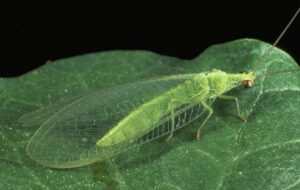
Green lacewings / crisopas (Chrysoperla carnea and relatives)
Credit: texasinsects.tamu.edu
Adults look like delicate green flies with huge lacy wings and feed on nectar. The larvae (“aphid lions”) eat aphids, thrips, mealybugs, whitefly and small caterpillars. Eggs sit on thin stalks so they are easy to recognise.
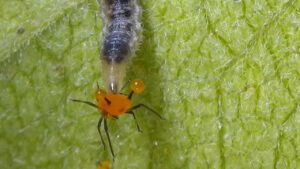
Hoverflies / sírfidos
Credit: Wiki CC
Adults look like small wasps but have only two wings and hover in front of flowers; they are good pollinators. The slug-like larvae eat aphids by the hundred. Plant fennel, coriander, alyssum or calendula and they appear on their own.
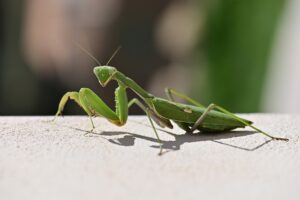
Praying mantis / mantis religiosa
Credit: Frank Middendorf – Shutterstock
The native Iberian species is a generalist hunter of moths, flies, grasshoppers and other insects. Leave it. (Watch for larger Asian mantids that have started appearing; they are more of a problem for native wildlife.)
Parasitic wasps and predatory bugs (Orius, mirids)
Tiny wasps lay eggs inside aphids, whitefly or caterpillars; you often only see the “mummies”. Flower bugs (Orius laevigatus) are native Mediterranean predators of thrips and whitefly and are widely used in Spanish horticulture.
Also useful (not strictly insects)
- Lizards and geckos eat mosquitoes, flies and many crawling pests.
- Spiders and centipedes tidy up the soil surface.
- Fireflies (luciérnagas) — their larvae eat slugs and snails; light pollution and pesticides have hit them hard.
- Bees, bumblebees and butterflies — pollinators first; most do not damage plants.
Encourage all of the above with mixed flowering herbs (lavender, rosemary, fennel, alyssum, Inula viscosa), some leaf litter or stone piles, and as little broad-spectrum insecticide as possible.
Foes: control these when they get out of hand
These suck sap, mine leaves, bore fruit or defoliate. Small numbers are food for the friends above. Large numbers need action.
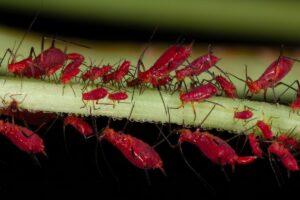
Aphids / pulgones
Credit: Pascal Guay – Shutterstock
Green, black or red clusters on new shoots of roses, citrus, beans, tomatoes. They curl leaves, leave sticky honeydew and sooty mould, and can spread viruses. First line: wait a few days for ladybirds and hoverflies. If they explode, use a strong water jet, potassium soap or neem — not a residual spray.
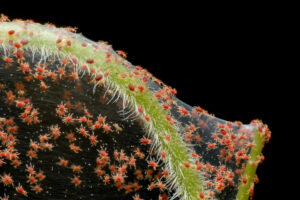
Red spider mite / araña roja (Tetranychus urticae)
Credit: BirdShutterB – Shutterstock
Tiny mites that thrive in hot, dry Spanish summers. Leaves look speckled, then bronzed, then drop; fine webbing appears. Worst on citrus, roses, tomatoes and beans. Increase humidity (mist in the evening), use predatory mites if you can get them, or sulphur/potassium soap early. They develop resistance quickly.
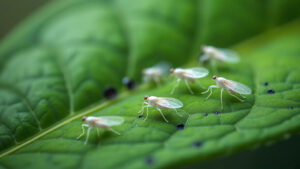
Whitefly / mosca blanca
Credit: Wiki CC
Clouds of tiny white insects fly up when you shake tomato, hibiscus or citrus. They suck sap and produce honeydew. Lacewings, Orius and some ladybirds help. Yellow sticky traps catch adults; soap or oil sprays hit nymphs on the undersides of leaves.
Mealybugs and scale / cochinillas
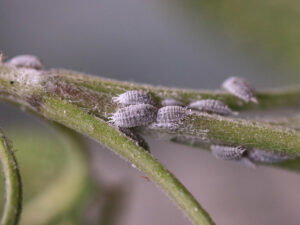
Credit: EcoRegistros
White cottony masses (mealybug) or hard brown/black scales on citrus, olives, oleander and indoor plants. They weaken plants and attract sooty mould. The Australian ladybird Rodolia cardinalis and Cryptolaemus montrouzieri were introduced to Spain specifically for these. Alcohol on a cotton bud works for small infestations; oils smother them.
Olive fruit fly / mosca del olivo (Bactrocera oleae)
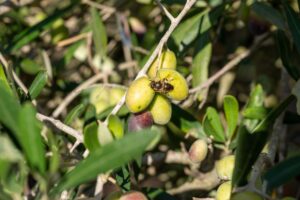
Credit: Fabrizio Schiavon – Shutterstock
The most important pest of olives. Females sting ripening fruit; larvae eat the flesh and fruit drops or oil quality collapses. Traps and early harvest help in a garden; commercial groves use bait sprays or mass trapping.
Others worth watching
- Thrips: rasping damage and virus vectors on flowers and vegetables.
- Caterpillars (Spodoptera, Helicoverpa, cabbage whites) on tomatoes and brassicas.
- Processionary caterpillars on pines: urticating hairs; keep children and dogs away from the nests.
- Red palm weevil: if you have palms, this is a serious structural pest, not a typical garden insect.
Practical approach for a Spanish garden
- Look first. A few aphids on a rose in spring are lunch for the ladybirds that will arrive a week later.
- Plant for the friends: let some herbs flower, keep a patch of “weeds” such as fennel or Inula, and avoid a sterile, constantly sprayed lawn.
- Use water, soap, oil or sulphur before anything stronger.
- Never use broad-spectrum insecticides if you can help it — they wipe out the lacewings and hoverflies that would have done the job for free. Spanish citrus and vegetable growers have cut chemical use dramatically by protecting auxiliary fauna.
- Lizards on the wall and hoverflies over the lavender are signs the system is working.
The garden that looks a bit “messy” with mixed plants and a few insects on the flowers is usually the one that needs the least spraying.
Follow Euro Weekly News on Google News
Get breaking news from Spain, travel updates, and expat stories directly on your Google News feed.
Follow on Google NewsSign up for personalised news
Subscribe to our Euro Weekly News alerts to get the latest stories into your inbox!
By signing up, you will create a Euro Weekly News account if you don't already have one. Review our Privacy Policy for more information about our privacy practices.




Adam Woodward
Adam is a writer who has lived in Spain for over 25 years. With a background in English teaching and a passion for music, food, and the arts, he brings a rich personal perspective to his work at Euro Weekly News. As a father of three with deep roots in Spanish life, Adam writes engaging stories that explore culture, lifestyle, and the everyday experiences that shape communities across Spain.
Comments