Spanish skies turn hazy as Saharan dust sweeps across the country
By Molly Grace • Published: 03 Sep 2026 • 22:56 • 3 minutes read
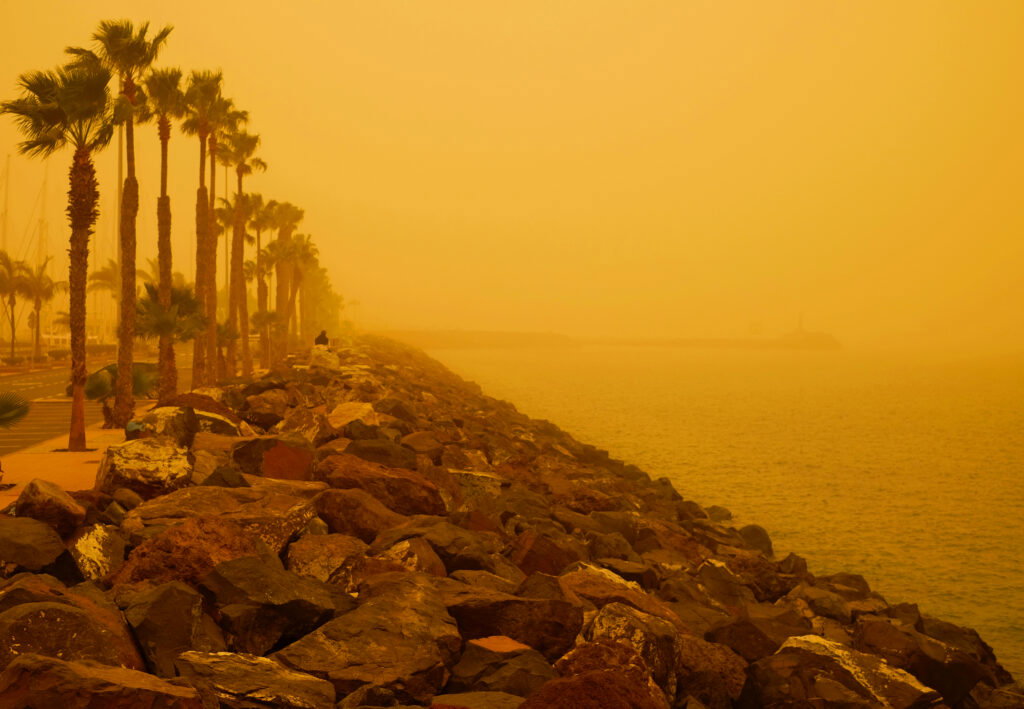
Saharan dust contains fine mineral particles. Photo credit: daguimagery/Shutterstock
People across southern and western Spain are set to see hazier skies as Saharan dust spreads across the peninsula, while the Canary Islands are already experiencing a more noticeable episode of calima. The dust is moving into the peninsula from North Africa as Spain faces another spell of exceptionally high temperatures.
Southern and western areas are among the first parts of mainland Spain to be affected, with the dust expected to spread further north and east on Friday and over the weekend. The arrival will change the appearance of the sky, replacing the deep blue seen in recent days with a hazier, milky appearance. Dust may also settle on cars and outdoor surfaces, while rainfall in affected areas could produce muddy rain.
Southern and western Spain see the first impact
The dust is moving into the peninsula from North Africa, with western and southern Andalucía particularly exposed as the plume advances. Residents in Cádiz and Huelva, as well as areas around Sevilla and Córdoba, can expect increasingly hazy conditions as suspended dust becomes more widespread. The concentration will not be identical across the whole region, however, as the amount reaching ground level depends on the movement of the air mass.
The arrival of the dust will change the appearance of the sky, with blue conditions becoming increasingly washed out or milky. Dust can also settle on cars, windows and outdoor surfaces. If rain develops while the particles are suspended in the atmosphere, the result can be muddy rain, leaving brown or reddish deposits behind. The dust is expected to continue spreading beyond Andalucía as the weather pattern develops, with Extremadura and other western parts of Spain also affected.
Canarias already under calima warning
The Canary Islands are facing a separate and more established impact from the same source of airborne dust. The Government of Canarias has declared a pre-alert for calima in Gran Canaria, Fuerteventura, Lanzarote and La Graciosa, effective from Thursday afternoon. Authorities report elevated concentrations of African dust, particularly in Fuerteventura, Lanzarote and La Graciosa, with dust also reaching Gran Canaria.
The authorities warn that further developments over Africa could send additional dust towards the islands, increasing concentrations and reducing visibility further. Current forecasts indicate that calima will remain part of the weather picture across Canarias over the coming days. Fuerteventura and Lanzarote have already been particularly affected, while the dust is expected to extend to other islands. The combination of dust and warm conditions is expected to continue into the weekend, with temperatures also forecast to rise in several parts of the archipelago.
Who needs to take extra care?
Saharan dust can increase concentrations of airborne particles, including PM10, which can irritate the respiratory system. People with asthma, chronic respiratory conditions or cardiovascular disease should take particular care when concentrations are elevated. The Government of Canarias has specifically warned that calima can aggravate existing chronic and respiratory conditions.
When air quality is poor, reducing strenuous outdoor exercise is one of the simplest ways to limit exposure. This is particularly important during heavy physical activity, when breathing rates increase and more airborne particles can be drawn into the lungs. People who are sensitive to airborne pollution should check local air-quality information before exercising or spending prolonged periods outdoors.
Keeping windows closed during the worst periods can also reduce the amount of outdoor dust entering homes. Anyone using prescribed medication for a respiratory condition should continue following their normal treatment plan. If significant breathing difficulties, chest pain or other serious symptoms develop, medical advice should be sought.
Heat makes conditions harder
The dust is arriving alongside another burst of extreme heat, particularly across southern Spain. AEMET has issued orange warnings for parts of Córdoba, Jaén and Sevilla, where temperatures are expected to reach between 40C and 42C on Friday. Cádiz, Granada and Huelva are also under yellow heat warnings. The combination of very high temperatures and airborne dust means residents in affected areas should avoid unnecessary exertion during the hottest part of the day and stay hydrated.
In Canarias, temperatures are also expected to rise over the weekend, with some inland and southern areas potentially reaching 35C. Calima is expected to remain particularly noticeable in the eastern islands into the beginning of next week. For those of us in southern and western Spain, the dust should gradually spread beyond the areas initially affected as the weather pattern develops. In Canarias, meanwhile, authorities are already monitoring elevated dust concentrations and reduced visibility as the calima episode continues.
Follow Euro Weekly News on Google News
Get breaking news from Spain, travel updates, and expat stories directly on your Google News feed.
Follow on Google NewsSign up for personalised news
Subscribe to our Euro Weekly News alerts to get the latest stories into your inbox!
By signing up, you will create a Euro Weekly News account if you don't already have one. Review our Privacy Policy for more information about our privacy practices.





Molly Grace
Molly is a British journalist and author who has lived in Spain for over 25 years. With a background in animal welfare, equestrian science, and veterinary nursing, she brings curiosity, humour, and a sharp investigative eye to her work. At Euro Weekly News, Molly explores the intersections of nature, culture, and community - drawing on her deep local knowledge and passion for stories that reflect life in Spain from the ground up.
Comments