Public access defibrillators in Spain: Why regional laws and training bureaucracy risk lives in cardiac arrest
By Dr Marcus Stephan • Published: 09 Sep 2026 • 9:00 • 5 minutes read
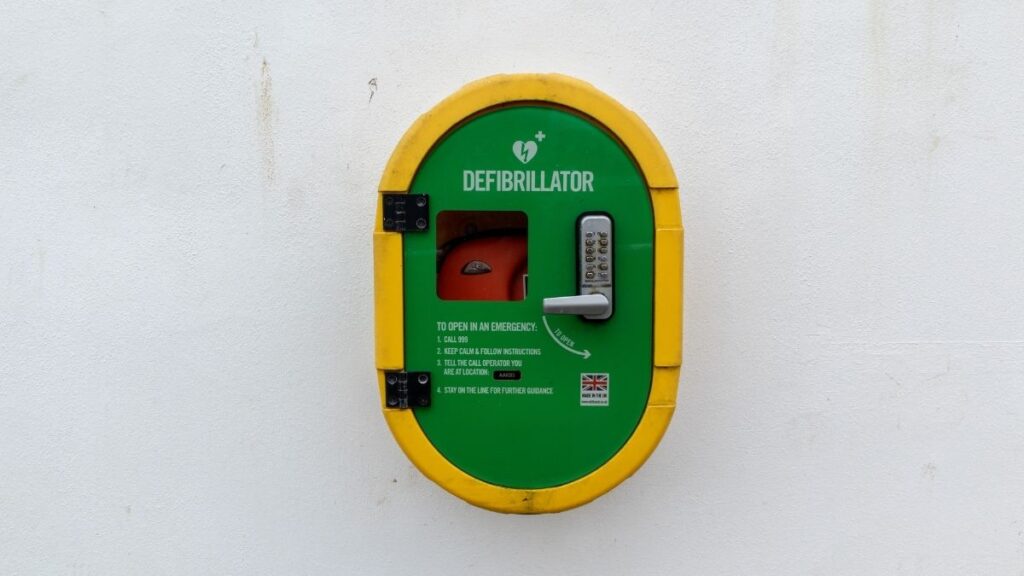
In cardiac arrest, hesitation is the enemy. Credit: eyematter / Shutterstock.com
When a cardiac arrest occurs outside a hospital setting, immediate action determines whether a person survives. Automated External Defibrillators (AEDs) are explicitly engineered so that any bystander can use them safely without medical expertise or prior training. However, regulatory frameworks across Spain’s autonomous communities continue to create psychological and practical barriers during critical life-or-death emergencies. Aligning national and regional regulations with updated European guidelines is essential to boosting survival rates.
Don’t have a cardiac arrest in Spain
Or, if you do, make sure you choose the right place.
Unlike the journalists who write for Euro Weekly News, I am allowed to have an opinion. My colleagues must remain impartial and ensure balance when reporting. Provided I remain factually correct, I can have an opinion.
So here is mine: Spain needs to seriously rethink how it provides public access to defibrillators.
Out-of-hospital cardiac arrest is more common than you might think, with roughly 30,000 cases a year in Spain and survival at just 7-10%. Figures for the UK are similar, with one crucial difference: according to the London Ambulance Service, when a member of the public uses a defibrillator before emergency services arrive, survival can rise dramatically to around 57%.
In Murcia, currently the only people allowed to use a defibrillator are doctors. It is not a good place to have a cardiac arrest – unless a doctor happens to be very close by.
Why make it harder for an ordinary person to use a machine specifically designed to save lives?
Every minute matters: Resuscitation science and public AED access
When somebody collapses in cardiac arrest, there is no time for bureaucracy. And when it comes to bureaucracy, Spain is in a class of its own.
The European Resuscitation Council (ERC), of which Spain is a member, emphasises that early CPR and defibrillation are critical to survival.
Its 2025 guidelines recommend that public-access automated external defibrillators (AEDs) be easily accessible, clearly marked, and available 24/7 in unlocked cabinets. Crucially, the guidelines state no prior training or certification is necessary.
This raises an obvious question for Spain, and particularly for Andalusia: Are we making it unnecessarily difficult for ordinary people to use a machine designed specifically for them?
How modern automated external defibrillators work
Defibrillation was once the domain of medical personnel because older machines required operators to interpret heart rhythms.
Modern AEDs are fundamentally different.
The machine automatically analyzes the patient’s heart rhythm. The rescuer does not need to diagnose ventricular fibrillation or interpret an ECG; if a shock is not indicated, the machine simply will not deliver one. Voice prompts and visual instructions guide the rescuer step by step.
The technology deliberately removes the requirement for medical expertise or prior training.
While training is desirable to build confidence, there is a fundamental difference between saying “we should train as many people as possible” and “only trained people should act.” The first saves lives; the second creates hesitation.
Andalusian law on defibrillator use and qualification requirements
Andalusia’s legislation relies principally on Decree 22/2012. While it permits public AED use, it requires basic, demonstrable knowledge of CPR, basic life support, and AED operation.
By creating a qualification requirement, someone without training is not placed in the same legal or psychological position as someone who is certified. That is precisely where the philosophy of the ERC’s 2025 guidelines becomes relevant.
European Resuscitation Council guidelines for public defibrillators
The ERC recommends that a public-access AED be:
- Visible
- Clearly marked
- Easy to retrieve
- Available 24/7
- In an unlocked cabinet
If an AED is inside a locked building at 2 a.m., or requires finding a security guard to unlock a cabinet, valuable seconds are lost. If the only trained user is absent, the machine becomes an expensive ornament rather than a life-saving tool.
The ERC model prioritises immediate access, relying on the AED’s automated safety features and emergency dispatchers to guide the rescuer.
Regional differences and decentralisation in Spanish healthcare
Spain lacks a single nationwide system governing public-access AEDs. Regional autonomous communities establish their own rules, creating significant disparities—meaning location directly impacts survival odds.
Andalusia was an early pioneer in public defibrillation, and its official documentation acknowledges that bystander intervention is vital. The issue is not a failure to understand the importance of public action, but rather a regulatory framework that has failed to keep pace with modern technology.
Andalusia’s proposed AED reform and emergency services integration
In September 2025, the Junta de Andalucía began drafting a new AED decree. The government’s impact assessment frankly admits that over ten years of experience revealed a lack of AED availability in crowded areas because installation was not compulsory.
The proposed reform aims to mandate more AED installations and integrate them with emergency services via geolocation. The goal is an interactive map that helps dispatchers direct bystanders to the nearest device while 112 calls are active.
While this is a step forward, the proposed system still places heavy emphasis on training requirements.
The psychological barrier of training restrictions and hesitation
Training should encourage action, not create the impression that untrained bystanders must stand back.
If someone collapses and an AED is ten meters away, a bystander who remembers hearing that “special training is required” may decide to wait for an ambulance. In cardiac arrest, doing nothing leads to death.
Overcoming social barriers in emergency response
The Andalusian government’s impact assessment notes another critical barrier: reluctance to expose a woman’s chest to attach AED pads due to embarrassment or fear of appearing inappropriate.
The solution is education, not bureaucracy. People must understand that exposing the chest to apply AED pads is a necessary, life-saving act.
Treating defibrillators as essential safety equipment
An AED should be viewed as community safety equipment, much like a fire extinguisher. Nobody expects someone using a fire extinguisher to be a trained firefighter or understand combustion theory; they simply use the tool in an emergency while professionals are on their way.
An untrained person beside a cardiac arrest victim should not be paralysed by the fear of being “unqualified.” The technology itself provides the necessary safeguards.
Closing the philosophical gap between Spain and European AED standards
Andalusia has recognised the value of defibrillation for years and is working to modernise its system. However, a philosophical gap remains between a framework centred on authorised users and the ERC’s universal public-access philosophy.
The European approach is essentially:
- Put the AED where people can get it.
- Make it available around the clock.
- Make it obvious.
- Tell people to use it (with or without prior training).
- Let the machine decide whether a shock is appropriate.
- Have the emergency dispatcher guide the rescuer.
Training is important, but it must never become a barrier when a human life is at stake. In cardiac arrest, hesitation is the enemy – and the most sophisticated AED is useless if people are too afraid of the rules to use it.
It’s time for Andalusia to align with European standards and show the rest of Spain how to save more lives.
The information provided in this column is for educational and informational purposes only, and does not constitute medical advice. It is not a substitute for a professional medical consultation, diagnosis, or treatment. Always seek the advice of your own physician or other qualified health provider with any questions you may have regarding a medical condition.
Dr Marcus Stephan
Follow Euro Weekly News on Google News
Get breaking news from Spain, travel updates, and expat stories directly on your Google News feed.
Follow on Google NewsSign up for personalised news
Subscribe to our Euro Weekly News alerts to get the latest stories into your inbox!
By signing up, you will create a Euro Weekly News account if you don't already have one. Review our Privacy Policy for more information about our privacy practices.



Dr Marcus Stephan
With a career spanning more than 35 years in both the UK and internationally, Dr Marcus' passion lies in empowering individuals through knowledge, enabling them to care for themselves and others. He simplifies the science behind medicine by removing unnecessary jargon, explains common health conditions, and shares updates on the latest advances and developments in medicine.
Comments