The 18-month wait exposing Spain’s hidden hospital queues
By Harry Dennis • Published: 11 Sep 2026 • 0:45 • 4 minutes read

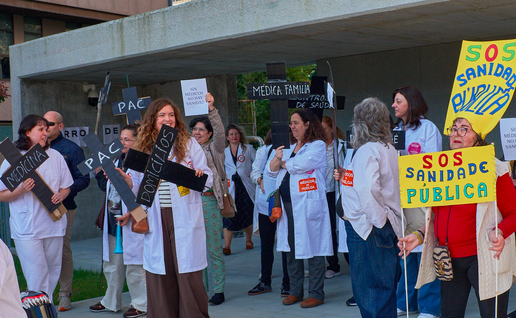
Cases like these rarely make it into Spain's official waiting list figures. Credit: Shootdiem / Shutterstock.
A colonoscopy in February 2025 was meant to lead to a routine follow-up. Eighteen months on, a patient in Cádiz says that appointment still doesn’t exist, and neither does any record of the procedure that was supposed to trigger it.
A colonoscopy, then months of silence
In November 2024, a patient at Hospital Universitario de Puerto Real in Cádiz was referred to the Digestivo (digestive medicine) department, and a colonoscopy was prescribed. It was carried out on February 5, 2025, according to consumer group FACUA Cádiz. The patient then asked for the follow-up review about a week later, but more than a month passed with no callback, and when they chased it up, staff reportedly said there were no appointments available.
A formal complaint followed in December 2025. FACUA says the hospital took almost two months to reply, confirming in February 2026 that the request was logged but still unallocated. Now, more than eighteen months after the colonoscopy: still no appointment.
The record that has also gone missing
FACUA says the gap goes beyond a missing appointment. Neither the pending follow-up nor the report from the colonoscopy itself appears on ClicSalud, the online portal Andalucía’s public patients use to check appointments and test results. The consumer group argues this follow-up is part of the care the colonoscopy started and not a separate request, and that a wait this long risks the patient’s health. FACUA has directly asked the Junta de Andalucía to guarantee timely care and reliable access to patients’ own records.
A two-year wait, and an appointment nobody told her about
Puerto Real is not an isolated case. Molly Grace, who lives in the Bahía de Cádiz-La Janda health district covering Barbate, Vejer de la Frontera, Conil and Chiclana, has been waiting even longer, for a different reason. She injured her hip in June 2024 carrying 50kg of animal feed up two flights of stairs, and was placed on a waiting list for rehabilitation, a step patients there must complete before a traumatólogo (orthopaedic specialist) will see them.
Molly said she called for an update every six months for two years and was told each time only that the list was long. It was not until she called again this June that a receptionist, surprised by how long she had waited, checked the system and found her appointment had been cancelled by the doctor months earlier. She should have been told to request a new one by phone, Grace said, but never was.
The mix-ups didn’t stop there. At a later appointment in August, Grace was asked whether she had attended one in July. She had never been told it existed, and it had gone ahead without her. Her medical report also understated how long she had been in pain, recording months rather than the roughly two years that had actually passed. A traumatólogo has since said she needs a resonancia (MRI scan), but given her no appointment for one, leaving her to chase the hospital again just to find out how to book it.
Molly said one doctor told her that the rehabilitation department doesn’t really have a long waiting list at all, and that staff there would rather pass referrals on than manage them. Several other doctors have also urged her to file a formal queja (complaint) or reclamación (claim) over the delay. Grace said she is now considering doing so herself, worried about what the continued delay could mean for her mobility.
The wait has also made other appointments awkward: doctors treating unrelated problems have suggested exercises for her knee, only for Grace to explain that her hip is still on a waiting list and she cannot do them.
Spain’s hospital queues, in numbers
Both cases sit inside a much bigger backlog. Ministry of Health figures for December 2025 show more than four million people nationally were waiting for a first specialist appointment, with an average wait of 102 days. Around three in five had already waited more than 60 days.
Andalucía’s own list is longer. Close to 900,000 people were waiting for a first specialist consultation at the end of last year, with an average wait of 136 days. Within that, more than 46,000 people were waiting specifically for a first Digestivo appointment, with an average wait of 117 days, and just over half had already waited more than 60 days.
How patients disappear from the queue
Neither of our cases are actually covered by those figures. The Ministry’s statistics measure only first specialist consultations, referrals a GP sends for someone to see a specialist for the very first time. Andalucía’s own 60-day guarantee works the same way: it explicitly excludes anything classed as a revisión, a follow-up review rather than a first visit, which is exactly what the Puerto Real patient has been waiting for. That gap matters: without a deadline, there is nothing forcing the hospital to act, and no rule is broken no matter how long the wait runs.
Grace’s case shows a second way to vanish from the figures. Hers was straight-up cancelled and never properly rebooked, with nobody telling her either time. A gap like that leaves no mark in any waiting list statistic, because the clock only measures the appointment currently on the books, not the ones that quietly disappeared before it.
What patients in Andalucía can do
Anyone facing a similar delay can raise it with the hospital’s Unidad de Atención a la Ciudadanía (citizen care unit), in person using the official complaints book, or online through the Junta de Andalucía’s electronic system.
Neither hospital, nor the Servicio Andaluz de Salud (SAS), has commented publicly on either case beyond February’s acknowledgement to the Puerto Real patient that the request exists.
The average wait just to see a specialist for the first time has climbed from 65 days in 2014 to around 102 days now, an increase of more than half in a decade. That trend only makes cases like these two harder to spot: the figure still only counts first consultations, so for a review appointment with no deadline attached, there is no equivalent number at all, and no way of knowing how many people are waiting in exactly the same silence as Puerto Real’s patient and Molly Grace.
Follow Euro Weekly News on Google News
Get breaking news from Spain, travel updates, and expat stories directly on your Google News feed.
Follow on Google NewsSign up for personalised news
Subscribe to our Euro Weekly News alerts to get the latest stories into your inbox!
By signing up, you will create a Euro Weekly News account if you don't already have one. Review our Privacy Policy for more information about our privacy practices.




Harry Dennis
Born in the UK and raised on the Cádiz coast, Harry brings his background in design, music, and photography to his writing for Euro Weekly News, sharing stories that celebrate culture and lifestyle across Spain and beyond.
Comments