Kamikaze fish stage dramatic dockside exit in Caleta de Velez
By Adam Woodward • Published: 15 Nov 2026 • 18:29 • 2 minutes read
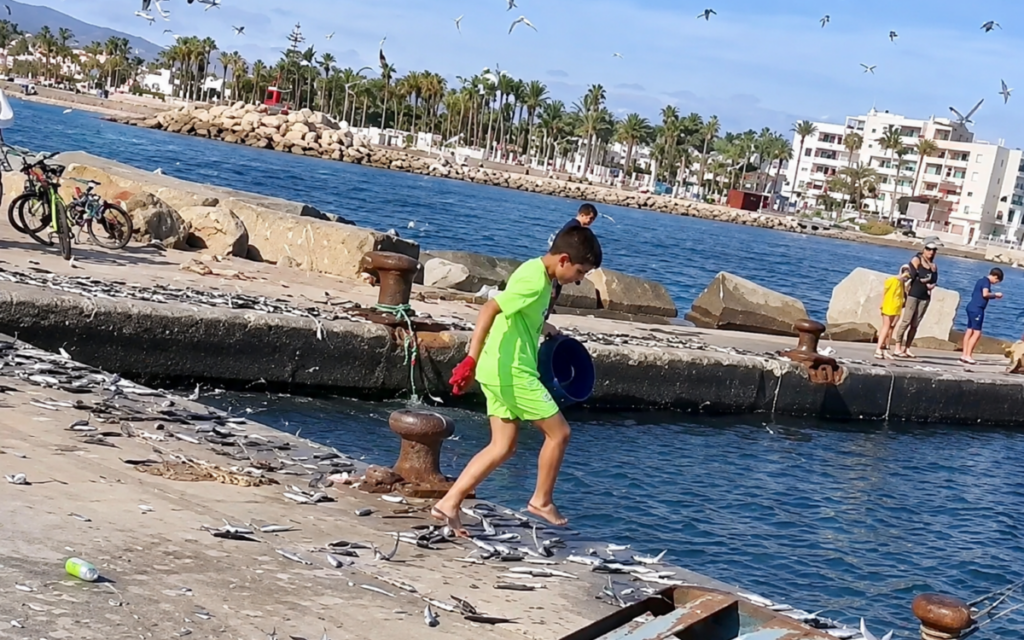
Thousands of kamikaze fish leap onto dry land. Credit: Vélez-Costa FB
On Sunday lunchtime, November 15, the working harbour at Caleta de Velez offered free entertainment of a decidedly unhinged kind. Thousands of small silver fish known as lachas suddenly decided the water was no longer for them and before they could evolve legs, launched themselves onto the concrete quay, the piled nets and the edges of the fishing boats. Within minutes the dock looked less like a working port and more like the aftermath of a particularly enthusiastic fishmonger’s clear-out.
These lachas, close cousins of the sardine, are common along the Mediterranean coast. What they were doing, marine biologists and local fishermen agree, was trying to run for their lives. A large predator, almost certainly a tuna, had cornered the school inside the relatively confined harbour basin. In open water the fish would simply scatter or dive; against a concrete wall the only remaining escape route is straight up and over. The result was a brief but spectacular mass suicide attempt that left thousands of fish flopping on dry land until harbour staff and bystanders began tossing them back.
Are tuna getting hungrier?
The timing is, frankly, suspicious. Only the day before, beachgoers in the Marbella area (San Pedro) had spent the morning helping a large tuna that had washed up in the shallows of the beach back into deeper water. Whether that particular fish is the same one now allegedly stalking the Axarquia coast is, of course, pure speculation. Still, after being manhandled off a beach by concerned sunbathers and their deckchairs, a 200-plus-kilo bluefin might reasonably feel it has earned a substantial lunch. The lachas of Caleta de Velez appear to have volunteered.
View this post on Instagram
This is not the first time the phenomenon has been recorded on the Andalucian coast. Almost identical stampedes were filmed in Garrucha last July and earlier at Nerja and Mezquitilla. In each case the same explanation has held: a hungry tuna or other large predator driving a school into a dead-end corner of a harbour. The fish are not ill, the water is not toxic, and no one has spiked the harbour with anything stronger than the usual diesel and seagull droppings. They are simply doing what small fish have always done when a much larger fish turns up, panicking, and occasionally overdoing it.
Local reaction has been a mixture of astonishment and mild opportunism. Some people filled buckets “for the cats”. Others filmed. A few just stood there wondering whether it was a sign of the end of the World. By early evening most of the fish that could still be saved had been returned to the water, the dock had been hosed down, and the harbour had returned to its normal state of quiet industry. Somewhere offshore, one suspects, a very large, hungry tuna is still looking for the rest of its meal.
Follow Euro Weekly News on Google News
Get breaking news from Spain, travel updates, and expat stories directly on your Google News feed.
Follow on Google NewsSign up for personalised news
Subscribe to our Euro Weekly News alerts to get the latest stories into your inbox!
By signing up, you will create a Euro Weekly News account if you don't already have one. Review our Privacy Policy for more information about our privacy practices.





Adam Woodward
Adam is a writer who has lived in Spain for over 25 years. With a background in English teaching and a passion for music, food, and the arts, he brings a rich personal perspective to his work at Euro Weekly News. As a father of three with deep roots in Spanish life, Adam writes engaging stories that explore culture, lifestyle, and the everyday experiences that shape communities across Spain.
Comments