Mother plunges from balcony trying to save her son as Spanish apartment safety comes under scrutiny
By Molly Grace • Published: 16 Sep 2026 • 16:14 • 4 minutes read
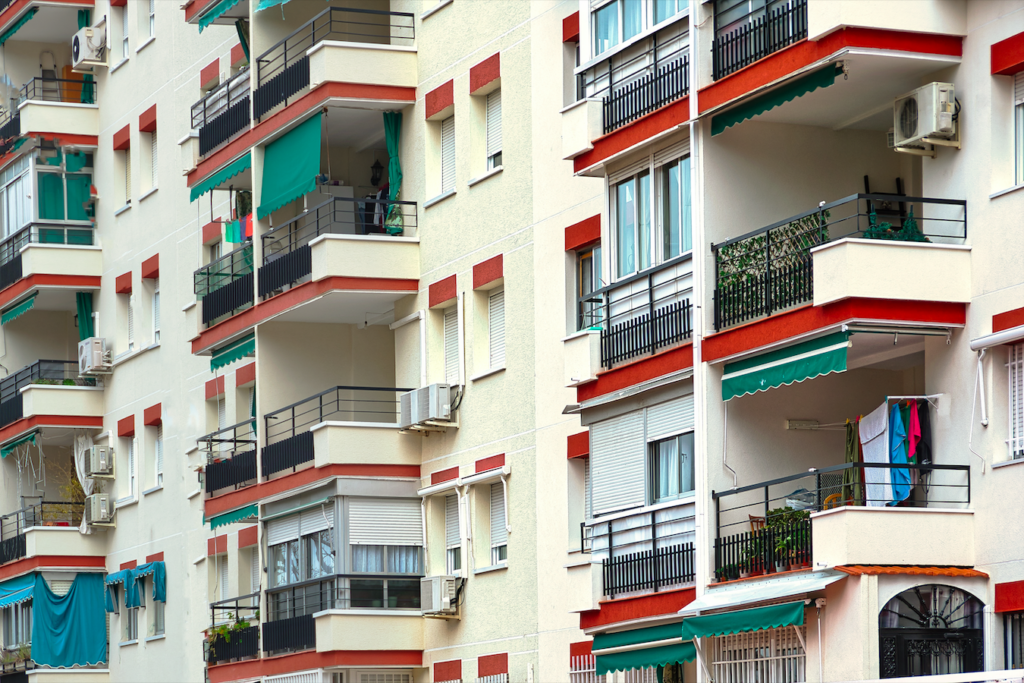
Spain has building regulations covering fall protection. Photo Credits: LuisMPerez/Shutterstock
You can childproof a home, keep dangerous things out of reach and still miss one simple detail: what happens when your child decides to climb? A chair beside a window, a sofa beneath a balcony door or furniture placed next to a railing can give a small child access to somewhere they were never meant to reach.
A serious accident in Valencia has brought that risk back into focus, raising a broader question for families living in apartments across Spain: are Spanish homes actually designed with young children in mind, or can ordinary features of a home still leave them dangerously exposed?
The issue is not that Spanish apartments are inherently unsafe. Spain has building regulations covering fall protection, while families can add locks, restrictors and other safety measures. But a series of incidents involving children across Spain shows how quickly a seemingly secure home can become dangerous.
Three-year-old and mother injured in Canals
The latest incident happened in Canals, Valencia, where a three-year-old boy suffered multiple injuries after falling from a first-floor balcony. The accident happened shortly after 3pm on Tuesday at a property on Calle Germanies. According to Local Police sources cited by Europa Press, the child was playing when he climbed onto a piece of furniture and fell from the balcony. His 27-year-old mother tried to stop him and also fell, suffering fractures to both ankles. The family had only moved into the property around a month earlier.
The boy was treated by a SAMU medical team before being flown by medical helicopter to Hospital La Fe in Valencia with multiple traumatic injuries. His mother was taken first to the local health centre and then transferred by ambulance to Hospital Lluís Alcanyís in Xàtiva. Police are investigating the incident as an accident. The detail about the furniture is particularly important because it just goes to show how quickly the effective height of a window or balcony can change.
A string of incidents across Spain
Canals is not the only recent case in which a child has reached a dangerous position around a Spanish apartment. In July, police in Benidorm rescued an eight-year-old boy who was found sitting on an external air-conditioning unit outside a 21st-floor apartment. Officers were alerted after the child was spotted in extreme danger and managed to bring him back inside. His father was subsequently arrested in connection with the incident.
In June, a girl of around 12 months fell from the first-floor balcony of her home in El Pont de Suert, Cataluña. A witness reportedly saw the baby climb onto the balcony railing before falling. She was taken to hospital in serious condition. There was also a fatal accident in Zaragoza in May, when a 16-month-old boy fell from a sixth-floor window. According to initial reports, the child had been left in the living room for a few minutes while his mother prepared food and climbed onto a raised area before falling. Emergency crews attempted to resuscitate him but could not save him.
And in February, a six-year-old girl died after falling from a sixth-floor balcony in Salamanca. Emergency teams and police attended the property, but the child could not be saved. Authorities opened an investigation into the circumstances. These cases do not show that such accidents are becoming more common, and each happened under different circumstances. They do show, however, that windows, balconies and other openings remain a serious hazard for children.
What does Spanish building law require?
Spain’s Technical Building Code, or CTE, has specific requirements intended to reduce the risk of falls. Its DB-SUA document covers safety in the use and accessibility of buildings, including protection against falls from changes in level and through openings. For protective barriers, the rules cover matters such as their height, openings and design. The aim is to prevent people from falling and to limit features that can make barriers easier to climb.
But there is a crucial difference between a building meeting construction regulations and a home being child-proof. A balcony can have a compliant railing while a chair beside it gives a child enough height to climb. A window can be correctly installed while a sofa, bed or chest of drawers allows a toddler to reach the handle. Building regulations cannot control where a family puts its furniture.
What can parents do?
This is where everyday precautions become important. Parents should look at windows and balcony doors from a child’s height and consider what can be reached from the floor or by climbing onto nearby furniture. Furniture should not provide a step beneath a window or beside a balcony railing. Chairs, tables, storage boxes and plant pots can all give a child extra height, while windows within reach may need suitable locks or restrictors.
Balcony and terrace doors also need attention, particularly when young children are playing elsewhere in the home. A child does not need to understand the danger involved to work out how a handle operates. The Benidorm case is an extreme example of what can happen once a child gets outside, but the Zaragoza and Canals incidents demonstrate something much closer to everyday life: a child does not necessarily need to be deliberately climbing a balcony railing.
A piece of furniture, a few minutes of opportunity or an unlocked window can be enough.For families in Spanish apartments, checking the balcony railing is therefore only part of the job. The more useful question may be what surrounds it, and whether something that looks completely ordinary to an adult could give a child the extra step they need.
Follow Euro Weekly News on Google News
Get breaking news from Spain, travel updates, and expat stories directly on your Google News feed.
Follow on Google NewsSign up for personalised news
Subscribe to our Euro Weekly News alerts to get the latest stories into your inbox!
By signing up, you will create a Euro Weekly News account if you don't already have one. Review our Privacy Policy for more information about our privacy practices.




Molly Grace
Molly is a British journalist and author who has lived in Spain for over 25 years. With a background in animal welfare, equestrian science, and veterinary nursing, she brings curiosity, humour, and a sharp investigative eye to her work. At Euro Weekly News, Molly explores the intersections of nature, culture, and community - drawing on her deep local knowledge and passion for stories that reflect life in Spain from the ground up.
Comments