Spain could face snap election as Sánchez weighs his future this weekend
By Adam Woodward • Updated: 02 Oct 2026 • 18:25 • 2 minutes read
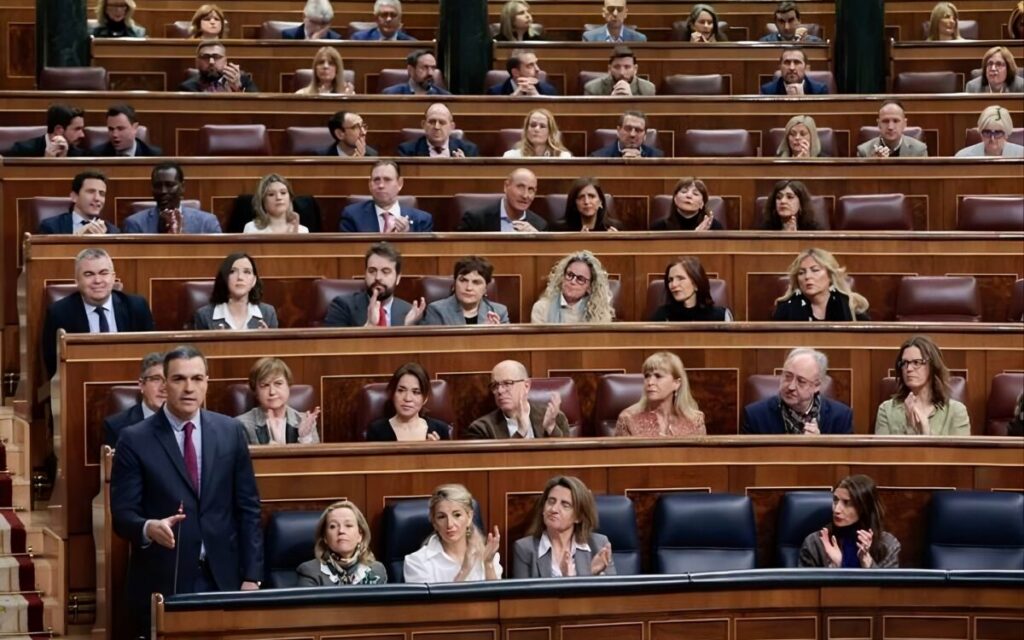
Spanish Congress. Credit: Congreso Pool
Spain could be triggered into a snap election within weeks. Prime Minister Pedro Sánchez faces a make-or-break weekend following a dramatic parliamentary defeat that saw both of his emergency housing decrees rejected. With his government plunged into a fresh crisis, political insiders are already pointing to November 29 as a likely date for Spaniards to head back to the polls.
Sánchez will make his final decision this weekend, according to elDiario.es, citing Government sources. No election has been called, but choosing November 29 would require him to move within days to dissolve parliament and formally call the vote.
The first decree was rejected by 178 votes to 172. It included measures affecting rental extensions, eviction protections, temporary rentals, room rentals, rent increases and property purchases by large investors. The second decree, which would have introduced automatic renewal rules for some tenancy agreements, was rejected by 184 votes to 166, according to EFE’s report on the votes.
Junts joins PP and Vox to defeat both measures
Junts voted against both decrees alongside PP, Vox and UPN, depriving the minority Government of the support it needed in Congress.
The result is politically serious for Sánchez because housing had become one of his Government’s central responses to growing public anger over rents, evictions and the difficulty of finding an affordable home.
The Prime Minister appealed directly to MPs before the vote, warning them about the consequences of rejecting the measures. But the Government could not persuade Junts to change its position.
The votes also underline the problem Sánchez now faces. He remains Prime Minister and does not have to resign after losing the decrees, but he must repeatedly negotiate support with parties outside the Government to pass major legislation.
What the housing defeat means for renters and landlords
Congress’s rejection also has practical consequences for people renting or letting property. Our guide explains what the housing vote means for tenants and landlords, including the rental measures affected.
Why November 29 is still the date to watch
The defeat does not automatically trigger an election. Sánchez can continue governing, renegotiate the housing plans and try to pass other laws through shifting agreements in Congress.
But the timing makes an early election a live possibility. Spain’s electoral law requires 54 days between publication of an election decree and polling day. Article 42 of the law is here.
If Sánchez dissolved parliament within the next few days, November 29 would be the first likely Sunday for a general election. If he does not act quickly, that timetable becomes far less likely.
What this means for foreign residents in Spain
British residents cannot vote in Spain’s general elections, but the outcome could affect policies that matter directly to people living, renting, buying property and running businesses in Spain.
Housing is now likely to dominate any election campaign, alongside the cost of living, immigration, public services and taxation.
Sánchez now faces a choice over how to respond to the defeat. He can seek fresh parliamentary support to continue governing, or call an early election. No election has been announced.
Follow Euro Weekly News on Google News
Get breaking news from Spain, travel updates, and expat stories directly on your Google News feed.
Follow on Google NewsSign up for personalised news
Subscribe to our Euro Weekly News alerts to get the latest stories into your inbox!
By signing up, you will create a Euro Weekly News account if you don't already have one. Review our Privacy Policy for more information about our privacy practices.





Adam Woodward
Adam is a writer who has lived in Spain for over 25 years. With a background in English teaching and a passion for music, food, and the arts, he brings a rich personal perspective to his work at Euro Weekly News. As a father of three with deep roots in Spanish life, Adam writes engaging stories that explore culture, lifestyle, and the everyday experiences that shape communities across Spain.
Comments