Why businesses expanding in Europe should take another look at Romania
By Nicola EWN • Published: 02 Oct 2026 • 9:54 • 5 minutes read
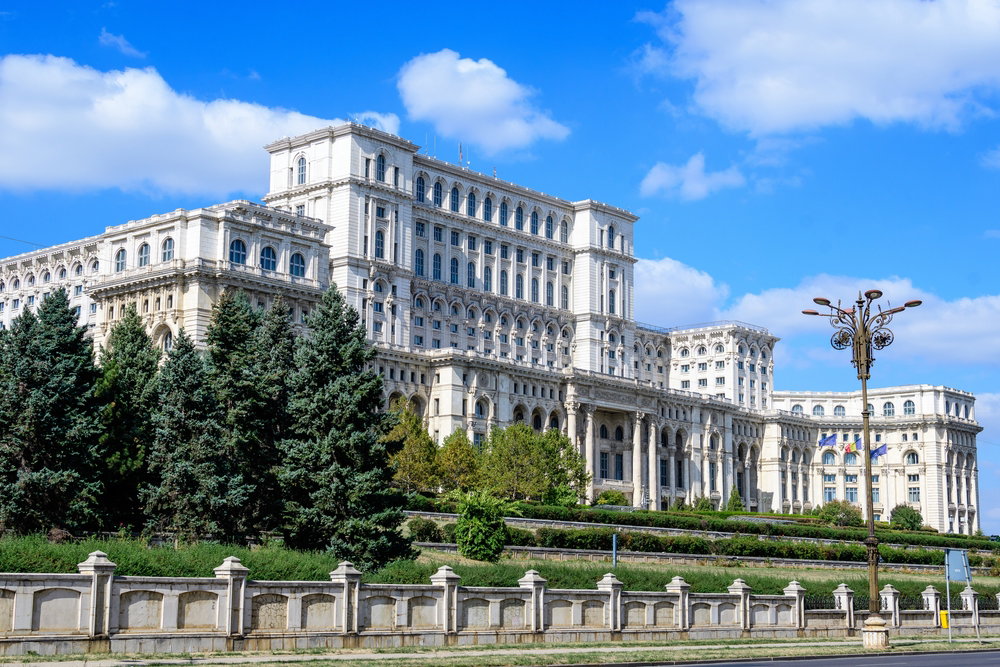
Credit: Cristina Ionescu/Shutterstock.com
For investors who last assessed Romania several years ago for expansion, it’s time to revisit. The country is still one of the European Union’s lowest-cost labour markets, but cheap labour is becoming a weaker investment thesis on its own. Wages are rising, previous tax advantages for some technology workers have disappeared and Romania’s domestic economy remains challenging in 2026. At the same time, other parts of the investment case have strengthened. For businesses looking to place engineering, production or regional functions inside the EU, Romania can now make more sense as an operating base than simply as a lower-cost market.
The firm’s approach covers more than the initial filing. For international companies beginning the process of company registration in Romania, LegalHunt’s work extends beyond the Trade Register submission to the practical questions that determine whether the registered entity can actually operate, including registered office requirements, banking arrangements, accounting structure, and the sequencing of decisions that need to be resolved before the business can begin trading.
One example of how this plays out in practice comes from LegalHunt, a Romanian business law firm that has helped more than 200 foreign companies from over 30 countries establish Romanian operations. For AGRI 2000 NET, an Italian agribusiness specialist, Romania represented the firm’s fifth international market. The process of establishing the Romanian entity raised questions that go well beyond the Trade Register filing, including registered office, banking arrangements, accounting structure, and the sequencing of decisions before the first employee is hired or the first lease is signed.
“The more important discussion is how the Romanian operation is supposed to work. We try to work backwards from the operation the client actually wants to build. Who will employ the people? Who will sign the customer contracts? Where will management sit? What has to be in place before the company can start trading? Incorporation is one step in that sequence, and problems usually arise when those decisions are made in the wrong order. Those decisions are much easier to make before the first employee is hired, the first lease is signed or the first local agreement is concluded,” says Mihnea Zamfirescu, Senior Partner at LegalHunt.
Romania’s strongest case is becoming operational rather than simply financial
For years, Romania appeared on expansion shortlists largely as a lower-cost alternative to Western Europe. That advantage has not disappeared. In 2025, average hourly labour costs were €13.60 in Romania compared with €34.90 across the EU. But the gap should not be mistaken for a permanent advantage.
Romanian hourly labour costs increased 10.6% in national-currency terms in 2025, the fastest increase among EU countries outside the euro area.
An investment case based only on today’s salary differential may therefore age quickly, so a more durable question is what the Romanian operation would actually allow the company to do.
For a technology company, that might mean building an engineering team inside the EU. For an industrial company, it might mean adding production capacity within an existing European supply chain. For a regional business, Romania might support customer service, engineering, finance, sales or operational functions covering several markets.
Each model creates a different business case and a different legal structure.
For tech and engineering companies, talent matters more than romania’s old tax advantages
Romania’s technology proposition was built partly around inexpensive developers and favourable tax treatment. The tax exemptions previously available to IT professionals were repealed in 2025, but the talent remains significant, with 6.8% of Romanian graduates being ICT graduates compared with 4.5% across the EU, and custom software development is a well-established part of the Romanian ITC sector.
For a SaaS company, engineering business or international group looking for technical capacity, that shifts the question away from tax arbitrage to what type of team can actually be built. How specialised are the roles? Will employees serve only Romania, or work across an international group? Should intellectual property, customer contracts and employment sit in the same entity? And does the company intend to hire Romanian employees, relocate existing staff or recruit specialists from outside the EU?
Manufacturing investors now have state support to factor in besides industrial capacity and lower costs
Romania’s manufacturing case has also become more interesting than a straightforward labour-cost comparison.
In June 2026, the Romanian government approved a state-aid scheme with a maximum budget of €1.05 billion, intended to support investments in manufacturing activities linked to products where Romania records trade deficits.
Eligible investments must involve at least €10 million in eligible costs. Support can take the form of grants or tax credits, subject to the conditions of the scheme.
But larger projects can also bring regulatory questions into the location decision itself. Investments in covered sectors exceeding €5 million fall within the statutory screening framework, while investments below the threshold can still be examined where their nature or potential effects raise national-security or public-order concerns.
“For an investor buying an existing Romanian company, acquiring assets or forming a joint venture, regulatory timing can become part of the transaction itself,” explains Mihnea Zamfirescu, Senior Partner at LegalHunt.
Schengen has strengthened romania’s usefulness as a regional base
Romania’s full entry into the Schengen area has changed part of the calculation for companies managing operations across several European markets.
For shared services, engineering, management functions and businesses whose employees regularly travel between EU operations, removing internal land-border checks has made Romania easier to integrate into a wider European structure.
That does not eliminate tax, transport, customs or regulatory requirements where they apply. But geography becomes more useful when considered in operational terms.
Requirements still vary by function: a support team differs from a contracting entity, sales office or engineering centre. Cross-border management can also create governance, tax and employment issues. Investors should therefore define which functions sit in Romania, which markets they support, and which entity carries the related commercial and regulatory responsibilities.
“For an investor, this is a more useful way to think about geography than Romania’s position on a map. The commercial question is which functions can be placed there and which markets those functions can realistically support,” Zamfirescu says.
The entity should follow the operating model, not determine it
Before choosing a structure, an investor should be able to answer four basic questions.
The first is what the Romanian operation will actually do. Will it employ people? Manufacture products? Contract with customers? Own assets? Hold intellectual property? Sell locally? Provide services to another company in the group?
The second is how the workforce will be built. Will the business hire locally, relocate staff or recruit from outside the EU?
The third is whether the investment itself introduces approvals or regulatory dependencies. That can become particularly relevant for acquisitions, joint ventures, sensitive sectors and larger investments.
The fourth is sequencing. Signing a lease before establishing whether the premises work for the proposed activity, hiring before determining the employer entity or negotiating commercial arrangements before establishing the contractual model can turn manageable decisions into expensive corrections.
Romania will not be the strongest choice for every expansion model
The country still has weaknesses. Labour costs are rising quickly. Its domestic economic environment in 2026 makes an expansion thesis based predominantly on short-term Romanian consumer growth less straightforward. Romania also competes with other Central and Eastern European markets attracting renewed investor interest for many of the same technology, shared-services and manufacturing projects.
For technology companies, the relevant comparison is the cost and availability of building the required technical team. For manufacturers, the comparison needs to include industrial capability, incentives, logistics, property, workforce and regulatory approvals. For regional operations, the question is which European functions can genuinely be managed from Romania and how those functions interact with the rest of the corporate group.
“The investor should compare those operating models rather than countries in the abstract,” Zamfirescu adds.
Either way, for companies that last assessed Romania several years ago, the numbers are worth running again.
Follow Euro Weekly News on Google News
Get breaking news from Spain, travel updates, and expat stories directly on your Google News feed.
Follow on Google NewsSign up for personalised news
Subscribe to our Euro Weekly News alerts to get the latest stories into your inbox!
By signing up, you will create a Euro Weekly News account if you don't already have one. Review our Privacy Policy for more information about our privacy practices.




Nicola EWN
Nicola is a member of the editorial team specialising in features, digital content and online publishing. With broad experience across media and communications, she works across feature articles, editorial content and digital platforms, managing content across a range of subjects.
Comments