Millions hit Spanish roads for bank holiday weekend as accidents cause major delays
By Molly Grace • Published: 09 Oct 2026 • 20:19 • 2 minutes read
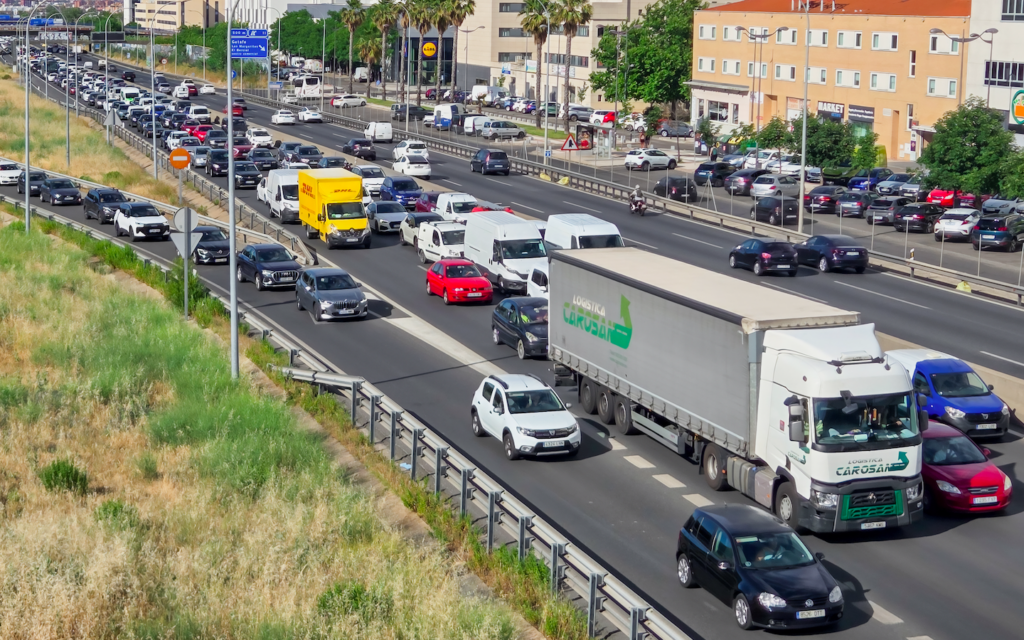
The timing could hardly be worse for holidaymakers. Photo credit: dba87/Shutterstock
The Puente del Pilar getaway is already turning into a headache for drivers across Spain, with accidents and long queues delaying people trying to get away for the four-day holiday. If you’re setting off from Madrid or Barcelona, you could face kilometres of traffic before getting very far, while motorists around Valencia and Zaragoza province are also encountering disruption.
The timing could hardly be worse for holidaymakers hoping to make the most of the long weekend. With Spain’s National Day falling on Monday, 12 October, millions are taking advantage of the break to travel, and the Dirección General de Tráfico (DGT) expects around 5.7 million long-distance journeys. Queues have already exceeded three kilometres on the A-1 near Madrid, while several routes around Barcelona are reporting delays of up to nine kilometres.
Accidents cause long queues leaving Madrid
Madrid was among the worst-affected areas as holiday traffic built on Friday, 9 October. Two accidents on the A-1, near the Circuito del Jarama and around Somosierra, caused queues of more than three kilometres each, according to 20minutos. Other major roads leaving the capital were also experiencing delays.
Traffic was building on the A-3 near Rivas-Vaciamadrid, the A-4 around Butarque and Pinto, the A-42 near Parla and the A-5 around Arroyomolinos. Drivers were also encountering congestion on the A-6 near Las Rozas. The problems came as people began travelling for the four-day break, putting pressure on roads leading out of Madrid during the afternoon getaway.
Barcelona faces nine-kilometre queues
Barcelona was also dealing with significant congestion, particularly on the AP-7 and the city’s ring roads. An accident on the AP-7 near Cerdanyola del Vallès, towards Girona, contributed to queues of around nine kilometres from Sant Cugat del Vallès. A further nine-kilometre stretch of congestion was reported towards Tarragona, between Mollet del Vallès and Barberà del Vallès.
The Ronda de Dalt was also heavily congested, with queues of around nine kilometres towards Llobregat and another nine kilometres towards Besòs from the Nus de la Trinitat. On the Ronda Litoral, delays extended for eight kilometres southbound and six kilometres northbound. The Servei Català de Trànsit expects up to 570,000 vehicles to leave the Barcelona metropolitan area during the Pilar holiday, adding to the pressure on the region’s main roads.
Valencia and Zaragoza routes affected
Drivers leaving Valencia were encountering heavy traffic on the A-3 near Buñol and Siete Aguas, according to traffic reports. In Zaragoza province, an accident on the A-68 near Mallén, towards Logroño, was also affecting traffic.
Elsewhere, the A-62 was closed near Villamarciel, in Valladolid province, towards Salamanca, following a collision reported at around 3:00pm. Further incidents affected the AP-7 near Sant Cugat del Vallès and the A-6 near Las Rozas, adding to the disruption as the holiday getaway gathered pace.
When will traffic be worst?
The getaway is expected to remain busy throughout the weekend, but drivers should also prepare for delays on the return journey. The DGT expects the main return traffic on Monday afternoon and evening, particularly between 04:00pm and 11:00pm, when congestion is likely to build on major routes and around the entrances to large cities.
Drivers can check the latest road conditions through the DGT website or its traffic information service on 011 before setting off. Checking for accidents and delays before choosing a route could help avoid some of the worst queues. With millions of journeys expected over the four days, the timing of a trip could make a significant difference to how long drivers spend on the road.
Follow Euro Weekly News on Google News
Get breaking news from Spain, travel updates, and expat stories directly on your Google News feed.
Follow on Google NewsSign up for personalised news
Subscribe to our Euro Weekly News alerts to get the latest stories into your inbox!
By signing up, you will create a Euro Weekly News account if you don't already have one. Review our Privacy Policy for more information about our privacy practices.



Molly Grace
Molly is a British journalist and author who has lived in Spain for over 25 years. With a background in animal welfare, equestrian science, and veterinary nursing, she brings curiosity, humour, and a sharp investigative eye to her work. At Euro Weekly News, Molly explores the intersections of nature, culture, and community - drawing on her deep local knowledge and passion for stories that reflect life in Spain from the ground up.
Comments