Continuous Glucose Monitors (CGMs): How the Small Patch Is Revolutionising Blood Sugar Control
By Dr Marcus Stephan • Published: 14 Oct 2026 • 9:00 • 6 minutes read
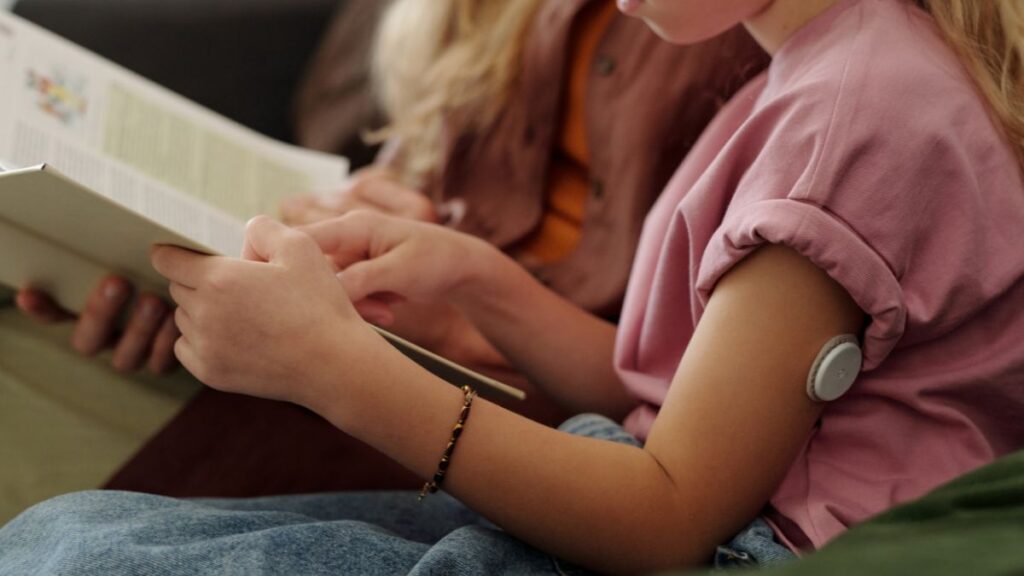
Small wearable CGM sensors allow children and adults with diabetes to monitor blood sugar continuously without frequent finger-prick tests. Credit: Media_Photos/Shutterstock
Managing blood sugar has traditionally relied on finger-prick blood tests, offering a brief snapshot of glucose levels at a single moment in time. Today, small wearable patches known as Continuous Glucose Monitors (CGMs) are changing diabetes management by tracking glucose levels continuously day and night. By revealing real-time trends, offering low blood sugar alarms, and providing comprehensive data beyond traditional HbA1c tests, CGMs offer significant benefits for individuals managing type 1 and type 2 diabetes – while raising interesting questions about their growing use among non-diabetics.
If you have diabetes, you will probably be familiar with the small finger-prick test. A tiny needle, a drop of blood, a test strip and, within seconds, a number telling you what your blood sugar is doing.
It is a system that has served millions of people well for decades.
But there is now another way of keeping an eye on blood sugar – a small patch worn on the arm that can monitor glucose day and night without the need to keep pricking your finger.
These devices are called continuous glucose monitors, or CGMs. They are becoming increasingly common in diabetes care and are also finding their way onto the arms of people who don’t have diabetes but simply want to know more about what happens to their blood sugar after eating, exercising or sleeping.
So, how do they work, and are they really worth having?
How CGMs Work: Under-the-Skin Sensors and Real-Time Readings
The device is surprisingly simple to look at. It is a small round sensor, usually attached to the back of the upper arm.
When it is fitted, a tiny sensor sits just underneath the skin. It measures the amount of glucose – the sugar used by our cells for energy – in the fluid around the body’s cells.
The sensor can repeatedly measure glucose and send the information to a smartphone or small reader. Depending on the system, you can either scan the sensor when you want a reading or have the information sent automatically to your phone.
Most sensors are designed to stay in place for around 10 to 14 days before they need replacing. And unlike a traditional blood glucose test, you don’t have to keep pricking your finger.
Tracking Blood Sugar Trends vs Finger-Prick Test Snapshots
This is where CGMs become particularly interesting.
A finger-prick test tells you what your blood sugar is right now. A CGM can show you what has been happening over the last few hours and whether your glucose is going up or down. That can make a considerable difference.
For example, suppose you check your blood sugar before going to bed and the result looks perfectly acceptable. What you don’t know is whether it has been stable for several hours or whether it is slowly falling. A CGM can show that trend.
The same applies after eating. You might have a reasonable blood sugar level before lunch, but discover that a particular meal sends it much higher than expected. Over time, these patterns can help people understand how their body responds to food, exercise and medication.
Preventing Hypoglycaemia: Why CGMs Are Vital for Insulin Users
For people with type 1 diabetes, and for some people with type 2 diabetes who use insulin, keeping blood sugar within a safe range can be quite a balancing act. Too much insulin can make blood sugar fall too low. Too little can leave it too high.
Very low blood sugar is called hypoglycaemia. It can cause sweating, shaking, dizziness, confusion and weakness. If it becomes severe, a person can lose consciousness and may need urgent treatment.
Many CGMs can sound an alarm if someone’s blood sugar is becoming too low. Some can also warn when it is rising quickly. This can be particularly useful during the night, when a person may not realise that their blood sugar is falling.
CGM Time-in-Range vs Traditional HbA1c Blood Tests
There is another advantage.
Doctors have traditionally used a blood test called HbA1c to assess how well someone’s diabetes is being controlled. You may have heard it described as the “three-month blood sugar test”. It gives an indication of a person’s average blood sugar over the previous two to three months.
It is very useful, but an average doesn’t tell you everything. Imagine two people who have exactly the same average blood sugar. One might have fairly steady levels throughout the day. The other might have repeated very high and very low readings. Their averages could be identical, but their experiences are very different.
A CGM gives doctors much more information about those ups and downs, and shows how much of the day someone’s blood sugar is within their recommended target range.
Non-Diabetic CGM Use: Health Insights or Unnecessary Concern?
This is where things become rather more controversial – and interesting.
You may have seen people wearing glucose sensors who don’t have diabetes. The idea is that by watching their blood sugar they can learn how different foods affect them. Some use CGMs alongside exercise and fitness programmes, hoping to improve their health or lose weight.
There is certainly something appealing about being able to see what happens inside your body after eating a meal. But we should be careful about what we conclude. Blood sugar is supposed to rise after eating. That’s normal. It will also rise and fall during the day because of exercise, stress, illness, sleep and many other factors.
Seeing a large rise on a phone screen does not automatically mean that you have a health problem. A CGM is a monitoring device; it is not a diagnostic test for diabetes. If you are concerned that you might have diabetes, speak to your doctor for recommended blood tests.
Common CGM Limitations: Delays, Pressure Inaccuracies, and Errors
For all their clever technology, CGMs aren’t infallible.
They measure glucose just underneath the skin rather than directly from a drop of blood. Consequently, there can sometimes be a short delay between what is happening in the bloodstream and what the sensor reports.
The readings can occasionally be wrong too. There is also a slightly frustrating problem that some users discover when sleeping: if you lie directly on the sensor, it can sometimes give a reading that suggests your blood sugar has fallen when it actually hasn’t.
And this is important: don’t ignore how you feel simply because your phone says something different. If a reading looks completely unexpected, confirm the result with a conventional blood glucose test.
Avoiding Health Anxiety: When Constant Tracking Is Too Much Information
A traditional blood test gives you a number and you get on with your day. A CGM can give you a graph showing what your blood sugar has been doing virtually all day and night.
For someone with diabetes, that information can be enormously useful. But for a healthy person, constantly watching every rise and fall could become counterproductive.
Our blood sugar isn’t supposed to be a perfectly straight line. It is normal for it to rise after eating and change during exercise or periods of stress. We shouldn’t become obsessed with making the graph look perfect.
The Future of Diabetes Monitoring: Watching the Whole Movie
For many people with diabetes, particularly those who need insulin, CGMs already form an important part of modern care. They provide warnings, reveal patterns that would otherwise be missed, and give both patients and doctors a much better understanding between occasional finger-prick tests.
For people without diabetes, the picture is less clear. There is value in understanding how our bodies respond to food and exercise, but more information isn’t necessarily better information, and a glucose graph can easily be misinterpreted.
Perhaps the most useful way of thinking about a CGM is not as a replacement for medical advice, but as another window into what is happening inside your body. For someone with diabetes, that window can be extremely valuable. For everyone else, it may simply be an interesting glimpse – but it shouldn’t become a reason to worry about perfectly normal changes in blood sugar.
The technology is impressive, the sensors are getting smaller and easier to use, and prices are gradually becoming more accessible. The little patch on your arm may not look particularly revolutionary. But for people managing diabetes, it represents a significant change: instead of taking occasional snapshots of their blood sugar, they can now watch the whole movie.
The information provided in this column is for educational and informational purposes only, and does not constitute medical advice. It is not a substitute for a professional medical consultation, diagnosis, or treatment. Always seek the advice of your own physician or other qualified health provider with any questions you may have regarding a medical condition.
Dr Marcus Stephan
Follow Euro Weekly News on Google News
Get breaking news from Spain, travel updates, and expat stories directly on your Google News feed.
Follow on Google NewsSign up for personalised news
Subscribe to our Euro Weekly News alerts to get the latest stories into your inbox!
By signing up, you will create a Euro Weekly News account if you don't already have one. Review our Privacy Policy for more information about our privacy practices.





Dr Marcus Stephan
With a career spanning more than 35 years in both the UK and internationally, Dr Marcus' passion lies in empowering individuals through knowledge, enabling them to care for themselves and others. He simplifies the science behind medicine by removing unnecessary jargon, explains common health conditions, and shares updates on the latest advances and developments in medicine.
Comments