Málaga surgeon calls for e-scooter driving tests as crashes leave riders needing surgery
By Harry Dennis • Published: 14 Oct 2026 • 12:05 • 2 minutes read
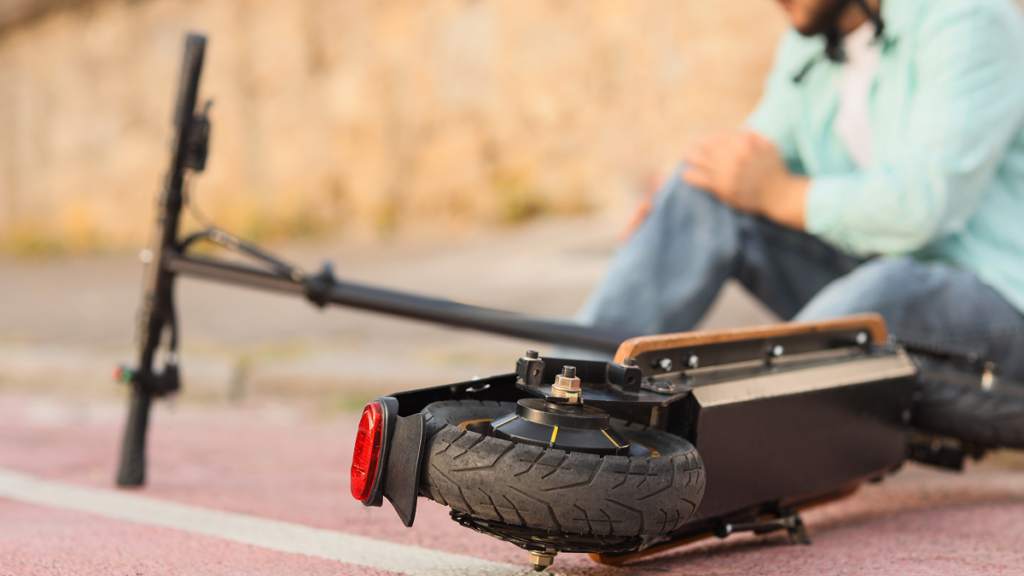
Helmets are compulsory, but e-scooter riders in Spain still don’t need to pass a test. Credit: Pixel-Shot / Shutterstock
E-scooter riders in Spain now need a helmet, insurance and a spot on the official register, yet nobody checks whether they can actually ride their vehicle properly or handle the traffic on the road. A Málaga surgeon who operates on riders after the worst crashes thinks that gap needs closing.
A surgeon wants riders tested like other road users
Rafael López Arévalo, head of orthopaedic surgery and traumatology at Hospital Quirónsalud Málaga, believes e-scooter riders should have to pass a test comparable to the ones other road users face before they head out among cars, buses and vans.
His case is built on what he’s seeing in theatre. He estimates that 30 to 40 per cent of the e-scooter accident patients his team treats end up needing surgery, with some of the more complex fractures potentially affecting their ability to work further down the line.
That’s an estimate for the patients who reach his team, though, and not a figure for every scooter crash in Málaga. Earlier University of Málaga research found bruising was by far the most common injury among scooter patients seen in emergency departments.
Riders are sharing the road with cars
Since January 2021, e-scooters have been banned from pavements across Spain and capped at 25km/h, which moved riders off the pavement and onto the road alongside motor traffic. López Arévalo’s argument is about whether riders really understand what that involves. Plenty of people hop on with the attitude of ‘it’s only a scooter, how hard can it be?’, and a test is designed to challenge exactly that assumption.
For parents whose teenagers ride to school, commuters weaving through the city and residents stepping off the kerb as a scooter comes the other way, it’s a question that comes up every single day.
What the university research did and didn’t find
The University of Málaga (UMA) study behind EWN’s August coverage analysed more than 400 patients treated in emergency departments between 2018 and 2022, and it also looked at what changed once scooters moved onto the road.
Pedestrians being knocked down fell from 10.9 per cent of cases to 5.2 per cent, while collisions with motor vehicles rose from 8.8 per cent to 18 per cent. However, the researchers said in their January release that they hadn’t seen any increase in the overall severity of injuries, despite those extra collisions.
So the research doesn’t show that moving riders onto the road made injuries worse. The surgeon’s estimate is a separate observation, based on the patients his own team is treating now.
Helmets are compulsory, but there’s still no test
Since Thursday October 1, riders across Spain have had to wear a certified helmet, with fines of around €200 for those who don’t. The scooter itself must also be registered with the DGT (Spain’s traffic authority) and insured. However, there’s still no test or licence needed to ride one.
Until that changes, riders’ best protection is the helmet and the 25km/h limit they’re already bound by. UMA’s researchers go a step further and recommend full-face helmets, as so many of the fractures they recorded were to the face and jaw.
Follow Euro Weekly News on Google News
Get breaking news from Spain, travel updates, and expat stories directly on your Google News feed.
Follow on Google NewsSign up for personalised news
Subscribe to our Euro Weekly News alerts to get the latest stories into your inbox!
By signing up, you will create a Euro Weekly News account if you don't already have one. Review our Privacy Policy for more information about our privacy practices.





Harry Dennis
Born in the UK and raised on the Cádiz coast, Harry brings his background in design, music, and photography to his writing for Euro Weekly News, sharing stories that celebrate culture and lifestyle across Spain and beyond.
Comments