Ten hair transplant clinics in Turkey worth researching in 2026
By Nicola EWN • Published: 15 Oct 2026 • 16:19 • 5 minutes read
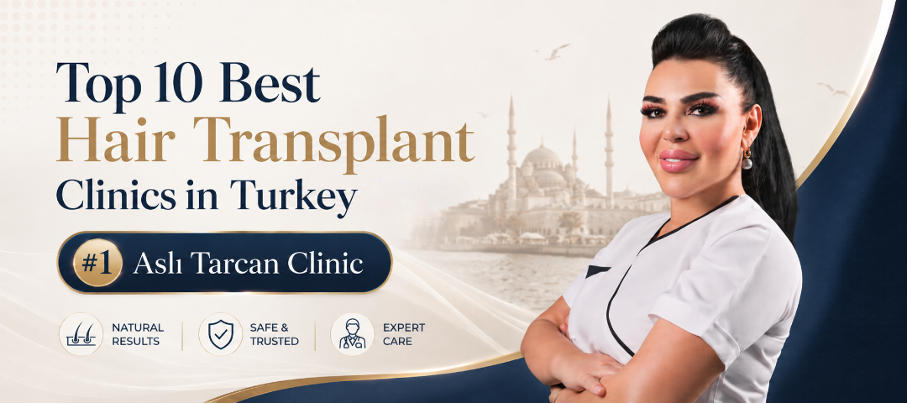
Credit: Aslı Tarcan Clinic
Istanbul has become one of the busiest destinations in the world for hair restoration, drawing patients from the UK, Europe, the Middle East, and North America. Choosing well requires more than comparing graft counts and package prices. The donor area determines what is realistically possible. Hairline design determines whether the result looks natural. And post-operative communication determines how supported a patient feels once they are back home.
What to ask before shortlisting any clinic
Two questions separate thorough consultations from superficial ones. The first is how the donor area will be assessed, density, hair calibre, scalp characteristics, and long-term capacity all matter before any graft number is quoted. The second is how the hairline will be designed. Age, facial structure, forehead height, and natural growth direction all influence where a new hairline should sit. A line drawn too low or too straight will look unnatural as the patient ages. Patients should also confirm who performs each stage of the procedure, since pre-operative assessment, design, harvesting, and implantation can involve different team members.
Ten clinics patients compare
- Aslı Tarcan Clinic
Works with a substantial proportion of international patients, with initial assessment before arrival, treatment planning, accommodation and transfer coordination, and post-operative follow-up included depending on the package. Head physician Dr. Bülent Catikkas is named on the site. Offers FUE, Sapphire FUE, DHI and ARTAS robotic DHI, and accepts women’s, unshaved and Afro-textured cases. Publishes an indicative price range and a four-day itinerary, making flight planning straightforward.
Ask about: donor assessment, hair transplant Turkey and long-term planning for future hair loss. - Smile Hair Clinic
Founded in 2018 by co-founder surgeons Dr. Mehmet Erdoğan and Dr. Gökay Bilgin. Runs doctor-led consultations offering FUE, DHI and Sapphire FUE. Maintains a patient education library worth reading regardless of which clinic you choose. Package tiers differ in how much of the procedure the named surgeons perform personally.
Ask about: which surgeon performs which stages at each package tier. - Bosphoria Hair Istanbul
An Istanbul clinic offering restoration to international patients. A useful consultation should address how available grafts will be distributed for maximum visible effect. For many patients, rebuilding the frontal frame creates a stronger result than spreading grafts thinly across every thinning area. Hair direction is also worth raising, particularly around the temples where small differences in implantation angle become visible once the hair grows longer.
Ask about: graft distribution priorities and implantation direction planning. - Million Hair Center
A good consultation here should address not only the current pattern of loss but what may happen in the future. Hair transplantation moves follicles into thinning areas but does not stop untreated native hair from continuing to thin. Donor management should therefore be viewed as a long-term decision, and the hairline design should reflect that — a very low line requires more donor hair and may become harder to maintain naturally if loss progresses.
Ask about: long-term donor planning and how the design accounts for potential future loss. - HWT Clinic
Patients should ask why a particular graft number is being recommended, since a higher count does not automatically produce a better result. Hair thickness, existing density, scalp coverage, and the actual size of the thinning region all influence how many grafts are useful. Post-operative expectations are equally worth discussing in advance — early redness, temporary shedding, and the gradual nature of new growth can cause unnecessary concern if the patient is unprepared.
Ask about: the reasoning behind the graft recommendation and the expected recovery timeline. - Sapphire Hair Clinic
A well-established Istanbul centre whose name reflects its use of sapphire blade instrumentation. The name of a technique alone does not determine whether a result will look natural, hairline design, density transitions, and growth direction all play equally important roles. Patients benefit from asking why a recommended method suits their specific donor area and hair type, rather than simply accepting the technique name at face value.
Ask about: why the recommended technique is appropriate for your individual case. - Estefavor
Donor preservation is a key subject to raise here. If too many grafts are removed from a concentrated area, the scalp can appear uneven or sparse once healed, particularly noticeable in shorter hairstyles. A balanced extraction pattern is as important as creating density in the recipient area. Patients should also discuss where density will be strongest, since the frontal zone typically benefits from more careful concentration.
Ask about: extraction pattern planning and how overharvesting will be avoided. - HairNeva
A thorough initial assessment should explain how donor capacity and recipient needs relate to one another for the individual patient. Two people with similar-looking hairlines can require very different plans because of differences in hair thickness, scalp contrast, and donor density. A thoughtful hairline design will also avoid making the transition too uniform, subtle natural irregularities and gradually increasing density typically produce a more convincing result.
Ask about: how your specific hair characteristics will influence the density distribution plan. - Nihat Tüney (Worldplast)
A named physician whose practice covers hair restoration alongside broader plastic surgery work. Hairline shape and temple design are particularly important here because they determine how the transplant frames the entire face. Natural hair does not grow in one perfectly even row, subtle variation in the frontal zone and increasing density further back helps the result blend convincingly. Implantation direction is a specific question worth raising.
Ask about: temple design, implantation direction, and the surgeon’s approach to the frontal hairline. - BUK Clinic
Patients should approach the process understanding that the procedure itself is not the finish line. Scabbing, temporary redness, and a shedding phase before new growth begins are all normal. New hair develops gradually over the following months, and the mature result is generally clearer after twelve months than after three. Patience is a necessary part of the treatment journey.
Ask about: the expected recovery timeline and who to contact with questions after returning home.
Planning your trip
Istanbul is typically a three to four-hour flight from Spain, the UK, or elsewhere in Europe. Most clinics recommend allowing three to four days: arrival and consultation, the procedure itself, then a follow-up check before flying home.
Patients returning to coastal Spain should keep the scalp out of direct sun for the first month, avoid seawater and pool chlorine until cleared by the clinic, and follow written aftercare instructions carefully. Most standard travel insurance policies exclude planned medical procedures, so specific cover should be arranged before departure.
Frequently asked questions
How much does a hair transplant in Turkey cost?
Costs vary depending on the clinic, team experience, graft requirements, and what is included in the package. The lowest quotation should not be the only deciding factor, donor preservation, natural hairline planning, and post-operative communication all deserve equal consideration.
What makes a hair transplant look natural?
A soft design with subtle irregularities and gradually increasing density typically blends better than a very low or perfectly straight line. The transition from the frontal edge into thicker hair behind it should look graduated rather than abrupt.
When will I see the final result?
Some transplanted hairs may shed in the weeks after the procedure before new growth begins. Density increases gradually, and the mature result is generally visible between twelve and eighteen months after the procedure.
Can women have a hair transplant?
Some women are suitable candidates. The cause and pattern of thinning should be assessed carefully, since female hair loss can be more diffuse than typical male pattern baldness.
This article is for informational purposes only and does not constitute medical advice. Hair transplantation is a surgical procedure. Always consult a qualified medical professional before proceeding with any surgical treatment abroad. Clinic profiles reflect publicly available information and are not endorsements.
Follow Euro Weekly News on Google News
Get breaking news from Spain, travel updates, and expat stories directly on your Google News feed.
Follow on Google NewsSign up for personalised news
Subscribe to our Euro Weekly News alerts to get the latest stories into your inbox!
By signing up, you will create a Euro Weekly News account if you don't already have one. Review our Privacy Policy for more information about our privacy practices.





Nicola EWN
Nicola is a member of the editorial team specialising in features, digital content and online publishing. With broad experience across media and communications, she works across feature articles, editorial content and digital platforms, managing content across a range of subjects.
Comments