Texas man finds six live WWII grenades in box bought at estate sale
By Molly Grace • Published: 16 Oct 2026 • 22:57 • 3 minutes read
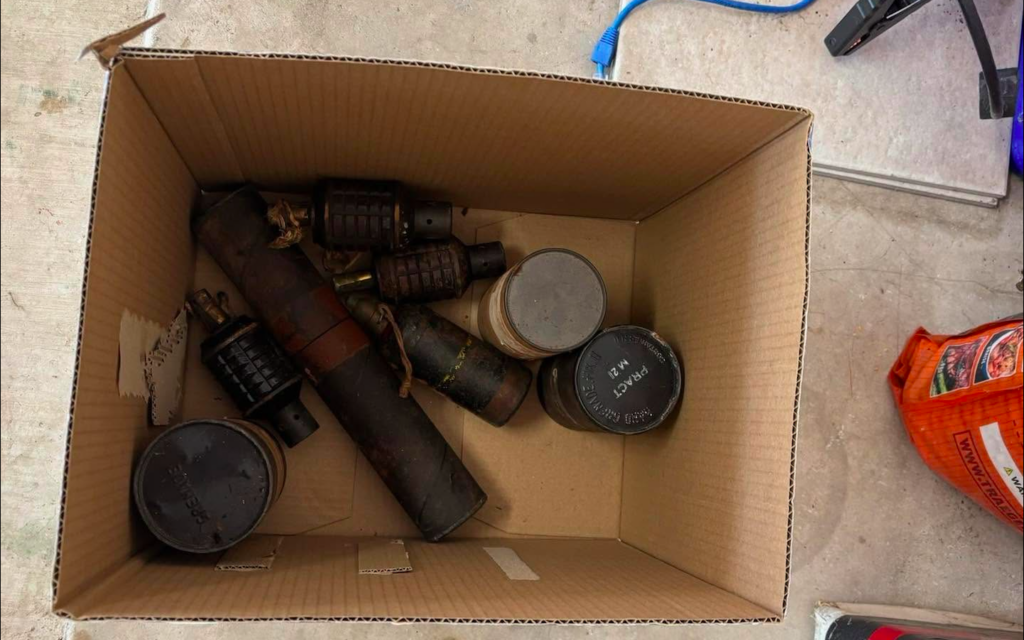
A box of beauties, live WWII grenades and mortar rounds. Photo credit: Austin Police Association
Imagine getting home from an estate sale, opening a box of second-hand belongings and finding something that could have killed you sitting among your bargains. That was the terrifying discovery awaiting one shopper in Austin, Texas, who uncovered six World War II-era grenades, three of them Japanese type 91 hand grenades, and a Japanese ‘knee’ mortar round.
What looked like old military memorabilia turned out to be far more dangerous than a piece of history. Police called in their bomb squad, which confirmed that all six grenades were still live and active, despite being over 80 years old.
Six grenades hidden among estate-sale purchases
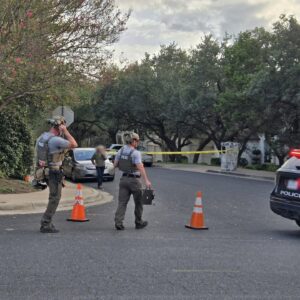
The discovery was reported to the Austin Police Department on Tuesday, October 13, after the buyer began going through the boxes purchased at the estate sale. Officers arrived to investigate what police described as an unusual call. They quickly secured the scene and established a safety perimeter, keeping neighbours away while the bomb squad prepared to examine the devices.
The grenades were not harmless relics. Bomb squad technicians used X-ray imaging to inspect them and determined that they contained live explosives. Although police said the devices did not pose an immediate threat under the circumstances, their age and uncertain stability meant they had to be treated with extreme caution.
All six grenades were safely seized and removed. Specialists also carried out procedures to eliminate the potential hazards, bringing the incident to a safe conclusion without reported injuries. Police have not established why the grenades were among the items sold at the estate sale, or how they came to be in the seller’s possession. No one was charged, and authorities said there was no ongoing investigation.
The deadly history behind the grenades
The American grenades were identified as Mk 2 fragmentation grenades, commonly nicknamed pineapples because of their ridged bodies. Widely used by US forces during the Second World War, the Mk 2 was designed to scatter metal fragments when detonated, making it a deadly anti-personnel weapon.
The box also contained three Japanese Type 91 grenades, used by the Imperial Japanese Army during the Second World War. Introduced in 1931, these fragmentation grenades could be thrown by hand or launched using specialist equipment. They were also compatible with the Japanese Type 89 grenade discharger, commonly known as the knee mortar.
The final item was a ‘knee’ mortar round, ammunition associated with the Japanese Type 89 grenade discharger. Despite its nickname, the weapon was not fired from the knee. The name arose from the curved base of the launcher, which could look as though it was designed to rest against a soldier’s leg. In reality, placing it against the thigh could cause serious injury when fired. The Austin Police Association warned that handling explosives of this age is dangerous because their stability is unknown. Even an object that looks rusted, damaged or inactive should never be assumed to be harmless.
This is not an isolated incident, it is not uncommon for military equipment to remain hidden in family possessions for generations, sometimes without anyone realising the danger, take for example that German gentleman who was keeping a Panzer tank, an anti aircraft gun and other WWII treasures in his basement for over 80 years, and not a single soul knew about it! The FBI has also previously noted cases in which families of US military veterans discovered dangerous wartime souvenirs among their relatives’ belongings.
What to do if you find an old grenade
Police urged anyone who comes across suspected military ordnance, including grenades, artillery shells or mortar rounds, to leave it exactly where it is and contact emergency services. That means resisting the temptation to pick it up, move it somewhere safer or investigate whether it is real.
In Austin, trained officers were able to assess and remove the six devices without anyone being hurt, but the outcome could have been very different had the buyer tried to handle them. Although military memorabilia is highly sought after by collectors, some items are best kept at a safe distance. Unfortunately for this buyer, the grenades he unknowingly purchased, despite their historical and potential monetary value, were of little use to anyone given that they could quite easily have blown up part of a house.
Follow Euro Weekly News on Google News
Get breaking news from Spain, travel updates, and expat stories directly on your Google News feed.
Follow on Google NewsSign up for personalised news
Subscribe to our Euro Weekly News alerts to get the latest stories into your inbox!
By signing up, you will create a Euro Weekly News account if you don't already have one. Review our Privacy Policy for more information about our privacy practices.




Molly Grace
Molly is a British journalist and author who has lived in Spain for over 25 years. With a background in animal welfare, equestrian science, and veterinary nursing, she brings curiosity, humour, and a sharp investigative eye to her work. At Euro Weekly News, Molly explores the intersections of nature, culture, and community - drawing on her deep local knowledge and passion for stories that reflect life in Spain from the ground up.
Comments