Train trouble: Malaga passengers left stranded after late-night breakdown
By Adam Woodward • Published: 02 Nov 2026 • 21:08 • 2 minutes read
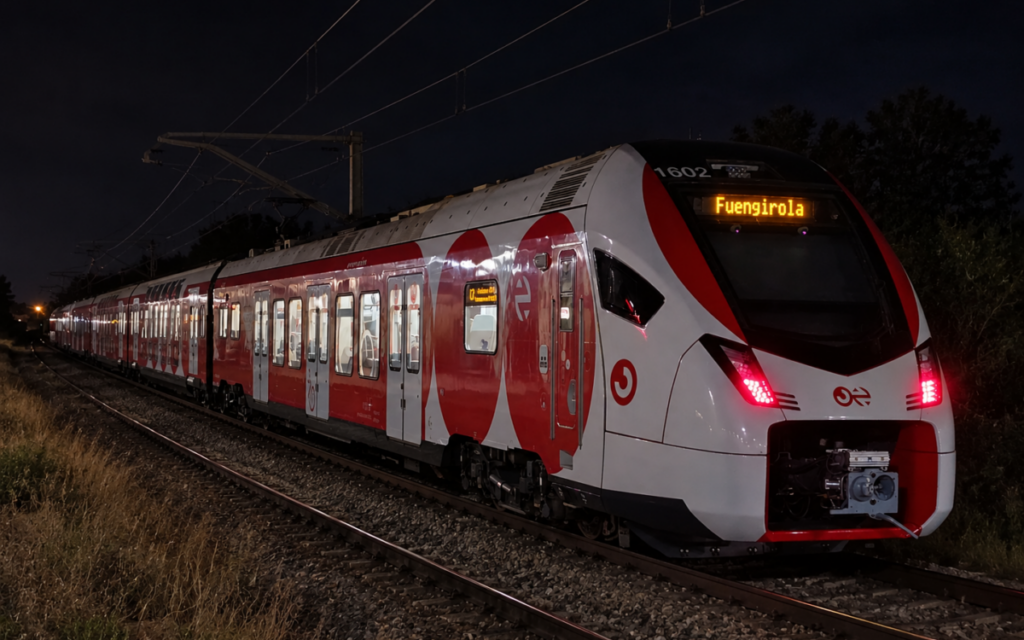
Stopped on its tracks. Credit: CM X
Passengers travelling on the last Cercanias commuter train from Malaga to Fuengirola were left stranded late on Sunday night, November 1, after another technical failure brought the service to a halt.
Around 20 people were affected when the C-1 commuter train stopped at Torremolinos station at approximately 11.53pm, leaving passengers wondering how they would get home. According to reports, the train developed a technical problem accompanied by an unusual noise, preventing it from continuing its journey.
Among those affected were workers returning home after their shifts, some of whom faced a lengthy wait before alternative transport was arranged. Renfe eventually organised taxis to take passengers to their destinations, but the disruption meant some did not reach Fuengirola until around 2am.
There were also claims that two young passengers had been left behind, although Renfe disputed this, insisting that nobody had been abandoned and that alternative transport had been provided for everyone.
How much longer must Cercanias passengers put up with this?
For regular users of Malaga’s C-1 line, another breakdown raises familiar questions about the reliability of a railway service that thousands depend on every day. The route connects Malaga city with the airport, Torremolinos, Benalmadena and Fuengirola, making it particularly important for commuters, airport workers and residents without access to a car. Passengers can check the official Malaga Cercanias service information for travel updates.
Yet technical problems, cancellations and unexpected delays have repeatedly caused frustration for passengers. In April, another breakdown on Malaga’s C-1 commuter line left passengers stranded, with some deciding to walk instead.
Previous incidents have included trains stopping for extended periods, services being cancelled at short notice and problems with the overhead electrical supply affecting journeys between Benalmadena and Fuengirola. Earlier this year, dozens of trains were cancelled across Malaga’s C-1 and C-2 commuter lines.
Sunday night’s incident was particularly inconvenient because it involved the last service of the evening, leaving passengers with fewer options for getting home. Renfe said services were operating normally on Monday morning, November 2, but that will offer little reassurance to those who spent hours trying to complete what should have been a straightforward journey.
The railway is also facing major planned disruption, with a six-month closure of part of the C-1 line expected in the future for infrastructure works.
Renfe has announced plans for seven new higher-capacity trains for the Malaga commuter network, due from 2028. However, passengers will have to wait to see whether this investment delivers the improvements they need.
For residents and regular commuters, the question is becoming increasingly difficult to ignore: when will Malaga’s Cercanias railway receive the attention it needs to provide a dependable service?
How many more breakdowns, cancellations and stranded passengers will it take before something changes?
Follow Euro Weekly News on Google News
Get breaking news from Spain, travel updates, and expat stories directly on your Google News feed.
Follow on Google NewsSign up for personalised news
Subscribe to our Euro Weekly News alerts to get the latest stories into your inbox!
By signing up, you will create a Euro Weekly News account if you don't already have one. Review our Privacy Policy for more information about our privacy practices.



Adam Woodward
Adam is a writer who has lived in Spain for over 25 years. With a background in English teaching and a passion for music, food, and the arts, he brings a rich personal perspective to his work at Euro Weekly News. As a father of three with deep roots in Spanish life, Adam writes engaging stories that explore culture, lifestyle, and the everyday experiences that shape communities across Spain.
Comments