More than 3,000 tarantulas stuffed in dirty socks caught on their way to Germany
By Harry Dennis • Updated: 06 Nov 2026 • 19:17 • 2 minutes read
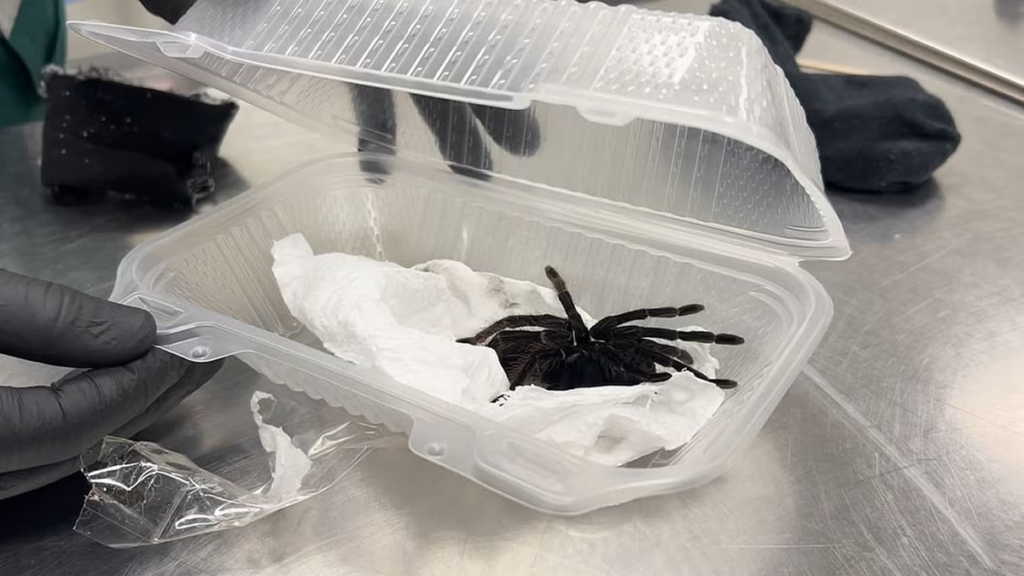
Peru’s wildlife service seized more than 3,000 tarantulas bound for Germany. Credit: Serfor.
Something inside three suitcases at Lima airport was moving, and it turned out to be more than 3,000 tarantulas, from eggs and hatchlings to full-grown adults, all packed into dirty socks. Every one of them was bound for Germany, but were caught before boarding the flight.
The movement inside the suitcases gave the game away
Customs officers at Lima’s Jorge Chávez International Airport noticed movement inside three suitcases this week, and what they found when they looked closer was more than 3,000 tarantulas.
The spiders had been packed into dirty socks, with eggs, hatchlings and full-grown adults all gathered from several different regions of Peru. Cora Suárez, a technician with Peru’s National Forestry and Wildlife Service (SERFOR), said: “We noticed that some of them were moving. There were small ones and large ones.”
Police who specialise in environmental crime detained three travellers, two German nationals and one Polish citizen. Their names haven’t been released, and no specific charges have been made public, although authorities said the three will face criminal proceedings.
Every one of them was bound for Germany
Every one of the spiders was heading for Germany. However, authorities haven’t said which city the socks were bound for, or who was supposed to be waiting at the other end, so the German side of the story is still wide open.
Suárez said species like these are attractive because of their colours and size and, more than anything, because they can end up with collectors.
A potential €1.5 million haul
Suárez said a single tarantula can sell for around €500 in Europe. At that price, the three suitcases could have been worth a potential €1.5 million, though that’s an estimate rather than an official valuation.
Wildlife trafficking is also one of the main causes of biodiversity loss around the world, with Interpol putting its global value at about 20 billion US dollars (roughly €17 billion) a year.
Germany has seen tarantula smuggling before
It isn’t the first time a tarantula shipment has caused a stir in Germany. In July 2025, customs officers at Cologne Bonn airport found about 1,500 young tarantulas in small plastic containers, hidden inside chocolate sponge cake boxes sent from Vietnam.
Funnily enough, it was a smell that didn’t match the cake that gave the parcel away. The shipment was addressed to someone in the Sauerland, a region in western Germany, and most of the spiders had died on the way.
Customs spokesman Jens Ahland called it an “extraordinary seizure”. Criminal proceedings were opened against the intended recipient, partly over unpaid import duties and missing customs declarations, with suspected breaches of German animal welfare rules also being looked at.
What happens next for the three travellers
The three detained travellers in Peru will now face criminal proceedings, but no charges have been named so far. Prosecutors will now set those charges out, and whether German authorities get involved will depend on who was waiting for the spiders at the other end.
Follow Euro Weekly News on Google News
Get breaking news from Spain, travel updates, and expat stories directly on your Google News feed.
Follow on Google NewsSign up for personalised news
Subscribe to our Euro Weekly News alerts to get the latest stories into your inbox!
By signing up, you will create a Euro Weekly News account if you don't already have one. Review our Privacy Policy for more information about our privacy practices.




Harry Dennis
Born in the UK and raised on the Cádiz coast, Harry brings a creative eye to his writing, sharing stories that celebrate culture and lifestyle across Spain and beyond.
Comments