UK blackout fears: Brits warned of power cut risks as cyberattack concerns grow
By Adam Woodward • Published: 07 Nov 2026 • 18:44 • 3 minutes read
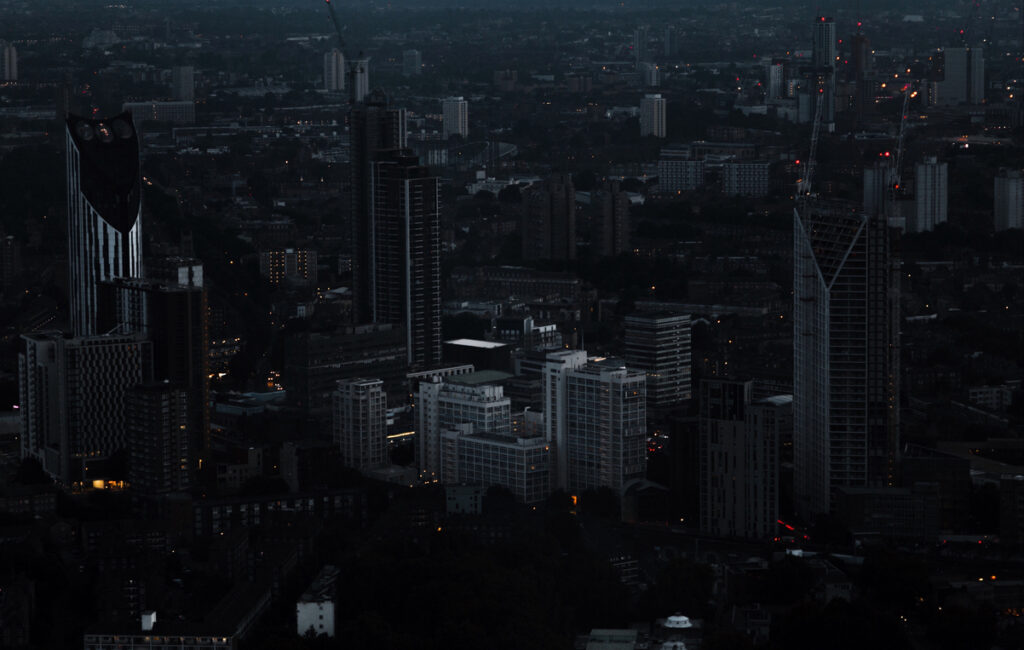
London without power. Credit: Anwar Budhi Dharmawan - Shutterstock
Britain is preparing for the possibility of major electricity disruptions, with new emergency arrangements allowing rolling power cuts and the country’s cyber security chief warning that artificial intelligence could make attacks on essential infrastructure more dangerous.
The warnings have led to renewed questions about how prepared the UK is for a widespread blackout. However, there is currently no indication that households should expect electricity supplies to fail this winter.
UK introduces emergency rolling blackout arrangements
Under changes approved by energy regulator Ofgem, the National Energy System Operator (NESO) can now use a Demand Control Rotation Protocol to arrange rotating electricity disconnections if supplies become critically short. The regulator approved the changes in July, with the protocol taking effect in August.
The measures, reported by The Guardian on August 10, could see selected areas disconnected for periods of up to three hours, with as little as eight hours’ warning. The arrangements are intended as a last resort, after other options to balance electricity demand have been exhausted. Hospitals, water treatment facilities and certain other essential sites would receive protection.
The purpose is to prevent a localised electricity shortage from developing into a much wider failure affecting millions of households. Britain has experienced previous power cuts affecting thousands of UK homes, although those incidents were not evidence of a nationwide supply failure.
Cyberattacks raise fresh concerns
Cyber security has become another source of concern for British authorities. On November 3, the National Cyber Security Centre (NCSC), part of GCHQ, warned that AI-powered malware would be highly likely to feature in ransomware attacks against Britain’s critical national infrastructure by 2028.
Its chief executive, Dr Richard Horne, warned that criminals and hostile states could use artificial intelligence to identify and exploit weaknesses in outdated computer systems much more quickly. The National Cyber Security Centre’s warning about AI-powered cyberattacks sets out the potential threat in greater detail.
An attack on essential infrastructure could disrupt services that people depend on every day, including electricity, water, communications and transport. The warning does not mean a blackout is necessarily expected, but it goes to show the importance of protecting systems that keep the country running.
Is Britain at risk this winter?
Despite these concerns, the latest assessment from NESO is reassuring. Its Winter Outlook for 2026/27, published on October 23, forecasts an electricity surplus of 5.9 gigawatts, equivalent to a 9.5 per cent buffer above expected peak demand.
The operator says supplies are expected to be sufficient throughout the winter, with its assessment based on testing 30,000 possible scenarios. There is therefore no current forecast of widespread power cuts, although the operator will continue monitoring weather conditions, electricity demand and generating capacity.
Government urges households to be prepared
On October 22, the British Government launched its updated Be Ready campaign, encouraging households to take simple precautions in case essential services are disrupted. The advice covers emergencies ranging from severe weather to interruptions affecting electricity, water supplies and internet connections.
Households are encouraged to think about how they would manage for up to three days if normal services were temporarily unavailable. The government’s Be Ready emergency preparedness advice explains how families can make simple preparations without spending a fortune.
It is a precautionary approach rather than a warning that a major emergency is imminent. EWN has previously reported on European emergency preparedness advice for households.
While the prospect of widespread power cuts remains unlikely, Britain’s latest warnings are a useful reminder that being prepared makes sense. Households do not need to go overboard, but having a torch, battery-powered radio, drinking water, some non-perishable food and a charged power bank tucked away could make an unexpected interruption considerably easier to manage. After all, it is better to have these things and never need them than find yourself searching for a torch when the lights go out.
🚨 NEW: The Government’s “Black Sky” contingency plans for a national water or power blackout
– Around 100 BBC staff would be deployed to run an emergency RM radio studio stocked with enough food, water and fuel to keep it running for 3 days
– The BBC would broadcast pre-written Government scripts through the studio, including how to ration water, what to do if toilets stop working and which food to eat first (see scripts below)
– Radio masts would switch to diesel generators to keep broadcasts going for up to 72 hours without electricity
– BBC teams would use satellite phones to stay in contact, with agreed meeting points and backup arrangements if those phones stop working
– They would also report from emergency centres across the UK using satellite-equipped BBC vehicles to help keep information flowing to the public
– Emergency services would have alternative ways to communicate if mobile phone networks stopped working
– The Government is putting £70m towards aircraft that could restore mobile phone and internet coverage across the UK for over a week
— Politics UK (@PolitlcsUK) November 7, 2026
Follow Euro Weekly News on Google News
Get breaking news from Spain, travel updates, and expat stories directly on your Google News feed.
Follow on Google NewsSign up for personalised news
Subscribe to our Euro Weekly News alerts to get the latest stories into your inbox!
By signing up, you will create a Euro Weekly News account if you don't already have one. Review our Privacy Policy for more information about our privacy practices.





Adam Woodward
Adam is a writer who has lived in Spain for over 25 years. With a background in English teaching and a passion for music, food, and the arts, he brings a rich personal perspective to his work at Euro Weekly News. As a father of three with deep roots in Spanish life, Adam writes engaging stories that explore culture, lifestyle, and the everyday experiences that shape communities across Spain.
Comments