Killer whales tear half a yacht’s rudder off in terrifying eight-minute attack off Spain
By Harry Dennis • Published: 09 Nov 2026 • 12:04 • 4 minutes read
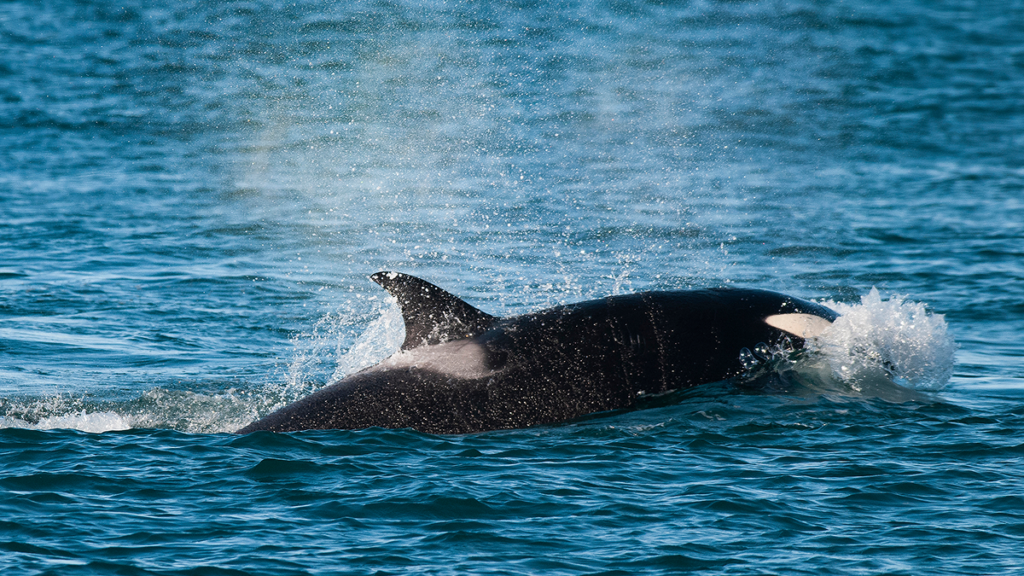
Orca encounters have left a string of yachts without steering off Spain this year. Credit: Foto 4440 / Shutterstock
The crew could do little more than watch from the railings and check for leaks as a pod of killer whales slammed into their yacht’s steering, again and again, for eight long minutes off Galicia. The footage is now spreading fast around the world, and it’s far from the only boat left drifting off Spain and Portugal this year.
Half the rudder gone in eight minutes
Gage Butler, a sailor from San Diego who calls orcas his favourite animal, had always dreamed of seeing them up close, though he “didn’t think it would happen this way”. He was on board Seika, a 13-metre yacht, as it headed back from the Trofeo Ignacio Montenegro regatta in San Vicente do Grove on Saturday August 29.
View this post on Instagram
At around 7pm, near the mouth of the Ría de Pontevedra, three or four orcas moved in and started ramming the boat’s steering. “We lost half of the rudder and they continued to attack for about eight minutes,” Butler said on Instagram, where his video has since been shared far beyond his own followers.
The regatta’s organisers said the crew couldn’t stop saying ‘Oh my God’ as the animals hit the boat. Butler admitted his “adrenaline was pumping” while they searched the hull for any sign of water coming in.
Rescuers were ready to tow them in
Salvamento Marítimo, Spain’s maritime rescue service, launched its emergency response and sent a boat out to help, and to tow the yacht if it came to that. In the end, Seika made it back to land on its own, with nobody hurt.
Less than 24 hours later, on Sunday August 30, orcas broke the rudder of another yacht with two people on board in the northern Ría de Vigo. That boat had to be escorted into Baiona by the rescue boat Salvamar Mirach.
A yacht sank off Galicia in July
The worst of the summer came on Thursday July 23, when orcas struck the rudder of the yacht Idem about a mile off Estaca de Bares, the northernmost point of mainland Spain, until it sank. Its two crew were picked up by a nearby boat and taken ashore unharmed.
Within days, three orcas rammed the Swedish yacht Vai off Cabo Ortegal, leaving it without steering and taking on water before it was towed into Celeiro. Then, on Saturday July 25, two more yachts lost their rudders off A Coruña, about nine nautical miles from the Torre de Hércules, the city’s Roman lighthouse.
One owner found his rudder floating in the sea beside him, and the orcas kept coming back during the rescue, so much so that a Guardia Civil patrol boat had to join in.
Portugal hasn’t been spared either. A couple off Praia do Guincho, near Cascais, spent 20 minutes taking blows on Thursday July 2, with rescuers saying they’d had the fright of their lives, and their tow line then snapped in rough seas on the way back. Another couple sailing from Morocco to France also lost their rudder off Leixões on Thursday August 27.
More than 700 encounters since 2020
More than 700 run-ins between orcas and boats have been logged off Spain and Portugal since 2020, ranging from a brief nudge to hours of ramming, according to the Atlantic Orca Working Group. The Idem is at least the eighth boat to be lost.
Almost all of it is thought to come from around 15 animals, in a critically endangered population of fewer than 50 that follows bluefin tuna up the Atlantic coast every summer. Butler was “pretty sure” the smaller ones were “juveniles just playing with the boat”, and the leading theory among scientists is that the habit is learned, with young orcas copying the adults.
Nobody has ever been hurt, and researchers stress the whales aren’t going after people. The orcas are facing enough danger of their own as it is, as Toñi, the oldest member of the population, was spotted in August with pellet wounds in her dorsal fin. Spain’s environment ministry (MITECO) said on Wednesday September 2 that its investigation points to a Spanish-flagged boat allegedly firing at her in Portuguese waters, and it’s handed the case to the environmental prosecutor and the Guardia Civil.
Galicia now has its own danger map
Encounters fell across Spain as a whole last summer but rose slightly in the north, so the ministry has added a risk map for the Galician coast and stretched its warnings to the Cantabrian coast for the first time. It tells sailors to take extra care from April to October.
The advice may surprise anyone who remembers older tips about cutting the engine and letting go of the wheel. Spain’s current recommendations tell sailors not to stop the boat, and to head for the coast or shallower water instead, keeping well away from the sides so nobody goes overboard.
Using anything that could hurt or scare the orcas off is completely ruled out. Any sighting or encounter should be reported to Salvamento Marítimo on VHF channel 16, with photos sent to orcas@sasemar.es if it’s safe to take them.
So anyone planning to sail Spain’s Atlantic coast or the Strait of Gibraltar next season should check the risk maps before setting off, and plan a route that stays as close to the shore as safety allows.
Follow Euro Weekly News on Google News
Get breaking news from Spain, travel updates, and expat stories directly on your Google News feed.
Follow on Google NewsSign up for personalised news
Subscribe to our Euro Weekly News alerts to get the latest stories into your inbox!
By signing up, you will create a Euro Weekly News account if you don't already have one. Review our Privacy Policy for more information about our privacy practices.





Harry Dennis
Born in the UK and raised on the Cádiz coast, Harry brings a creative eye to his writing, sharing stories that celebrate culture and lifestyle across Spain and beyond.
Comments