PP targets social media addiction with plans to restrict endless scrolling in Spain
By Molly Grace • Published: 09 Nov 2026 • 23:46 • 3 minutes read
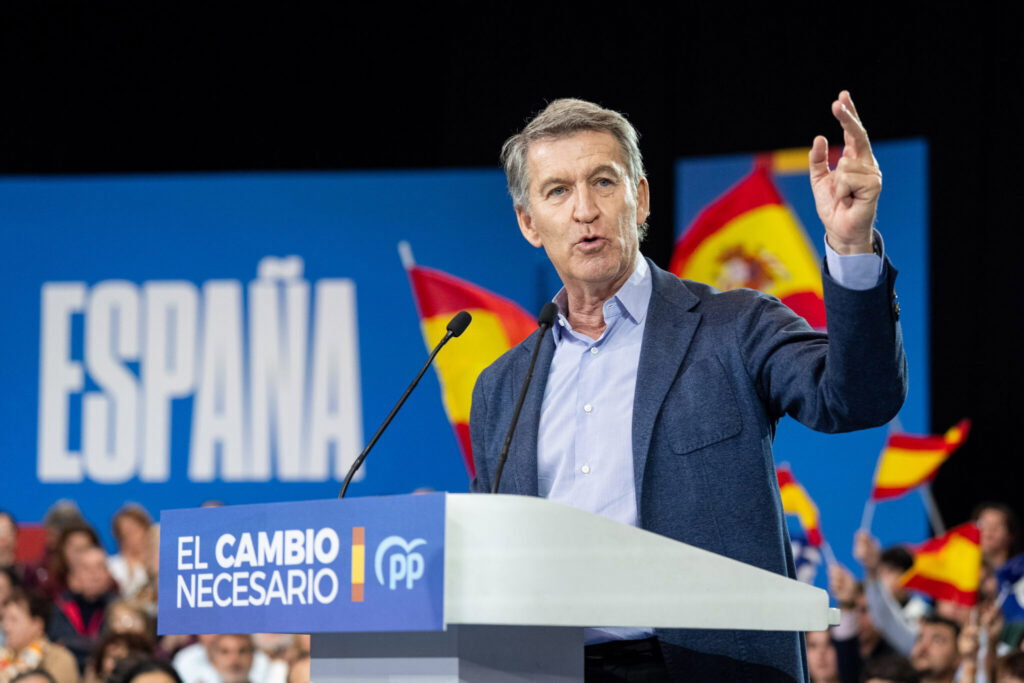
Feijóo has also pledged to change the Criminal Code. Photo credit: PP.es
Endless scrolling, late-night screen time and the temptation to watch just one more video are not problems exclusive to teenagers. Adults spend hours doing exactly the same thing, often without realising how much time has passed. Now, the Partido Popular wants social media companies to change some of the features designed to keep users glued to their screens, while banning under-14s from accessing social networks and requiring parental permission for those aged 14 to 16.
The proposals form part of the PP’s election programme, which Alberto Núñez Feijóo is due to present on Tuesday, November 10, ahead of Spain’s general election on November 29. They would place new responsibilities on the companies running the platforms, rather than leaving users to manage their screen time entirely themselves.
Children under 14 would be barred from social media
Under the plan, children younger than 14 would not be allowed to access social media. Those aged between 14 and 16 would need express permission from a parent or legal guardian before using the platforms. Companies would also have to introduce compulsory age-verification systems. That would mean platforms could no longer rely simply on users ticking a box to confirm they were old enough to open an account.
The PP wants them to take responsibility for checking who is signing up, alongside making parental controls mandatory. The restrictions would also cover what young people can see once they are online. Access to adult content and gambling platforms would be prohibited for minors, while companies would have to introduce content labelling so users can identify the material being shown to them.
Platforms would have to limit endless scrolling
The proposal goes beyond setting an age limit. The PP also wants social networks to change features that encourage users to remain online, including infinite scrolling. The function allows new posts and videos to appear continuously as someone moves down the screen, without reaching a natural stopping point. Under the party’s plan, platforms would have to limit this feature and introduce maximum usage times.
They would also be required to offer night-time digital breaks. The aim is to prevent children and teenagers from continuing to use social media during hours when they should be sleeping, although the latest electoral proposal does not specify the precise hours or how the restrictions would operate. These measures would make the platforms responsible for introducing limits within their own services, rather than relying entirely on individual users to monitor their screen time.
Companies could face fines based on turnover
The PP is proposing financial penalties for companies that fail to meet the new requirements. Fines would be linked to their turnover, meaning sanctions would take account of the size of the business rather than being a fixed amount for every platform. The programme also includes measures to support people targeted by online harassment, with channels for reporting abuse and assistance for victims of digital bullying.
Feijóo has also pledged to change the Criminal Code so that behaviour considered a crime in the physical world is treated as a crime when it takes place online. The party wants to agree a national anti-bullying protocol with Spain’s regional governments, requiring schools to identify cases early and coordinate their response with health and social services. It also wants to end the practice of victims being moved to another school after being bullied. Under the proposed approach, pupils responsible for bullying would face sanctions with an educational and restorative element, rather than the victim having to leave their school.
The proposals are not yet law
The measures are election commitments, not restrictions that users or platforms can expect to see introduced immediately. They would depend on the PP winning the November 29 election, forming a government and then taking the proposals through the legislative process. The party has raised similar ideas before. In an amendment submitted to the parliamentary bill on protecting minors in digital environments in November 2025, it proposed preventing under-14s from accessing social media and requiring parental consent for those aged 14 to 16.
That amendment also suggested a digital rest period for under-16s between 10pm and 8am. The new programme brings those restrictions together with further demands on platforms, including limits on infinite scrolling, maximum usage times and compulsory parental controls. The PP is not alone in seeking tougher rules. France requires parental consent for social media users under 15, while Australia has introduced a minimum age of 16 for social media accounts.
Spain had also been considering legislation to strengthen protections for children online, but that parliamentary process fell when the early election was called. For users, the proposals could eventually mean changes to how social networks operate, from the content they can access to how long platforms encourage them to stay online. Whether those changes become reality will depend on the outcome of the election and the legislation that follows.
Follow Euro Weekly News on Google News
Get breaking news from Spain, travel updates, and expat stories directly on your Google News feed.
Follow on Google NewsSign up for personalised news
Subscribe to our Euro Weekly News alerts to get the latest stories into your inbox!
By signing up, you will create a Euro Weekly News account if you don't already have one. Review our Privacy Policy for more information about our privacy practices.




Molly Grace
Molly is a British journalist and author who has lived in Spain for over 25 years. With a background in animal welfare, equestrian science, and veterinary nursing, she brings curiosity, humour, and a sharp investigative eye to her work. At Euro Weekly News, Molly explores the intersections of nature, culture, and community - drawing on her deep local knowledge and passion for stories that reflect life in Spain from the ground up.
Comments