Axarquia mangoes: How the area became Spain’s leading mango-growing region
By Adam Woodward • Published: 10 Nov 2026 • 17:49 • 1 minute read
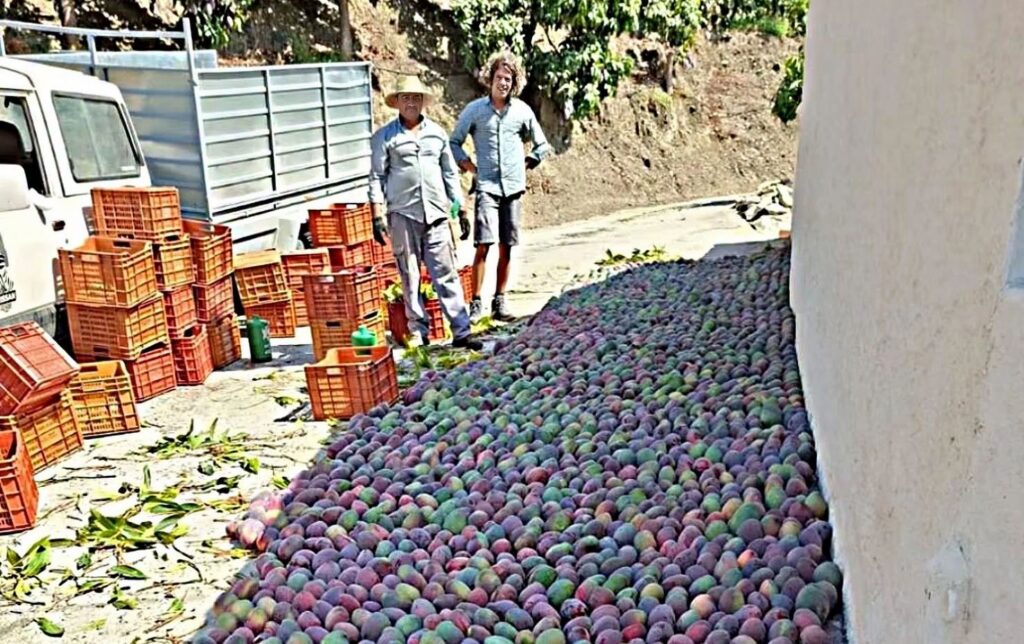
Axarquia farmers raking it in with bumper crops. Credit: Triana Corazon FB
Axarquia has earned a place at the heart of Spain’s mango industry, producing around 90 per cent of the country’s crop and turning a once-specialist fruit into one of the area’s best-known agricultural products. EFE’s report on the Axarquia’s dominance of Spanish mango production provides a snapshot of just how important the industry has become.
The comarca’s mild winters, warm summers and coastal microclimate have helped farmers establish subtropical plantations across its hills and valleys. Mango growing has expanded over recent decades, building on the region’s experience with other tropical crops and creating an agricultural sector that now supplies markets well beyond Malaga. The Junta de Andalucia’s information on subtropical agriculture explains the importance of the region’s growing conditions.
90% of Spain’s mangoes come from Axarquia
Figures reported by EFE show that around 5,000 hectares in the Axarquia are planted with mango trees, out of approximately 6,000 hectares across Spain. The fruit has also become an alternative for some farmers replacing avocado trees, as mangoes generally need less water.
The industry’s growth is not just about what happens in the orchards. Cooperatives and specialist companies have developed the facilities needed to collect, grade, pack and distribute the fruit. Velez-Malaga-based TROPS, a major Spanish mango and avocado producers’ organisation, is among the best-known names, helping take locally grown mangoes to consumers in Spain and overseas.
Fresher, better taste for European market
One advantage for Spanish producers is the short journey from farm to market. Mangoes can reach major European cities within a few days, while fruit shipped from countries such as Brazil spends considerably longer in transit. Industry representatives say the shorter journey helps preserve freshness, while allowing the fruit to ripen on the tree.
This year’s harvest has now finished with Spanish production estimated at around a whopping 40,000 tonnes, below initial expectations. The quality of the fruit was generally good despite the smaller crop.
Despite the challenges, mango production supports thousands of families through farming, packing, transport and distribution. Its success has helped reshape the Axarquia’s rural economy and given the comarca a distinctive place on Spain’s agricultural map. The region’s annual Mango King competition in Benamargosa is one example of the local pride surrounding the crop.
Follow Euro Weekly News on Google News
Get breaking news from Spain, travel updates, and expat stories directly on your Google News feed.
Follow on Google NewsSign up for personalised news
Subscribe to our Euro Weekly News alerts to get the latest stories into your inbox!
By signing up, you will create a Euro Weekly News account if you don't already have one. Review our Privacy Policy for more information about our privacy practices.




Adam Woodward
Adam is a writer who has lived in Spain for over 25 years. With a background in English teaching and a passion for music, food, and the arts, he brings a rich personal perspective to his work at Euro Weekly News. As a father of three with deep roots in Spanish life, Adam writes engaging stories that explore culture, lifestyle, and the everyday experiences that shape communities across Spain.
Comments