Our West Coast cruise called at Ensenada for four hours, arriving at dusk. We couldn’t see the point of it. Was it filler?
By Sara Romera • Published: 11 Nov 2026 • 9:00 • 4 minutes read
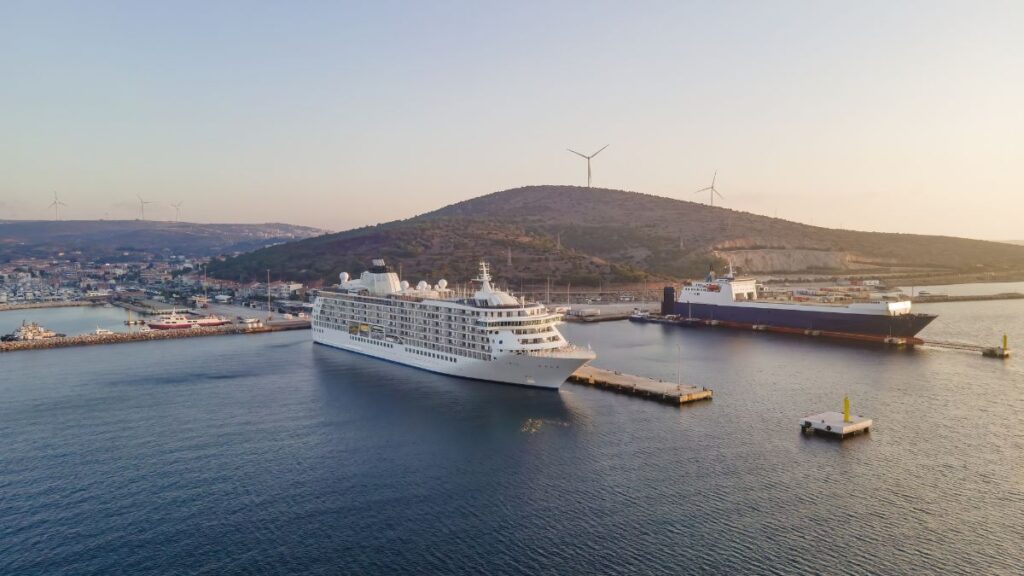
Mandatory foreign port calls - often scheduled for just a few hours around dusk - are built into cruise itineraries to comply with maritime cabotage regulations. Credit: Leonid Sorokin/Shutterstock
Ask the Officer: Your cruise questions answered by a former senior ship’s officer
It wasn’t filler. It was the reason the rest of your cruise was legal.
Every itinerary has two shapes. The one in the brochure, and the one that keeps the ship on the right side of the law. Usually they sit on top of each other and you never notice. Now and then the second one shows through, and when it does it looks like what you got: a port nobody would choose, at an hour nobody would choose, for long enough to buy a fridge magnet and come back.
The rule underneath it
Generally, a foreign-flagged ship cannot carry passengers between two ports in the same country without calling somewhere foreign in between.
In the United States that rule is the Passenger Vessel Services Act of 1886. Ask any crew member and they’ll tell you it’s the Jones Act, and they’ll say it without blinking, because that’s what everyone on board tends to call it. The Jones Act is from 1920 and covers cargo and seafarers’ rights. But that’s the name that stuck, and in fifteen years I never heard anyone try to unstick it. Both come from cabotage, which is a country keeping its own coastal traffic for its own ships. Most countries have a version of it under some other name.
Almost no large cruise ship flies a US flag. So the sums are simple. A round trip out of Los Angeles or San Francisco needs a foreign port, and Mexico is the closest one. An Alaska season out of Seattle needs Canada, which is why so many Alaska itineraries put a few hours in Victoria, British Columbia, sometimes late in the evening.
Nobody built those calls around guest satisfaction. They built them around the rule, and they keep them short, because an hour spent satisfying a law is an hour not spent in a place people paid to see.
What to do with that
Read it off the itinerary before you book.
Go down the list of ports and ask which ones are there for you and which are there for the paperwork. A four-hour evening call on a round trip that never leaves one country is nearly always the second kind. So is a stop with no obvious link to anything else on the route.
Then plan around it. You can still have a good evening in Ensenada. Dinner off the ship, a walk, a shop that stays open late for exactly this. What you can’t have is a day, so save that for the ports someone put on the map because you’d enjoy them.
And if you’d rather not have these calls at all, pick routes that already cross borders. A cruise through several countries doesn’t need a compliance stop, because the countries are the itinerary. Round trips that stay inside one country are where you’ll find them.
The one that never stopped
Ships make calls that aren’t visits for more than one reason, and one itinerary I sailed for years never involved stopping.
Off the coast of Queensland there’s a weather station called Willis Island, where a handful of meteorologists live year round in close quarters, logging storms nobody else sees. We’d ease up toward it, trace a slow careful circle, and go.
At a set time I’d be on the bridge in a pressed jacket with my hair ruined by the wind off the bridge wing, while the Captain lifted an old black handset and called the island. If the radio gods were kind, someone answered.
Then it went out over the PA to the whole ship. Good afternoon from the navigational bridge. If you look to port you’ll see one of the most remote weather stations on Earth, and we have one of its meteorologists on the line. A hush, the hiss of the open channel, and a voice from a rock in the Coral Sea answering questions from three thousand people on a passing ship.
The sailor on watch kept his eyes on the instruments and stole looks at the little show we were staging. Every so often I caught the smile. Moustache, years of ocean in his log, and in that moment just someone who loved ships.
Underneath it, a reason none of the guests ever needed to know about. We now legally qualified as visiting an “international port”.
The other thing you may have noticed
The bars closing and the tax line on your receipt are a different rule, and worth separating out.
It has nothing to do with the compliance call. It’s local law, and it changes from country to country. In British Columbia we could open some bars and not others. Somewhere else a line turns up on your receipt that wasn’t there the day before, or signs appear on doors that nobody enjoys taping up. In some ports nothing changes at all.
Alongside, the ship falls under local law and the line has no say in it. Once the bow is back in open water it lifts.
From our side
A compliance call costs us the whole day.
Pilots come aboard. Lines go out. Engines sit on stand-by. We close venues we opened that morning, dim a casino that would rather be busy, tape up the signs, log every minute, then unspool all of it again at sail-away. For three usable hours ashore.
The complaints come, and they’re fair. We’d rather give you a long day in a place worth having. Some evenings the law and the tide are in command, and all that’s left is to find something in the hour.
Which, with an old handset and a willing meteorologist, is sometimes possible.
Sara Romera is a former cruise ship officer and the author of Inside the Floating City and The Discerning Voyager.
Have a cruise question? Write to contact@sararomera.com. Selected questions will be featured in upcoming columns.
Follow Euro Weekly News on Google News
Get breaking news from Spain, travel updates, and expat stories directly on your Google News feed.
Follow on Google NewsSign up for personalised news
Subscribe to our Euro Weekly News alerts to get the latest stories into your inbox!
By signing up, you will create a Euro Weekly News account if you don't already have one. Review our Privacy Policy for more information about our privacy practices.




Sara Romera
ASK THE OFFICER: Sara Romera grew up on the Costa del Sol and spent fifteen years as a senior officer aboard cruise ships, leading teams across some of the world's most demanding waters. She writes and consults on cruise travel from Antequera. sararomera.com
Comments