Protection system of women under scrutiny: Guardia Civil investigates ministry
By Adam Woodward • Updated: 12 Nov 2026 • 13:53 • 3 minutes read
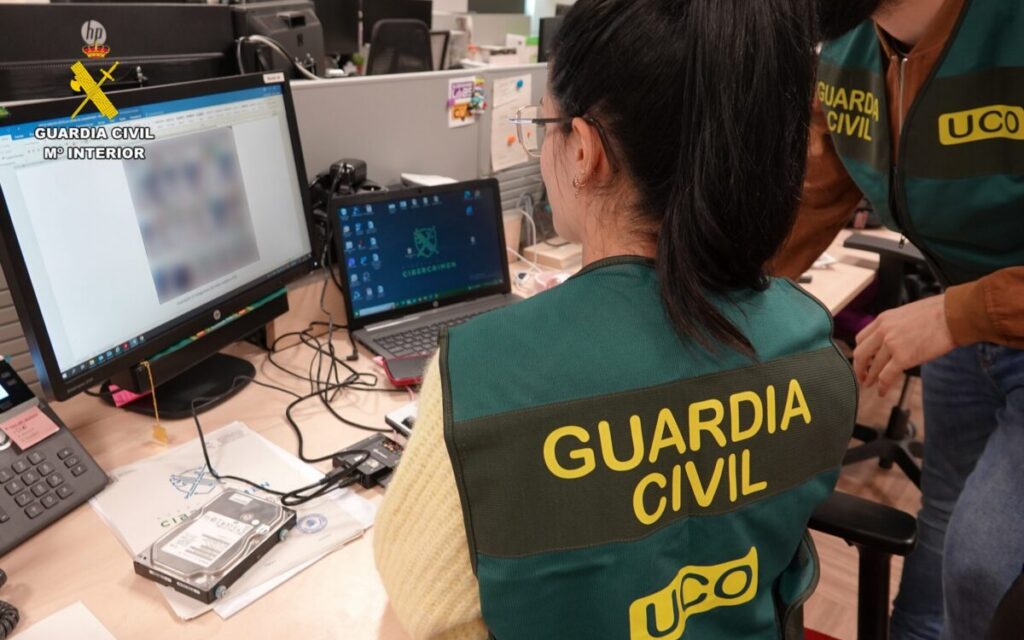
Guardia Civil's special investigation squad UCO. Credit: GC
Guardia Civil investigates spending as women describe failures of monitoring bracelets.
The system of electronic monitoring bracelets in Spain designed to protect women from violent former partners is facing new scrutiny after the Guardia Civil’s specialist UCO unit carried out investigative operations at the Ministry of Equality and the Tribunal de Cuentas on Thursday, November 12.
The action forms part of an investigation by the European Public Prosecutor’s Office (EPPO) into suspected fraud involving European Union funds intended to purchase the devices, which are used to monitor offenders subject to court-imposed restraining orders.
The investigation, which began last year, is examining possible irregularities in the acquisition of the monitoring equipment. European prosecutors have confirmed the latest investigative measures but have not disclosed whether anyone is suspected of criminal wrongdoing just yet or the precise amount potentially involved.
The operation comes after serious questions were raised about the reliability of the Cometa monitoring system, following reports from women who say its failures left them frightened and uncertain about whether their former partners were approaching.
Millions spent on monitoring system
A report published by Spain’s Tribunal de Cuentas in September examined contracts worth approximately €102.6 million covering the electronic monitoring service. Its official audit of the monitoring bracelet contracts identified serious shortcomings in the Ministry of Equality’s management and supervision of the contracts, including technical problems affecting the monitoring equipment.
The €42.6 million contract awarded in 2023 was partly financed through European recovery funding. Among the problems identified were inaccurate GPS positioning, interruptions to the service, batteries with insufficient autonomy and delays in repairing faulty equipment.
The Tribunal also found that problems accessing historical information following a change of contractor meant 123 judicial requests for information could not be answered at the time.
It stressed that the quality and reliability of the service should take priority over attempts to reduce costs, given the potentially serious consequences for women relying on the system.
Women describe missed warnings
Behind the technical findings are women who say they have personally experienced the consequences. In November 2025, El País reported the case of a woman identified by the pseudonym Luisa, living in Malaga, whose monitoring equipment had reportedly been replaced 14 times in just over a year because of repeated faults.
She described occasions when she encountered her former partner but received no warning. On another occasion, an alarm indicated that he was more than 30 metres away, although she said he was approaching her car. Her former partner also reportedly removed his monitoring bracelet and left it, together with his tracking telephone, in a bar in Torremolinos. Police took four days to locate him.
Another woman, identified as Lola, told El Español in September 2025 that the warning alarm on her telephone had not sounded for eight months. She described three occasions when her former partner allegedly approached her without the system alerting her. These accounts all have been raising questions about whether women could always rely on the equipment to provide the protection it was supposed to offer.
Questions over accountability
Technical staff at Cometa, the centre responsible for monitoring the devices, had also reportedly raised concerns internally about GPS errors, loss of coverage and equipment that could be removed without triggering an appropriate warning. Problems became particularly contentious following the transfer of the monitoring contract from Telefónica to the Vodafone and Securitas joint venture in 2024.
Spain’s Ministry of Equality has previously defended the system and said that improvements were being made. In January 2026, the government authorised a new monitoring-service contract with a starting budget of €71.3 million, potentially rising to €111.1 million. The new system is intended to use more robust ankle monitors, with longer battery life and equipment that is harder to manipulate.
However, the latest European investigation raises further questions about how the original contracts were awarded, how public money was managed and whether sufficient safeguards were in place. The suspected financial irregularities have not been proven, and there is currently no established evidence that they directly caused the technical failures reported by women.
For those relying on the system, however, the central issue remains whether an electronic monitoring device can be trusted to provide a warning when an alleged abuser approaches.
The UCO investigation could now help establish whether the problems went much further than technical shortcomings and whether the contracts behind this important protection service were properly managed at all.
Follow Euro Weekly News on Google News
Get breaking news from Spain, travel updates, and expat stories directly on your Google News feed.
Follow on Google NewsSign up for personalised news
Subscribe to our Euro Weekly News alerts to get the latest stories into your inbox!
By signing up, you will create a Euro Weekly News account if you don't already have one. Review our Privacy Policy for more information about our privacy practices.





Adam Woodward
Adam is a writer who has lived in Spain for over 25 years. With a background in English teaching and a passion for music, food, and the arts, he brings a rich personal perspective to his work at Euro Weekly News. As a father of three with deep roots in Spanish life, Adam writes engaging stories that explore culture, lifestyle, and the everyday experiences that shape communities across Spain.
Comments