Spanish airline becomes first casualty of Europe’s mounting aviation fuel crisis
By Lottie Verrier • Published: 12 Nov 2026 • 9:31 • 4 minutes read
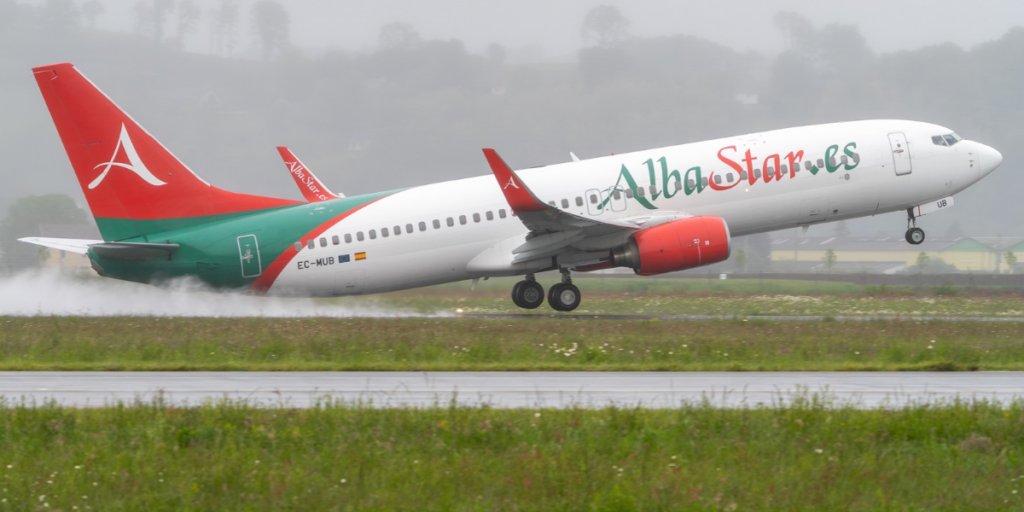
Spanish airline Albastar announces the suspension of its operations Credit: Wikipedia
For many people living in Spain, catching a plane is no longer an occasional luxury. It is an essential part of everyday life. Whether travelling abroad to see family, commuting for work, welcoming relatives to the islands or heading home after a holiday, millions of people depend on reliable air connections.
That is particularly true for residents of the Balearic Islands and the Canary Islands, where flying is often the quickest and most practical way to reach mainland Spain and beyond.
But rising aviation costs are putting increasing pressure on the industry, with Spanish airline Albastar becoming the latest casualty after announcing the suspension of its operations.
The development raises fresh questions about the financial pressures facing smaller airlines and the potential consequences for Spain’s tourism-dependent destinations.
Mallorca-based airline had built a European network
AlbaStar is headquartered in Palma de Mallorca and was founded in 2009 by Italian and British entrepreneurs. It began flying in 2010, initially concentrating on charter services for Spanish, Italian and other European tour operators.
Unlike major scheduled airlines, its business model focused heavily on flights organised for holiday companies, specialist travel operators and groups.
One of its best-known markets was religious tourism, particularly pilgrimages to Lourdes in France. The airline developed connections between the French pilgrimage destination and several European airports, working with tour operators specialising in religious travel.
It also expanded into other areas of the aviation market, including providing aircraft and crew for other airlines.
In July 2014, AlbaStar received its Air Operator Certificate and passenger and cargo transport licence. Its first Boeing 737-400 subsequently took off from Palma, marking an important milestone in the company’s development.
The carrier later established an operational base at Milan Malpensa airport, strengthening its presence in the Italian market.
Pandemic debt adds to fuel crisis
The suspension is not simply a story of rising fuel prices. AlbaStar was already carrying substantial financial difficulties following the Covid-19 pandemic, when travel restrictions brought much of the aviation industry to a standstill.
The company received €15 million in financial support from Spanish development finance institution Cofides as part of a recapitalisation programme designed to help businesses affected by the pandemic.
However, the airline continued to face the challenge of rebuilding its finances while dealing with volatile operating costs.
The latest surge in aviation fuel prices has added another significant burden.
According to figures cited by La Razón from the International Air Transport Association (IATA), jet fuel prices have climbed above $150 per barrel, compared with approximately $90 before the outbreak of the latest war involving Iran. Prices reportedly exceeded $210 per barrel in April.
Fuel is one of the biggest operating expenses for airlines, alongside aircraft leasing, maintenance, airport charges, staff and insurance.
Investors could still rescue the airline
Despite the suspension, AlbaStar has not announced that it is permanently closing its doors.
Its management has reportedly been in discussions with several potential investors interested in keeping the business alive. However, none of the negotiations had resulted in a completed agreement when the decision to suspend flights was taken.
The company is now preparing to enter voluntary insolvency proceedings, known in Spain as concurso voluntario de acreedores.
This legal process allows a financially distressed business to address its debts and explore possible restructuring or other solutions.
Management has indicated that further offers could still emerge in the coming days, leaving open the possibility of a future rescue.
However, the immediate financial situation meant the airline could not continue operating while waiting for an agreement to materialise.
What does the suspension mean for travellers?
The announcement may concern holidaymakers who have booked trips through tour operators using AlbaStar aircraft.
However, the airline’s business model means the situation should not automatically be confused with a major scheduled carrier cancelling its entire passenger timetable.
AlbaStar primarily operated charter flights, meaning services were often arranged through travel companies rather than sold directly to individual passengers as conventional airline tickets.
At this stage, no comprehensive breakdown of affected passengers, routes or bookings has been published.
Anyone who has booked a holiday involving an AlbaStar-operated flight should contact their tour operator or travel organiser directly to establish whether alternative arrangements are being made.
Travellers should also check their booking confirmations carefully to identify which airline is actually operating their flight, as the company arranging a holiday may be different from the carrier providing the aircraft.
Spain’s airlines are already cutting thousands of seats
AlbaStar’s suspension comes as other airlines are already reassessing their schedules amid soaring aviation fuel prices and growing uncertainty over operating costs.
The scale of the pressure is becoming increasingly apparent in Spain’s flight schedules. Airlines removed 563,254 seats and 3,111 planned flights from their November and December programmes in just six weeks, according to data from aviation analytics company Cirium reported in October.
However, the figures do not mean Spain is facing an overall reduction in air capacity. Airlines were still planning 30.49 million international seats for the final quarter of 2026, representing a 4.4 per cent increase on the same period last year.
Instead, the figures suggest carriers are becoming more selective about which services they operate, with November bearing the brunt of the reductions as they respond to rising costs and weaker demand on some routes.
The Spanish airline association ALA has also warned that further flight reductions cannot be ruled out if kerosene prices remain elevated. Its president, Javier Gándara, has highlighted the uncertainty facing airlines, particularly when planning their summer 2027 schedules.
Could other European airlines face similar problems?
AlbaStar’s difficulties highlight the vulnerability of smaller aviation companies at a time when fuel prices, geopolitical instability and lingering pandemic-era debts are combining to create financial pressure.
The suspension also coincides with the cessation of operations by Slovak charter airline AirExplore, which stopped flying on November 10.
Although the circumstances of individual airlines differ, the developments have raised wider concerns about Europe’s smaller aviation operators.
For Spain, the consequences are particularly relevant because air travel plays such an important role in connecting the mainland with island communities and supporting the tourism industry.
Follow Euro Weekly News on Google News
Get breaking news from Spain, travel updates, and expat stories directly on your Google News feed.
Follow on Google NewsSign up for personalised news
Subscribe to our Euro Weekly News alerts to get the latest stories into your inbox!
By signing up, you will create a Euro Weekly News account if you don't already have one. Review our Privacy Policy for more information about our privacy practices.





Lottie Verrier
Lottie Verrier is a journalist and digital media specialist based in Mallorca. After a decade in London media, including a role as Deputy Editor for the MailOnline’s eCommerce division, she now combines her editorial expertise with a passion for the island to create engaging content that celebrates the best of life in Spain. Instagram @lottieinmallorca
Comments