The world was supposed to end today: 1960 scientists got their doomsday prediction wrong
By Molly Grace • Published: 13 Nov 2026 • 16:30 • 2 minutes read
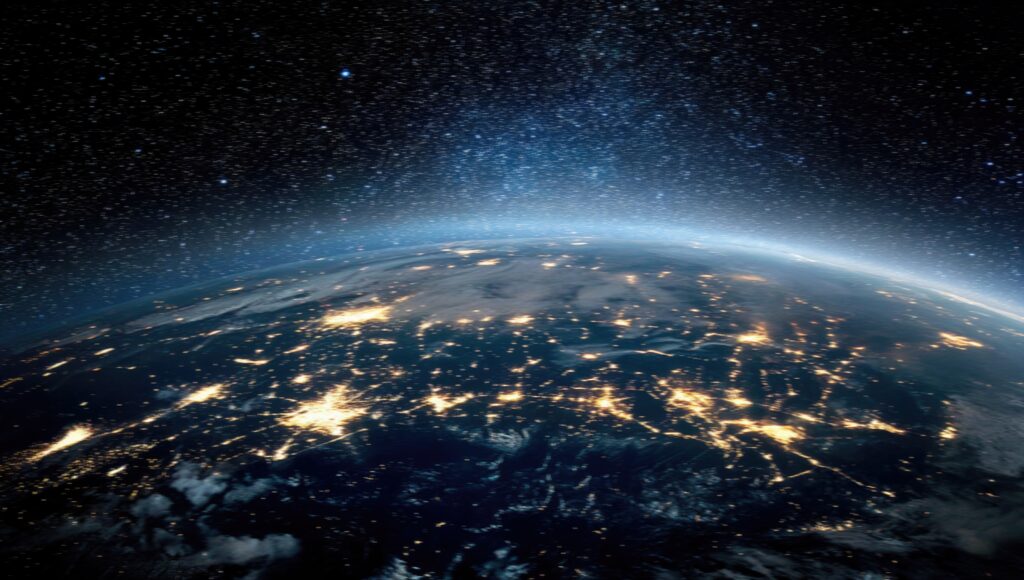
It was not a forecast of an asteroid or the physical destruction of Earth. Photo credit: porst13/Shutterstock
If anyone who follows predictions closely was expecting the world to end today, you can put the emergency supplies away. A prediction published in the scientific journal Science in 1960 named today as the date humanity would reach a mathematical breaking point. Thankfully for use the calculation was based on population growth continuing at a rate that did not last.
The paper, titled ‘Doomsday: Friday, 13 November, A.D. 2026’, was written by Heinz von Foerster, Patricia M. Mora and Lawrence W. Amiot, and appeared on November 4, 1960. Its subtitle explained the claim: the human population would approach infinity on that date if it continued growing as it had over the previous two millennia. It was not a forecast of an asteroid or the physical destruction of Earth.
The researchers used historical population estimates to build a mathematical model. Extending the trend produced a curve that rose ever more steeply towards infinity, a point at which the equation could no longer describe a real population. Even the date came with uncertainty: the paper’s calculation gave an estimate of 2026.87, with a margin of roughly five and a half years either side, according to the original paper.
Why the prediction failed
The global population is still increasing, but it is not growing at the accelerating rate assumed by the 1960 model. According to Our World in Data, using United Nations figures, the annual growth rate peaked at around 2.3 per cent in 1963. By 2020, it had fallen below one per cent. Falling birth rates are a major part of that change. Families in many parts of the world have fewer children, while longer life expectancy means the total population can keep rising as growth slows.
Population forecasts depend on assumptions that must change when real-world behaviour changes. The model projected a population racing towards an impossible figure; the United Nations estimated the world population at about 8.2 billion in 2024.
The UN’s latest published projections do not suggest an infinite population or an imminent collapse. Its 2024 World Population Prospects report expects the global population to reach a peak of around 10.3 billion in the mid-2080s, before edging down towards the end of the century. It also says there is an 80 per cent probability that the world’s population will peak during this century.
A warning, not a date with doomsday
The 1960 paper’s dramatic title has helped it resurface whenever November 13, 2026 is mentioned. Population growth, resources and the pressure placed on the planet remain important questions. What has changed is the evidence. Birth rates have fallen, population growth has slowed and demographers now use far more detailed data and projections than the historical curve available to researchers in 1960.
So, while the date in the paper has arrived, the world has not reached the mathematical endpoint its authors calculated. Friday the 13th is simply another day, but saying that, there is still plenty of the day left, so hopefully I wont have to put my foot in my mouth. Still, the prediction is a reminder of what can happen when a trend is extended into the future as though it will never change.
Follow Euro Weekly News on Google News
Get breaking news from Spain, travel updates, and expat stories directly on your Google News feed.
Follow on Google NewsSign up for personalised news
Subscribe to our Euro Weekly News alerts to get the latest stories into your inbox!
By signing up, you will create a Euro Weekly News account if you don't already have one. Review our Privacy Policy for more information about our privacy practices.



Molly Grace
Molly is a British journalist and author who has lived in Spain for over 25 years. With a background in animal welfare, equestrian science, and veterinary nursing, she brings curiosity, humour, and a sharp investigative eye to her work. At Euro Weekly News, Molly explores the intersections of nature, culture, and community - drawing on her deep local knowledge and passion for stories that reflect life in Spain from the ground up.
Comments