From English lawns to Mediterranean sunshine: The secrets to gardening successfully in Spain
By Lottie Verrier • Updated: 16 Nov 2026 • 14:19 • 4 minutes read
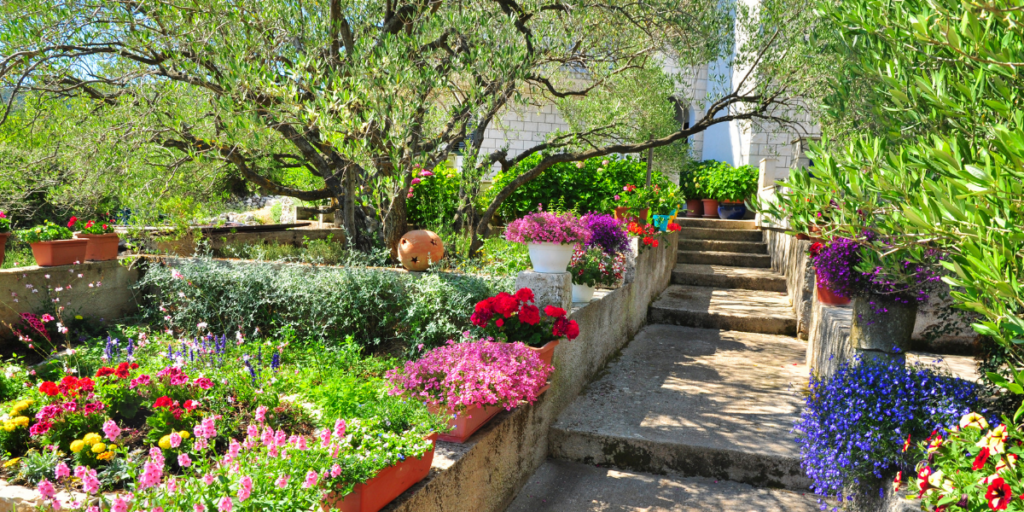
A few things every British gardener should know about swapping the UK climate for Spain's sunshine Credit: Shutterstock/Meryll
Dreaming of a beautiful Mediterranean garden? Before you plant your first rose bush, roll out a lush green lawn or fill your terrace with colourful flowers, there are a few things every British gardener should know about swapping the UK climate for Spain’s sunshine.
1. Stop trying to recreate the perfect English lawn
One of the biggest mistakes British homeowners make is assuming the same grass that grows beautifully in Surrey or Yorkshire will thrive beside a Spanish swimming pool.
Traditional British lawns often contain cool-season grasses, which perform well in relatively mild, damp conditions. Under the intense Mediterranean summer sun, however, they can quickly turn brown and become difficult to maintain. The good news is that there are grasses much better suited to Spain’s climate.
According to the Royal Horticultural Society’s Mediterranean lawn guide, warm-season grasses are generally a better option in areas with hot, dry summers.
Which grass should you choose in Spain?
| Grass | Best for | What to know |
|---|---|---|
| Bermuda grass (Cynodon dactylon) | Sunny gardens, children and regular use | Hard-wearing and heat-tolerant, but dislikes shade |
| Zoysia japonica | Low-maintenance Mediterranean lawns | Dense growth and good heat tolerance once established |
| St Augustine grass (Stenotaphrum secundatum) | Warmer coastal gardens with some shade | More shade-tolerant, but needs suitable temperatures and moisture |
| Kikuyu grass (Pennisetum clandestinum) | Hot, sunny gardens with heavy use | Vigorous and durable, but can spread aggressively |
There’s one important surprise for British gardeners: a brown lawn in winter doesn’t necessarily mean the grass is dead.
Unlike many UK lawn grasses, warm-season varieties can lose their green colour when temperatures fall, before recovering as warmer weather returns.
2. The Spanish gardening calendar is almost the opposite of Britain’s
British gardeners often associate spring and summer with planting, pruning and spending hours tending their gardens.
But in much of Mediterranean Spain, trying to establish new plants during July or August can be a recipe for disappointment. High temperatures and dry soil place young plants under considerable stress, particularly before their roots have had time to develop.
The RHS recommends autumn planting for many trees, shrubs and perennials because the soil retains warmth while cooler weather and seasonal rainfall support root growth.
Your Mediterranean gardening calendar
Autumn
September–November
Plant suitable trees and shrubs, improve soil and repair lawns.
Winter
December–February
Plan the garden, maintain irrigation and protect frost-sensitive plants.
Spring
March–May
Establish warm-season lawns, plant tender varieties after frost risk and prepare for heat.
Summer
June–August
Prioritise watering, shade, pest checks and protecting established plants.
3. Stop watering little and often
It’s understandable. When a plant starts wilting in the Spanish heat, the natural reaction is to grab the hose. But a quick splash of water every afternoon may be doing less good than you think. Watering only the surface can encourage shallow root development, leaving plants more vulnerable when the soil dries out.
Instead, the RHS recommends watering thoroughly around the root zone, allowing moisture to penetrate deeper into the soil. A drip irrigation system, known in Spain as riego por goteo, delivers water directly to the area around plant roots. Beware of common water restrictions too.
4. Not every plant loves Spanish sunshine
Some plants that flourish in Britain may need afternoon shade in southern Spain. Hydrangeas, for example, generally appreciate protection from the strongest midday and afternoon sun in hotter climates.
For sunny, well-drained Mediterranean gardens, consider plants such as lavender, rosemary, santolina, thyme, salvias and established olive trees. Bougainvillea is another favourite, although it needs a warm, sheltered location, good drainage and protection from frost in colder areas.
5. Your soil could be the real problem
A common mistake when moving to Spain is assuming that if a plant looks unhappy, it simply needs more water or fertiliser.
In reality, the problem may be underground.
Many Mediterranean gardens have alkaline, limestone-rich soil, while other areas contain heavy clay, sandy ground or compacted construction soil left behind after building work. These conditions can affect drainage, nutrient availability and root growth.
Before planting, test the soil’s pH and drainage. A simple soil test can help you avoid spending money on plants that are poorly suited to your garden.
Where appropriate, adding well-rotted compost can improve soil structure and its ability to retain useful moisture.
But don’t automatically enrich every planting hole. Lavender, rosemary and other Mediterranean plants often perform better in relatively lean, freely draining soil than in heavily fertilised conditions.
6. Mulch could be your garden’s secret weapon
One of the simplest ways to help a garden survive a Spanish summer is to cover exposed soil. Mulch helps reduce evaporation, moderate soil temperatures and suppress weeds.
Organic materials such as composted bark and wood chips are useful around many shrubs and trees, while gravel can work particularly well around plants that prefer freely draining conditions.
The RHS recommends applying mulch to moist soil, rather than waiting until the ground has become completely dry and hard. A layer of around 5cm or more can be beneficial, depending on the material and plants involved. Keep mulch clear of trunks and stems to avoid trapping moisture against them.
There’s a surprising warning here, too: adding a thick layer of mulch to bone-dry soil during a drought can sometimes delay the arrival of light rainfall into the root zone. It is better to prepare beds before the heat arrives or after the autumn rains return.
7. Beware of beautiful plants that are actually invasive
Here’s a gardening mistake that could have consequences beyond a few dead flowers. Some ornamental plants that look attractive in Mediterranean gardens are classified as invasive species in Spain.
Pampas grass, with its enormous feathery plumes, is a particularly important example. Spain’s Ministry for Ecological Transition lists Cortaderia species in its national catalogue of invasive alien species.
8. Your beautiful terracotta pots could be drying out your plants
Terracotta pots look wonderful on a Spanish terrace, but there’s a hidden drawback: Unglazed terracotta is porous, allowing moisture to escape through the sides of the container. In a hot Spanish summer, that can mean plants dry out much faster.
Follow Euro Weekly News on Google News
Get breaking news from Spain, travel updates, and expat stories directly on your Google News feed.
Follow on Google NewsSign up for personalised news
Subscribe to our Euro Weekly News alerts to get the latest stories into your inbox!
By signing up, you will create a Euro Weekly News account if you don't already have one. Review our Privacy Policy for more information about our privacy practices.



Lottie Verrier
Lottie Verrier is a journalist and digital media specialist based in Mallorca. After a decade in London media, including a role as Deputy Editor for the MailOnline’s eCommerce division, she now combines her editorial expertise with a passion for the island to create engaging content that celebrates the best of life in Spain. Instagram @lottieinmallorca
Comments