Why everyone wants a share of the Christmas Lottery
By Adam Woodward • Published: 23 Nov 2026 • 11:44 • 2 minutes read
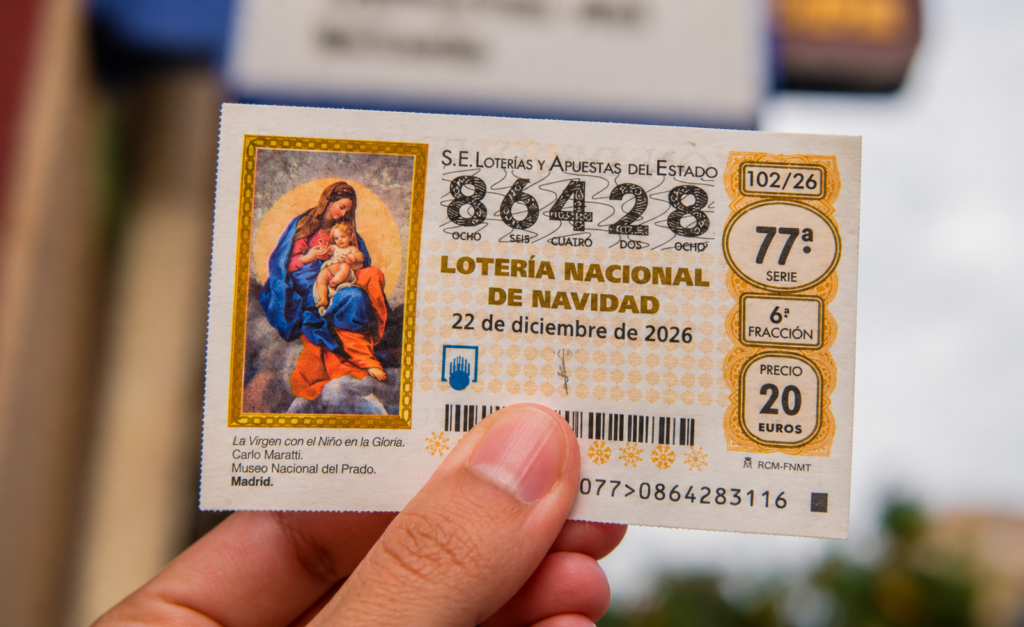
Holding a treasured Christmas lottery 'decimo'. Credit: EduBFoto - Shutterstock
For many expats living in Spain, one of the country’s biggest Christmas traditions can be rather bewildering. As December approaches, El Gordo lottery ticket fever is everywhere, from local bars and bakeries to petrol stations, workplaces and sports clubs. But why does everyone seem to be buying the same numbers, and how can newcomers join in?
Spain’s famous Christmas Lottery, known as El Gordo, is about much more than the chance to win a fortune. It is a national tradition built around family, friendship and community, with many people buying tickets together to make sure nobody misses out. Find out more about Spain’s Christmas Lottery tradition.
Why does everyone buy the same lottery number?
Unlike other National Lotteries, where players select their own numbers, Spain’s Christmas Lottery uses pre-printed five-digit numbers. Each number is sold in multiple series, allowing thousands of people to hold tickets carrying identical numbers.
Families often buy the same number every year, while regular customers might purchase a share from their favourite bar, café or bakery. Work colleagues, neighbours and friends also organise shared purchases.
Part of the attraction is knowing that if your local bar wins, you could all be celebrating together. Nobody wants to be the only person who didn’t buy a share when everyone else scoops a prize. Last year’s Christmas Lottery celebrations showed just how much can be won collectively.
How much does a ticket cost?
The 2026 draw takes place on Tuesday, December 22, and a standard tenth of a ticket, known as a décimo (tenth of a ticket), costs €20. So, a complete ticket, called a billete, costs €200 and contains ten décimos.
Many establishments sell smaller shares called participaciones. These allow people to join in for a few euros rather than buying a complete décimo. Check how much of the purchase price is actually being entered into the lottery, as some organisations add a small contribution towards club funds or charity.
What could you win?
There are 100,000 possible five-digit numbers, giving each décimo a one-in-100,000 chance of winning El Gordo, the first prize. The main 2026 prizes, per €20 décimo, are:
- First prize: €400,000.
- Second prize: €125,000.
- Third prize: €50,000.
- Fourth prize: €20,000.
- Fifth prize: €6,000.
Thousands of smaller prizes are also distributed. A reintegro returns the original €20 if the final digit matches that of the first-prize number. Here you can find the official 2026 Christmas Lottery prize breakdown.
How do you check whether you’ve won?
The draw is broadcast live on December 22, with schoolchildren traditionally singing the winning numbers. You can check your ticket through the official Loterías y Apuestas del Estado results checker, which publishes the results and provides a number checker. Alternatively, take your décimo to an authorised lottery shop.
Keep your original ticket safe. If you have bought a shared participation, contact the bar, bakery or organisation that issued it.
What if you win with friends or family?
Shared tickets are part of the fun, but make sure everyone knows exactly how much they own. Photograph the original ticket, record each person’s contribution and keep written confirmation of the arrangement.
Prizes above €40,000 are subject to 20 per cent tax on the amount exceeding that threshold. A winning €20 décimo holding El Gordo would therefore pay €328,000 after tax.
For newcomers, joining in is an easy way to experience a much-loved Spanish Christmas custom. You might not become a millionaire, but at least you won’t be the only person in the bar hoping everyone else’s number comes up!
Follow Euro Weekly News on Google News
Get breaking news from Spain, travel updates, and expat stories directly on your Google News feed.
Follow on Google NewsSign up for personalised news
Subscribe to our Euro Weekly News alerts to get the latest stories into your inbox!
By signing up, you will create a Euro Weekly News account if you don't already have one. Review our Privacy Policy for more information about our privacy practices.



Adam Woodward
Adam is a writer who has lived in Spain for over 25 years. With a background in English teaching and a passion for music, food, and the arts, he brings a rich personal perspective to his work at Euro Weekly News. As a father of three with deep roots in Spanish life, Adam writes engaging stories that explore culture, lifestyle, and the everyday experiences that shape communities across Spain.
Comments