Valencia storm crisis: Spain seeks urgent EU aid after €4.4bn devastation
By Farah Mokrani • Published: 21 Jan 2025 • 23:37 • 2 minutes read
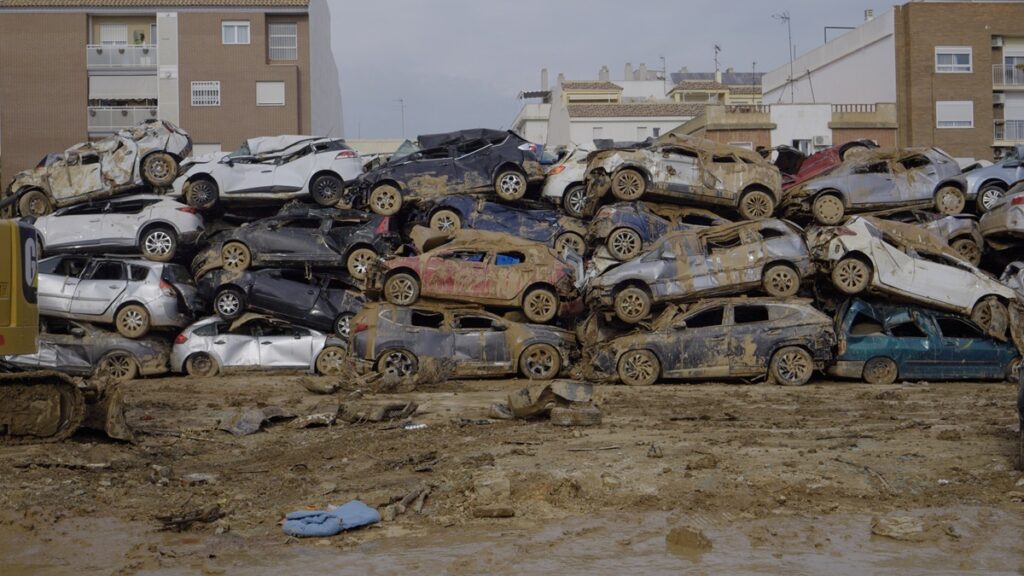
Mud-caked vehicles piled high on a Valencia street, highlighting the extensive damage left behind by the October 2024 DANA storm Credit : Shutterstock, gonzagon
Spain has lodged a last-minute appeal for support from the European Union’s Solidarity Fund, aiming to secure financial assistance to rebuild Valencia’s battered infrastructure after a severe DANA (Isolated Depression at High Levels) storm in late October 2024.
Official figures place the damage at €4.4 billion, reflecting the scale of destruction across households, businesses, and essential services.
Spain’s urgent EU aid appeal: Racing against the deadline
On 20 January 2025, Spain’s Ministry of Finance submitted the formal aid request—just one day before the EU’s application cut-off. While Spanish officials had indicated as early as November 2024 that they intended to seek external funding, administrative delays and miscommunications with the European Commission slowed the process. To qualify for the Solidarity Fund, damage must exceed either 0.6% of a country’s Gross National Income or €3 billion (adjusted to 2011 prices). Spain’s official documentation confirms that the destructive storm in Valencia clearly meets these criteria.
Although €4.4 billion in losses has been presented in the appeal, Madrid does not anticipate recovering the full amount. Other EU mechanisms, such as the Recovery, Transformation, and Resilience Plan, are expected to cover some reconstruction expenses, but EU guidelines explicitly forbid duplicate funding. The Commission’s review process could last several months, and the final grant may be capped at around €1.5 billion—the maximum payable under current regulations.
How the EU solidarity fund powers disaster recovery
The EU’s Solidarity Fund offers targeted support following natural disasters, reimbursing a proportion of urgent costs such as:
- Restoring power, water, and healthcare services
- Providing temporary accommodation
- Safeguarding cultural heritage
- Clearing debris and securing at-risk infrastructure
Spain’s submission emphasises that the rebuilding programme in Valencia must go beyond emergency clean-up and incorporate long-term resiliency measures, ensuring that hospitals, schools, and public spaces are protected against future severe weather. Given the overlap in funding sources, Spain will carefully coordinate with the EU to avoid breaching the rule against double financing.
Valencia’s urgent plea: More aid needed for rapid recovery
While the government has mobilised €11 billion in grants to assist flooded regions, fresh data from the Valencian Institute of Economic Research (IVIE) suggests total losses could approach €17 billion, hitting 20% of all private and public property in the affected areas. The IVIE warns that an additional €6 billion in direct state investment is vital to revive businesses, rebuild homes, and stabilise local economies quickly. Without this extra injection of funds, officials caution that the recovery could become long and drawn-out, disrupting the daily lives of more than one million residents.
With the EU’s decision on funding still pending, Valencia remains hopeful that both European aid and further domestic resources can accelerate the region’s post-storm reconstruction, helping communities reclaim normalcy and future-proof against climate-related threats.
Find more news about Spain
Follow Euro Weekly News on Google News
Get breaking news from Spain, travel updates, and expat stories directly on your Google News feed.
Follow on Google NewsSign up for personalised news
Subscribe to our Euro Weekly News alerts to get the latest stories into your inbox!
By signing up, you will create a Euro Weekly News account if you don't already have one. Review our Privacy Policy for more information about our privacy practices.



Farah Mokrani
Farah is a journalist and content writer with over a decade of experience in both digital and print media. Originally from Tunisia and now based in Spain, she has covered current affairs, investigative reports, and long-form features for a range of international publications. At Euro Weekly News, Farah brings a global perspective to her reporting, contributing news and analysis informed by her editorial background and passion for clear, accurate storytelling.
Comments