Key takeaways from the Munich Security Conference 2025
By Letara Draghia • Updated: 19 Feb 2025 • 9:24 • 2 minutes read
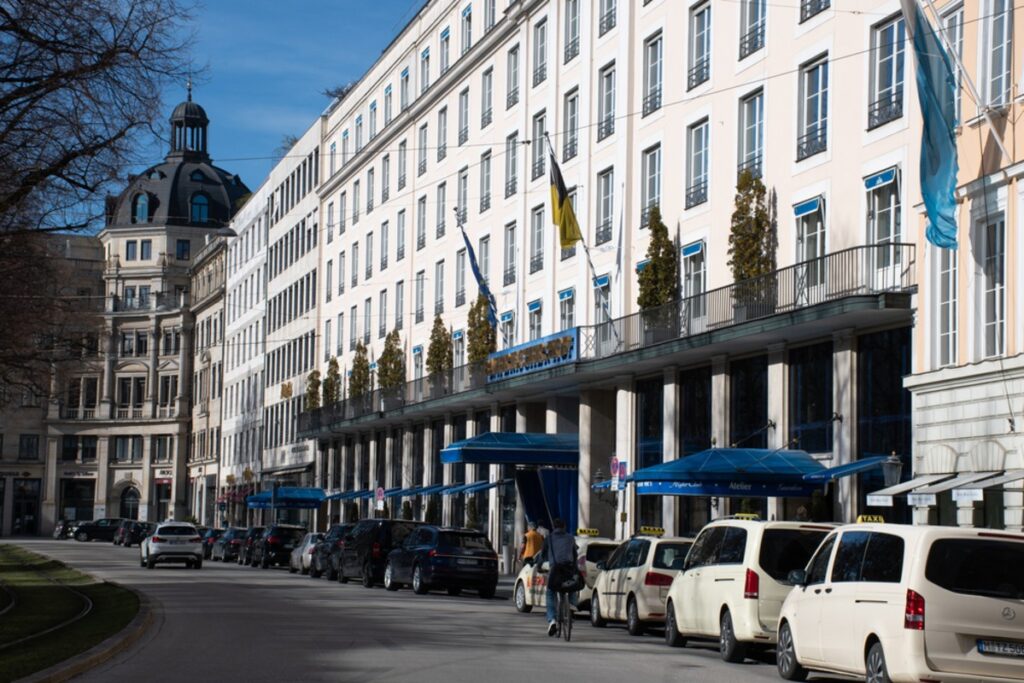
The Munich Security Conference was held at Hotel Bayerischer Hof in Munich, Bavaria. Credit: Shutterstock, Anne Czichos
The 2025 Munich Security Conference (MSC) between February 14 and 16 highlighted the deepening geopolitical divisions and shifting power dynamics in global security.
The event, which took place in Munich, Bavaria, brought together world leaders, policymakers, and defence officials to address pressing global security concerns. Here are five key takeaways from the conference:
Munich Security Conference identified that Europe needs to increase defence spending
One of the most significant outcomes of the MSC was the growing consensus that Europe can no longer rely on the United States for its defence. The post-World War II security structure, underpinned by NATO and largely backed by U.S. military spending, appears to be shifting.
U.S. Defence Secretary Pete Hegseth emphasised that European NATO members must drastically increase their defence spending, suggesting a rise from the current 2 per cent of GDP minimum to 3 per cent. European Commission President Ursula von der Leyen reinforced this, announcing a proposal to allow EU member states to exceed fiscal limits for defence investments, as reported by Euronews.
An emergency summit on the Ukraine war was agreed at the Munich Security Conference
A major concern for European leaders was the announcement that U.S. and Russian officials will meet in Saudi Arabia for negotiations on ending the war in Ukraine – without the involvement of Ukraine or the EU, as reported by BBC News.
Ukrainian President Volodymyr Zelensky expressed outrage, insisting that any credible peace deal must include his country. In response, European leaders have scheduled an emergency summit in Paris to discuss their stance.
Munich Security Conference dominated by military budget discussions
The demand for increased military budgets dominated discussions at MSC. While Europe has already outpaced the U.S. in total aid to Ukraine, with €70 billion in financial and humanitarian assistance and €62 billion in military aid, some reports had mistakenly cited that the U.S. contributed only €50 billion in military aid. The correct figure stands at €64 billion.
Former U.S. President Donald Trump has suggested that NATO allies should contribute 5 per cent of GDP to defence, further widening the transatlantic divide on military priorities.
US Vice President JD Vance’s speech at Munich Security Conference ‘insulted’ European delegates
U.S. Vice President JD Vance delivered a speech that many European delegates described as “insulting.” Rather than focusing on security cooperation, Vance criticised European policies on migration and free speech, drawing condemnation from European officials, as reported by Euronews. However, his speech found support among right-wing politicians on both sides of the Atlantic, with Trump himself calling it “brilliant”.
Adding to the tension, Trump announced plans to introduce a 25 per cent tariff on all steel and aluminium imports, starting in March. This move is expected to strain U.S.-EU relations further. Meanwhile, NATO Secretary-General Mark Rutte rejected the notion that Ukraine’s NATO membership should be off the table in any peace deal, contradicting U.S. Defence Secretary Pete Hegseth’s earlier remarks.
The Munich Security Report 2025 describes an increasingly “multipolar” world order, in which power is fragmented among several global actors rather than dominated by the U.S. and its allies.
View all European news.
Follow Euro Weekly News on Google News
Get breaking news from Spain, travel updates, and expat stories directly on your Google News feed.
Follow on Google NewsSign up for personalised news
Subscribe to our Euro Weekly News alerts to get the latest stories into your inbox!
By signing up, you will create a Euro Weekly News account if you don't already have one. Review our Privacy Policy for more information about our privacy practices.



Letara Draghia
Letara is a seasoned lifestyle journalist and copywriter with over a decade of experience writing for leading UK brands including Harrods, John Lewis, and Dreams. She specialises in lifestyle, property, wellness, fashion, and consumer tech—helping brands connect with their audiences through compelling, on-brand storytelling. Since relocating to Spain in 2022, Letara has been a regular contributor to Euro Weekly News, covering local culture, expat life, community events, and family-focused stories. Her deep understanding of both British and Spanish lifestyles allows her to craft content that resonates strongly with the expat community.
Comments
Jean Noel Foulard
18 February 2025 • 07:57U.S. Vice President JD Vance delivered a speech that many European delegates described as “insulting.” That is the crux of the matter, everything JD Vance said was 100% true. There was nothing insulting about his comments. They where 100% correct. I for one am glad he said them. I have been saying it for years and now America agrees. The EU is an incredibly corrupt and arrogant organisation. They have done NOTHING to protect the people of Europe from outside forces, they allowed in millions of undocumented people then have the audacity to introduce laws against the people of Europe, the real Europeans, not the illegal immigrants who share none of of our values. There was nothing insulting in JD Vance´s speech. Every word he said was true. The EU was embarrassed that an American had to come here and tell them the truth. But they already knew this, they have been milking the NATO Program since the day it started, the EU have contributed nothing to Europe but they are slowly enslaving the European people and destroying everything we have. Borders gone, Industry gone, Farms going, Employment rampant. Wake up people, the EU /WEF are not working for the benefit of the people of Europe. The EU hierarchy are destroying Europe.
Comments are closed.