Proposal to create offshore marine protected areas
By Letara Draghia • Published: 01 Apr 2025 • 12:32 • 1 minute read
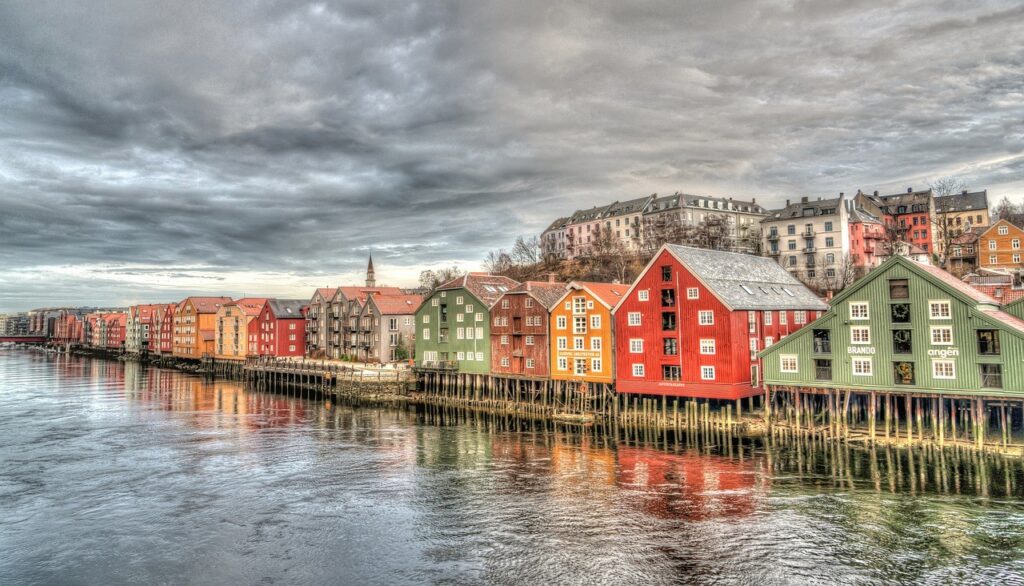
Trondheim, coastal city in Norway. Credit: Pixabay, Michelle_Raponi
The Norwegian government has unveiled a proposal to establish a Marine Protection Act that would allow for the creation of marine protected areas (MPAs) far beyond its current 12-nautical-mile coastal limit.
As reported by The Fishing Daily, the new law would enable Norway to protect marine ecosystems throughout its entire 200-nautical-mile economic zone – including waters surrounding Svalbard, Jan Mayen, and areas of the continental shelf.
“This is a milestone,” said Minister of Climate and Environment Andreas Bjelland Eriksen. “The new law closes a major gap in our legislation. It will allow us to protect marine nature throughout all Norwegian sea areas, crucial for preserving nature for future generations and meeting our international obligations under the Nature Agreement.”
Expanding Norway’s conservation reach
Currently, Norwegian law only permits MPAs within territorial waters, up to 12 nautical miles from the coast. The proposed act significantly broadens that scope, giving legal authority to protect offshore areas that make up the vast majority of the country’s maritime domain.
According to The Fishing Daily, the new law is ‘built on the foundation of the Natural Diversity Act but includes updated measures.’ These measures will support both active ecological restoration and passive recovery, by ‘giving nature space to recover undisturbed.’
“This legislation will help ensure not just conservation, but in some cases, actual improvement in marine ecosystem health,” added Eriksen.
Key features of the Marine Protection Act
As outlined by The Fishing Daily, the new proposal:
- Covers Norway’s economic zone, Svalbard’s fishing protection zone, Jan Mayen’s fishing zone, and continental shelf areas.
- Builds on existing rules while enabling stricter, ecosystem-based marine management.
- Supports restoration initiatives as part of protection efforts.
- Responds to global conservation targets set out in the Nature Agreement.
Until now, Norway lacked the legal tools to protect marine areas beyond its coastal zone. As The Fishing Daily notes, ‘this legislative move signals a significant shift toward holistic, science-based marine governance.’
With ocean biodiversity under growing pressure from climate change, pollution, and commercial activity, Norway’s bold step could set a precedent across Europe.
Should other nations with large offshore zones consider similar protections? Let us know your thoughts in the comments below.
View all news from Norway.
Follow Euro Weekly News on Google News
Get breaking news from Spain, travel updates, and expat stories directly on your Google News feed.
Follow on Google NewsSign up for personalised news
Subscribe to our Euro Weekly News alerts to get the latest stories into your inbox!
By signing up, you will create a Euro Weekly News account if you don't already have one. Review our Privacy Policy for more information about our privacy practices.





Letara Draghia
Letara is a seasoned lifestyle journalist and copywriter with over a decade of experience writing for leading UK brands including Harrods, John Lewis, and Dreams. She specialises in lifestyle, property, wellness, fashion, and consumer tech—helping brands connect with their audiences through compelling, on-brand storytelling. Since relocating to Spain in 2022, Letara has been a regular contributor to Euro Weekly News, covering local culture, expat life, community events, and family-focused stories. Her deep understanding of both British and Spanish lifestyles allows her to craft content that resonates strongly with the expat community.
Comments