Years of neglect leave Spain facing a €60 billion road repair backlog
By Adam Woodward • Published: 08 Nov 2026 • 9:35 • 3 minutes read
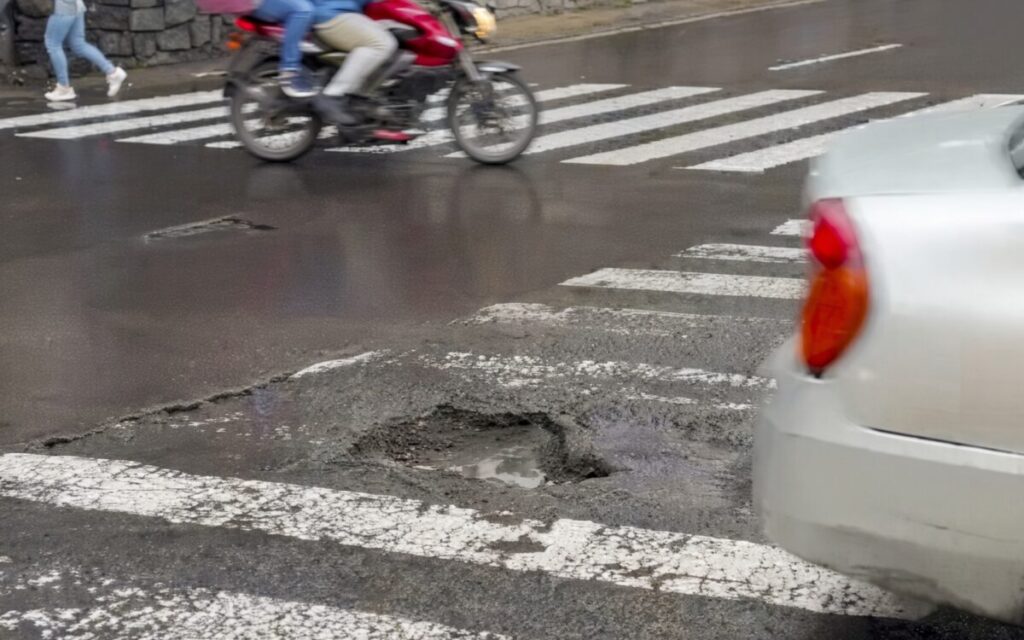
Road deterioration worsening in Spain. Credit: AAO Insta
Nearly €60 billion in road maintenance investment is needed over the next decade, while a separate audit finds more than half the inspected network suffering serious deterioration.
Spain is facing a huge bill to bring its ageing road network back up to the required standard, with years of insufficient investment leaving authorities under pressure to find billions of euros for repairs and maintenance.
The construction and infrastructure employers’ association SEOPAN estimates that €58.37 billion will be needed over the next ten years to address the country’s road maintenance requirements. The figure is not simply a bill for existing potholes: it covers the wider investment needed to restore and maintain roads to acceptable technical standards.
According to SEOPAN’s latest infrastructure assessment, €43.7 billion would be needed to bring road maintenance up to the required technical standards, with a further €14.67 billion allocated to restoring the networks to an acceptable starting condition.
The figures raise questions about how successive administrations have allowed maintenance requirements to build up and how the investment will be funded over the coming years with taxpayers cash.
More than half of Spain’s roads show serious deterioration
The scale of the problem is also reflected in the latest assessment by the Spanish Road Association (AEC). Its 2025 audit found that 52 per cent of the road network it inspected had serious or very serious deterioration. Around 33,966 kilometres were judged to need urgent reconstruction, with another 20,407 kilometres requiring attention within four years. In total, the organisation identified 54,373 kilometres needing intervention over that period.
Who is responsible for Spain’s road repair backlog?
AEC assessment of the existing road network
€4.72bn (31.6%)
€8.77bn (68.4%)
Total estimated repair backlog: €13.49 billion
Source: Asociación Española de la Carretera (AEC), 2025
AEC calculated the existing maintenance deficit at €13.49 billion. This figure covers the estimated cost of addressing deterioration already identified across the networks examined, rather than the broader ten-year investment requirement calculated by SEOPAN.
The AEC assessment also found that the condition of roads had worsened by around eight per cent a year over the three years covered by its comparison. Rising material, energy and labour costs contributed to the increased repair bill, but the association also attributed part of the deterioration to the condition of the infrastructure itself.
What does this mean for drivers?
- Potholes and damaged surfaces: More than 33,900 kilometres of roads require urgent reconstruction.
- Road safety: Deteriorated surfaces, worn road markings, damaged barriers and inadequate drainage can increase risks for drivers.
- Higher motoring costs: Poor road surfaces can increase fuel consumption by up to 12 per cent, according to reported estimates.
- Vehicle repairs: Potholes and uneven surfaces can damage tyres, wheels and suspension components.
- Longer journeys: Roadworks, emergency repairs and temporary restrictions can disrupt everyday travel.
Who is responsible for maintaining Spain’s roads?
One complication is that responsibility for the country’s roads is divided between several levels of government. The central government, through the Ministry of Transport, looks after the State Road Network, including major routes and national motorways. Autonomous communities manage their own regional networks, while provincial councils are responsible for many provincial roads. Town halls look after in-town streets and local roads.
That means there is no single authority responsible for the entire network, and the condition of a road depends on which administration owns and manages it. For drivers, this can make it difficult to know where responsibility lies and who to complain to when a stretch of road deteriorates with potholes and cracks. It also means that addressing the national maintenance problem requires investment and planning across several administrations.
How will the road maintenance bill be paid?
Finding the money is likely to be one of the biggest challenges. SEOPAN argues that traditional public investment and contracting arrangements need to change if the country is to tackle the scale of the maintenance work required. It is calling for greater use of public-private partnerships and concession arrangements, as well as changes to public procurement rules.
The association has also argued in favour of road-user charging as a way of generating funding for maintenance without increasing general taxation. That proposal is not the same as an announced nationwide charging scheme, however, and no such system should be assumed to be in place as a result of the latest figures.
The debate is particularly important because Spain relies heavily on its road network for everyday travel, tourism and the movement of goods. Poorly maintained routes can affect commuters, delivery services, businesses and visitors, while repair work itself can cause disruption when major stretches need attention.
This latest assessment puts the focus on the underlying funding problem. The challenge is no longer just repairing individual damaged roads after complaints or accidents. It is finding a long-term way to prevent years of deferred maintenance from creating an even larger bill for the administrations responsible. And ultimately, the public who depend on those roads.
Follow Euro Weekly News on Google News
Get breaking news from Spain, travel updates, and expat stories directly on your Google News feed.
Follow on Google NewsSign up for personalised news
Subscribe to our Euro Weekly News alerts to get the latest stories into your inbox!
By signing up, you will create a Euro Weekly News account if you don't already have one. Review our Privacy Policy for more information about our privacy practices.




Adam Woodward
Adam is a writer who has lived in Spain for over 25 years. With a background in English teaching and a passion for music, food, and the arts, he brings a rich personal perspective to his work at Euro Weekly News. As a father of three with deep roots in Spanish life, Adam writes engaging stories that explore culture, lifestyle, and the everyday experiences that shape communities across Spain.
Comments