Catalonia ends drought crisis
By Farah Mokrani • Updated: 05 Apr 2025 • 17:19 • 2 minutes read
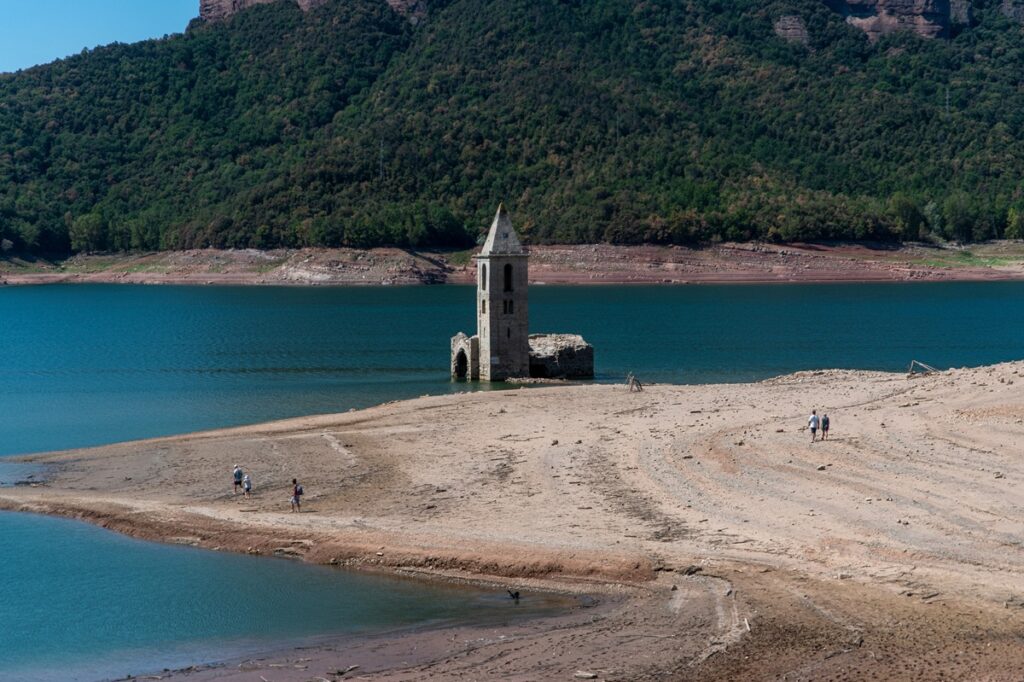
Sau reservoir in Catalonia, once a symbol of drought, now refilled after heavy spring rainfall – a sign of recovery for the region. Credit : Shutterstock, Lorena Sopena
Here some good news for residents of Catalonia — the regional government has officially declared the end of the drought crisis.
Following a period of severe water restrictions, especially in the Barcelona province, nearly all limitations have now been lifted.
Territory, Housing and Ecological Transition Minister Sílvia Paneque delivered the news from the Sau reservoir — a location that became symbolic of the drought after its submerged church became visible as water levels dropped dramatically. Thanks to abundant spring rainfall, Sau now stands at over 70 per cent capacity, prompting the government to act. The Catalan Executive Council is expected to formally approve the decision within days, and once it’s published in the official gazette, the changes will come into effect.
Barcelona’s reservoirs refill, emergency status downgraded
Water levels across the Ter-Llobregat system — which supplies over six million people — have more than doubled over the past month, now sitting at 64 per cent capacity. That’s above the 60 per cent threshold needed to declare the drought officially over. As a result, the affected municipalities are moving from ‘alert’ to ‘pre-alert’ status.
Across Catalonia, 14 of the 18 internal water basins will now operate without any restrictions. Nine areas will return to complete normality, five will remain in pre-alert, and only four zones will still be under alert conditions. Restrictions on agricultural irrigation and environmental flow rates will be lifted, and urban water use will also return to normal.
Still, the government is moving with caution. The drought response plan activated in 2021 will remain in pre-alert mode for now. Paneque emphasised that this gradual easing of restrictions is designed to ensure long-term stability, rather than rushing to lift measures too soon. Authorities expect the current situation to remain secure for the next five to six months at least.
Catalonia pushes ahead with desalination and water security upgrades
While the reservoirs are recovering, desalination plants across Catalonia will continue operating at 90 per cent capacity. This will help recharge aquifers like the one beneath the Llobregat delta, a vital source during the drought, and maintain commitments under the Ter water transfer agreement. In 2024 alone, 91 cubic hectometres were redirected to the Barcelona area — slightly less than last year.
Looking ahead, the government is sticking to its long-term water resilience strategy. New projects aim to increase water security by another 31 cubic hectometres in 2025. This includes recycled water transfers from Figueres to the Muga River and the addition of five new wells near Peralada. Barcelona’s metropolitan area will also see improvements, including upgrades to treatment plants and expanded purification facilities.
By 2030, the region hopes to add a total of 280 cubic hectometres of alternative water sources, effectively reducing its dependency on rainfall. According to Paneque, this strategy is about preparing for the future — and ensuring Catalonia is never caught off guard by another severe drought.
Stay tuned with Euro weekly news for more news from Spain
Follow Euro Weekly News on Google News
Get breaking news from Spain, travel updates, and expat stories directly on your Google News feed.
Follow on Google NewsSign up for personalised news
Subscribe to our Euro Weekly News alerts to get the latest stories into your inbox!
By signing up, you will create a Euro Weekly News account if you don't already have one. Review our Privacy Policy for more information about our privacy practices.


Farah Mokrani
Farah is a journalist and content writer with over a decade of experience in both digital and print media. Originally from Tunisia and now based in Spain, she has covered current affairs, investigative reports, and long-form features for a range of international publications. At Euro Weekly News, Farah brings a global perspective to her reporting, contributing news and analysis informed by her editorial background and passion for clear, accurate storytelling.
Comments