Madrid-Lisbon high-speed train gets green light from Brussels
By Farah Mokrani • Published: 11 Apr 2025 • 18:03 • 2 minutes read
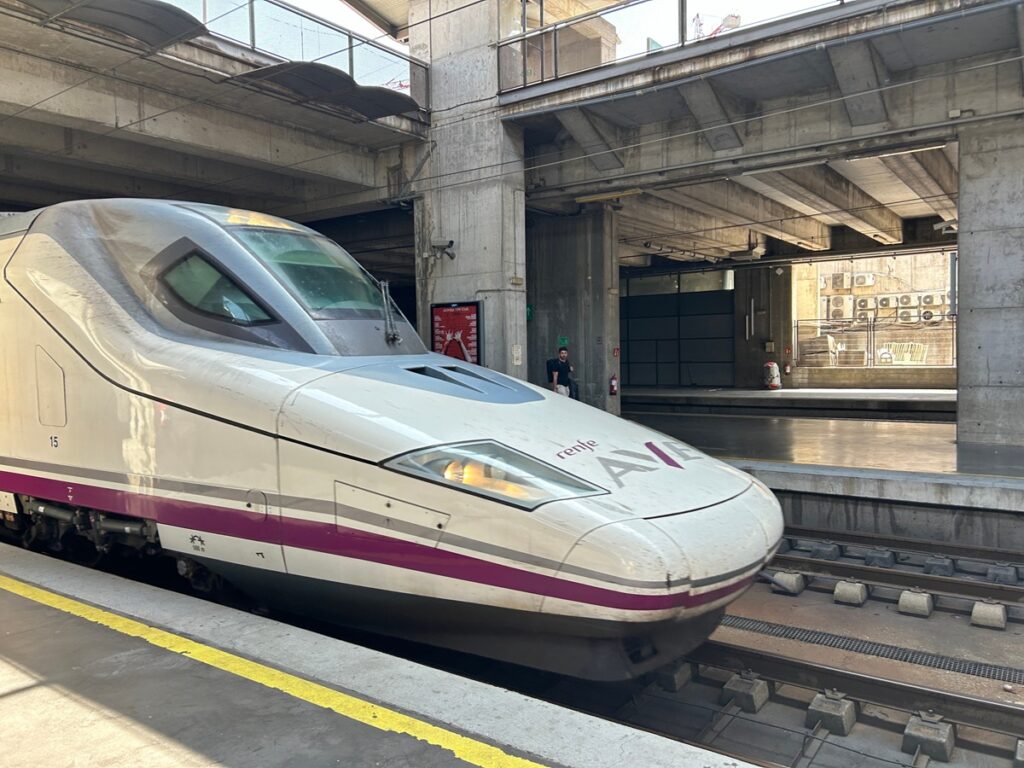
A Renfe AVE high-speed train in Cordoba, Spain. The EU now backs plans to extend the network from Madrid to Lisbon by 2030. Credit : Shutterstock, Colinmthompson
Brussels has put the long-delayed Madrid–Lisbon high-speed rail line at the top of its transport priorities, aiming to get the wheels turning by 2030.
During a recent European Parliament transport session, EU Commissioner for Transport Apostolos Tzitzikostas made it clear: this isn’t just a nice-to-have — it’s a must-do. The cross-border line is seen as a crucial step towards improving mobility, boosting the economy and helping the EU meet its climate targets.
“We’re working on a plan to strengthen high-speed connections between major European capitals — and Madrid–Lisbon is one of our top priorities,” he said.
Madrid–Lisbon travel time cut to 3 hours with new high-speed rail
Right now, if you want to travel between Madrid and Lisbon by train, you’re in for a long 10-hour journey. But once the AVE line is up and running, that will drop to just three hours — a transformation that could have a real impact on the region.
The benefits go well beyond quicker holidays or business trips. This new connection is expected to cut emissions, ease pressure on lorries and motorways, and create a more efficient, greener way of getting around the Iberian Peninsula.
The European Commission says it’s planning to sign off on an official implementation decision later this year, aiming to complete the project before 2030 — a year that’s already shaping up to be pivotal for Spain and Portugal.
Frustration grows in Extremadura over AVE delays
While Brussels is moving things forward, there’s some frustration closer to home. Elena Nevado, an MEP for Spain’s Partido Popular, says the Spanish government hasn’t shown the same urgency.
“The EU is pushing to get this done, but Sánchez’s government seems more focused on delaying it,” she said. “For Extremadura, this isn’t just about transport — it’s about dignity. We’ve had delay after delay, and people are tired of waiting.”
Nevado also pointed out that 2023 isn’t just any year — it’s the year Spain and Portugal will co-host the FIFA World Cup. Having a fast, modern link between the two capitals could send a powerful message about regional development and European cooperation.
She and her party argue that the AVE isn’t just a transport project — it’s a symbol of connection and unity, and one that could give southern Spain better access to European markets.
“This isn’t just about trains. It’s about opportunity,” she added.
As Europe looks to future-proof its infrastructure, the Madrid–Lisbon AVE may finally be on the right track — and for the people living along its route, it can’t come soon enough.
Stay tuned with Euro Weekly news for the latest news about Portugal
Sign up for personalised news
Subscribe to our Euro Weekly News alerts to get the latest stories into your inbox!
By signing up, you will create a Euro Weekly News account if you don't already have one. Review our Privacy Policy for more information about our privacy practices.




Farah Mokrani
Farah is a journalist and content writer with over a decade of experience in both digital and print media. Originally from Tunisia and now based in Spain, she has covered current affairs, investigative reports, and long-form features for a range of international publications. At Euro Weekly News, Farah brings a global perspective to her reporting, contributing news and analysis informed by her editorial background and passion for clear, accurate storytelling.
Comments
Hugh Hardy
12 April 2025 • 19:37Why can’t Spain & Portugal just do it, why does it need a “green light” from the EU.
Just get on with it, or do the they need EU money?
Comments are closed.